

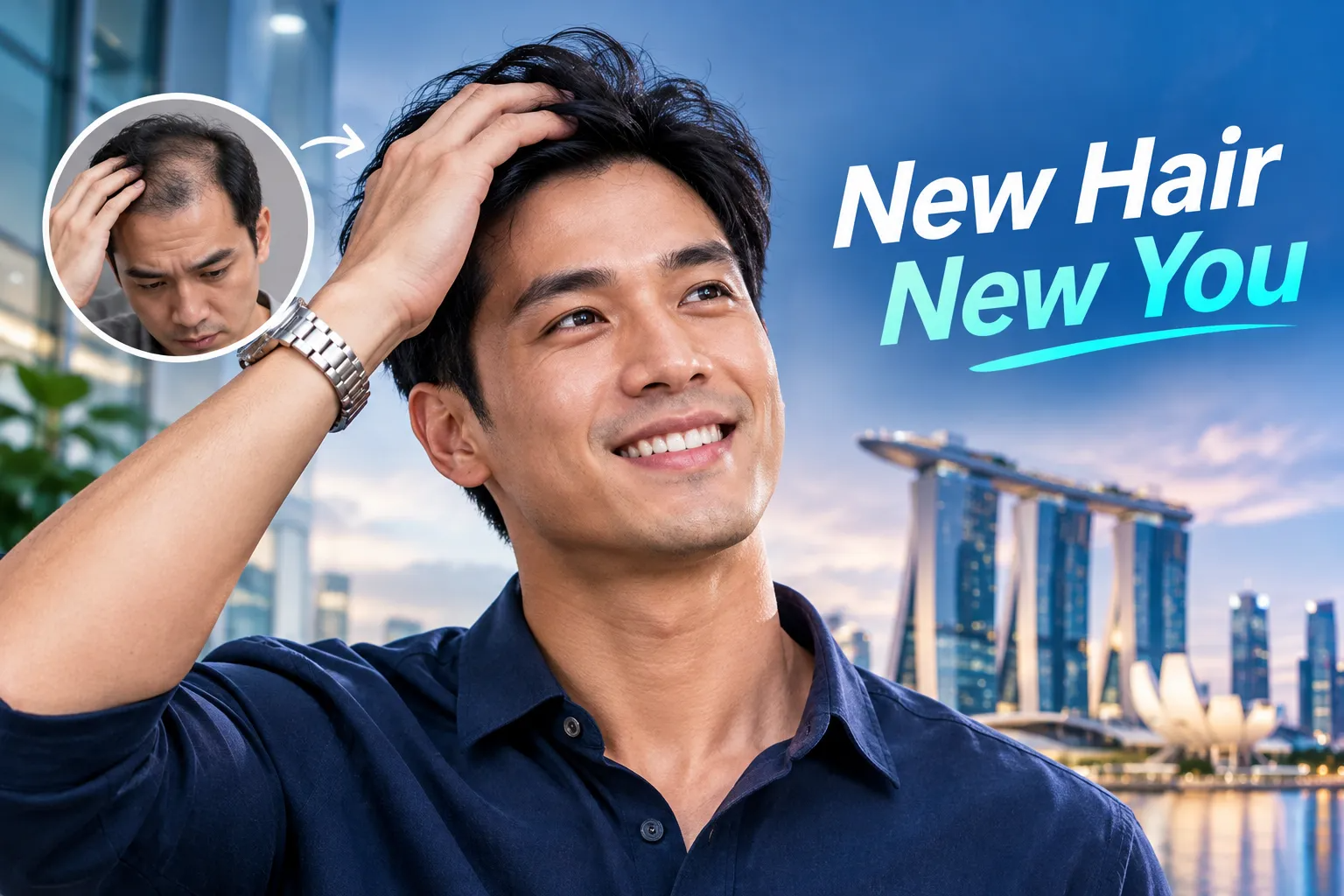
Singapore men and women dealing with hair loss have three main options covered in this article: non surgical hair replacement systems, hair transplants, and scalp micropigmentation. Each works differently, suits different stages of hair loss, and carries its own cost and maintenance commitment. The right choice depends on how much coverage you need, how much upkeep you can commit to, and whether you want something reversible or permanent. HairSpec is a Singapore-based hair loss and hair replacement specialist with more than 20 years of experience. This article compares these options clearly so you can walk into any consultation knowing the right questions to ask.
Key takeaways
Three options compared: Non-surgical hair systems deliver instant results; transplants grow gradually over 9–12 months (based on typical FUE timelines cited by Veritas and Alaxis; final thickening may continue for up to 18 months); scalp micropigmentation creates the visual impression of density without adding hair.
Cost range: Basic hair systems start from around S$488; custom systems run S$1,200–S$1,800+ (based on 2026 figures from efreshme.com); first-year total for a standard system is typically S$1,500– S$2,500 including maintenance, depending on servicing frequency and replacement cycle (efreshme.com and Urban Living).
Climate matters: Singapore’s humidity means base material selection and maintenance frequency are more important here than in cooler climates.
Not one-size-fits-all: Women’s diffuse thinning and men’s receding hairlines require different approaches; your donor hair density affects transplant suitability.
Start with an assessment: A proper scalp assessment before any commitment identifies your hair loss pattern and narrows down options that genuinely suit you.
What are the main hair replacement options in Singapore?
The three options compared here are a non-surgical hair system, a hair transplant, and scalp micropigmentation (SMP). Each sits in a different category: one is external and reversible, one is surgical and biological, and one is a cosmetic tattooing technique. Understanding the difference up front saves you time and money.
Non-surgical hair systems are custom hairpieces made from human or blended hair, bonded or taped to the scalp to provide instant cosmetic coverage without any surgery. Our Nanospec Hair Replacement Technology is one example of how these systems have evolved to deliver a natural-looking result. Hair transplants, by contrast, involve a surgeon relocating your own living follicles (using FUE or FUT technique) from donor areas to thinning regions. Results appear gradually over several months and depend heavily on how much healthy donor hair you have.
Scalp micropigmentation is a non-invasive cosmetic procedure that uses pigment to create the visual impression of a fuller scalp or cropped hairline, without adding any actual hair length or volume.
| Feature | Hair system | Hair transplant | Scalp micropigmentation |
| Appearance timeline | Immediate | 9–12 months for full result (Veritas/Alaxis); final thickening may continue to 18 months | Visible after each session |
| Reversibility | Fully reversible | Permanent | Long-lasting; pigment fades gradually over time |
| Surgical risk | None | Yes: scarring, recovery time | Involves needles; risks include infection or irritation, seek a qualified assessment |
| Maintenance frequency | Every 2–4 weeks professionally | Low after recovery | Periodic touch-ups as pigment fades |
| Typical durability | 6–12 months per system (varies by material and care) | Transplanted follicles can continue producing hair; surrounding untreated hair may still thin | Several years before significant fading |
| Best-suited stage | Any stage, including advanced loss | Early to moderate loss with stable donor area | Close-cropped style preference, moderate loss |
How non-surgical hair systems actually work
A hair system fitting is not a quick retail transaction. It starts with a thorough scalp assessment to identify your pattern of hair loss, existing hair density, natural hair direction, and lifestyle habits. From there, the system is measured, matched for colour, density, texture, curl, and hairline design, then built on a base material suited to your needs, lace, polyurethane, monofilament, or a hybrid. This process takes place in a private salon setting, because privacy and comfort matter as much as the technical result.
Once the system arrives, the cut-in stage blends it with your existing hair and shapes it to your intended style. French lace bases are generally considered a breathable option for Singapore’s heat and humidity, as the open mesh allows airflow and helps manage perspiration (Lordhair; Hairbrise). It is worth noting that lace bases require more careful maintenance than polyurethane and may not suit every lifestyle. For wearers who are very active or who swim regularly, a French-lace-and-skin hybrid perimeter offers a more secure bond while preserving ventilation through the main base.
Maintenance is a real commitment in Singapore’s climate. Plan for a professional appointment every two to four weeks; this covers removal, scalp cleaning, system cleaning, reattachment, and trim. After heavy sweating or swimming, dry both your hair and scalp thoroughly before the bond is re-sealed, since a damp scalp reduces bond reliability and can cause discomfort. Persistent itching, redness, or odour are signs to stop wear temporarily and get professional advice.
How long does a system last? Condition determines this more than a fixed date. With regular professional care, many systems last 6–12 months, though this varies considerably by base material and care routine, lace systems can degrade faster, while polyurethane bases typically fall in the 3–6 month range under normal use. Exercise, frequent swimming, strong sunlight, and high perspiration can all shorten the cycle. The signs to watch for are thinning fibres, a frayed or stretched base, persistent odour, or difficulty achieving a reliable bond.
Who is each option actually suited for?
Non-surgical systems work particularly well for men with more advanced hair loss, where transplant donor supply may already be limited. The customisation available covers hairline shape, grey percentage, density matching, and curl pattern, so the result reflects your natural hair characteristics rather than a generic style. For men experiencing significant recession or thinning across the crown, a system provides coverage that surgery simply cannot replicate when donor supply is insufficient.
Female pattern hair loss and diffuse thinning typically present as thinning across the central scalp with the frontal hairline remaining relatively intact, rather than the defined recession pattern common in men, though other causes can present differently and warrant their own assessment. This means a full or partial hair system, or a topper hairpiece, can restore volume immediately without surgery. HairSpec offers wigs and toupees for men and women.
A good transplant candidate generally has stable donor hair at the back and sides of the scalp and is experiencing early to moderate loss. Results take time: transplanted hairs commonly shed during the first two months, with new fine hairs emerging around months three to six, and the full cosmetic result becoming visible at nine to twelve months. SMP suits someone who prefers a close-cropped or shaved style and wants a permanent, low-maintenance option. It does not add any length or volume, so it is not the right choice for someone wanting their former hair back.
What does hair replacement cost in Singapore?
For non-surgical hair systems, budget in two layers: the system itself and ongoing maintenance. Based on 2026 figures from efreshme.com, basic or ready-made systems typically run S$488–S$988. Custom systems, matched precisely to your colour, density, length, and base material, commonly run S$1,200– S$1,800 for standard specifications; premium packages with more complex requirements run S$3,000– S$5,000 or more (efreshme.com). Maintenance visits run roughly S$80–S$90 per session (efreshme.com), so with appointments every two to four weeks, the first-year total for a standard system sits at approximately S$1,500–S$2,500 all in, though actual costs vary depending on servicing frequency and how quickly a given system needs replacing (efreshme.com; Urban Living).
For SMP, thescalpstudio.com’s 2026 pricing data shows that hairline or small-area sessions start from S$300–S$800, density fill for thinning hair runs S$800–S$1,500 per session, and a full shaved-head or buzz-cut design can reach S$1,600–S$2,000 per session. Based on figures from IN Eternity Clinic, a standard full treatment across two to four sessions typically costs around S$2,000–S$3,000, excluding future touch-ups; package inclusions vary, so confirm what is covered before comparing quotes. SMP involves needles and carries risks such as infection or irritation; a qualified medical assessment is advisable. Hair transplant pricing depends on the number of grafts, the technique used, and the clinic, so ask whether any quoted fee is fully inclusive before comparing figures.
One point that often goes overlooked is the cost of doing nothing. Some forms of hair loss progress over time, and early assessment can help identify the cause and the options available to you before the picture becomes more complex.
What to ask before choosing a hair replacement specialist
Before committing to any system, get clear answers on materials. Ask whether the system uses human hair, synthetic fibre, or a blend, and what the base material is, lace, polyurethane, monofilament, or hybrid. Also ask whether the adhesive or tape has been matched to your scalp sensitivity, perspiration level, and lifestyle. A reliable specialist will explain the trade-offs between materials rather than recommending one on price or appearance alone, and will show you physical samples in daylight so you can judge breathability and texture yourself.
On appearance and fit, the key questions cover colour matching (including grey percentage), hairline and parting customisation, whether the specialist takes a scalp template or digital measurement, and whether you can inspect the system before attachment. A natural result depends on colour, density, texture, direction, and hairline contour all working together. Colour alone is not enough.
Aftercare questions matter just as much as the fitting itself. Ask what products are safe on the system, how often it needs professional servicing, what swimming and exercise will do to the bond, and what the replacement cycle looks like. Ask to see the maintenance schedule in writing before you commit. Knowing the total cost of ownership, not just the system price, is what lets you make a genuinely informed decision.
The right hair replacement decision starts with the right information
Hair replacement in Singapore ranges from instant non-surgical systems to gradual surgical restoration and permanent cosmetic tattooing. Each has real trade-offs on timeline, cost, maintenance, and suitability. No single option works for everyone, and the worst decisions happen when people choose based on price or word-of-mouth alone without understanding their own hair loss pattern first.
The smartest move before spending anything is a professional assessment that maps your specific pattern of hair loss to the options that actually address it. At HairSpec, we offer a free scalp assessment for exactly this purpose, a clear, personalised starting point that helps you understand which hair loss solutions may be suited to your situation.
If you are ready to get a clearer picture of your options, get in touch with our team to book your free scalp assessment. Walk in knowing what questions to ask, and leave with a better understanding of where things stand.
Frequently Asked Questions
Yes, you can wear a hair system if you swim or exercise regularly, but your choice of base and maintenance routine matter. A French-lace-and-skin hybrid perimeter can offer a more secure bond while
allowing airflow. After heavy sweating or swimming, dry your hair and scalp thoroughly before the bond is re-sealed.
Your hair system may need replacing if its fibres are thinning, its base is frayed or stretched, or you have difficulty achieving a reliable bond. Persistent odour is another sign to watch for. Many systems last six to 12 months with regular professional care, although material and care affect their lifespan.
If you have persistent itching, redness or odour, stop wearing your hair system temporarily and get professional advice. Ask whether your adhesive or tape has been matched to your scalp sensitivity, perspiration level and lifestyle.
Yes, we offer a free scalp assessment to help you understand which hair loss solutions may suit your situation. It gives you a personalised starting point before you commit to an option.