

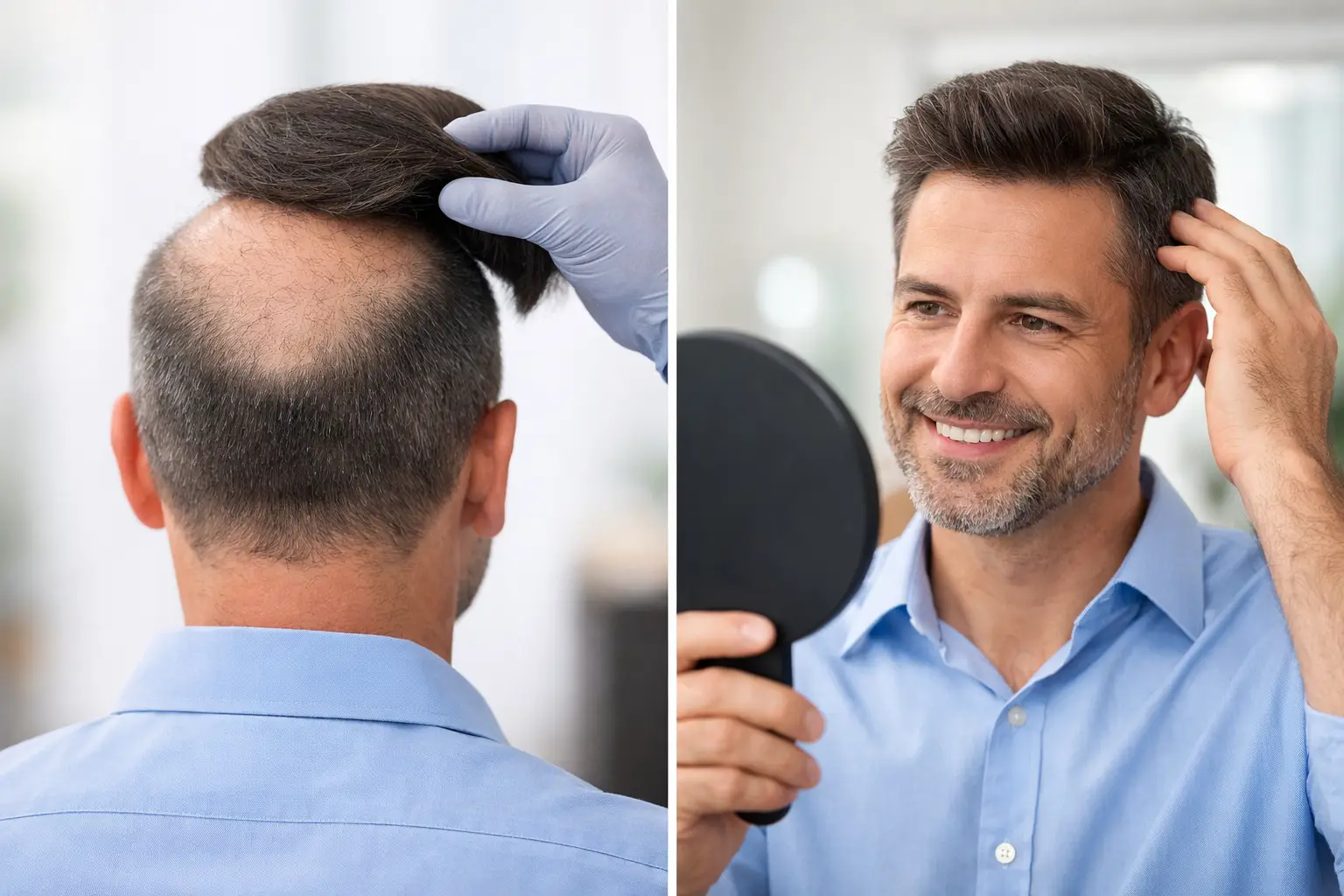
You usually ask this question after a real moment – more hair in the shower, more scalp under bright office lighting, or a style that no longer sits the way it used to. Is hair replacement permanent? The honest answer is that some solutions are long-lasting, some are temporary by design, and the right choice depends on your hair loss pattern, lifestyle, budget, and how much maintenance you are comfortable with.
That is why the term hair replacement can be confusing. Some people use it to mean non-surgical systems such as toppers, wigs, toupees, or bonded hair systems. Others use it more broadly to include surgical hair transplantation and appearance-based options like scalp micropigmentation. These are very different categories, and they do not all offer the same kind of permanence.
Is hair replacement permanent for every treatment?
No. Hair replacement is not one single treatment, so there is no one-size-fits-all answer. A hair transplant is often considered the most permanent option because transplanted follicles are moved from a donor area and continue to grow in their new location. A non-surgical hair system, on the other hand, can deliver immediate, natural-looking coverage but will need regular maintenance and eventual replacement. Scalp micropigmentation can last for years, but it is a cosmetic tattoo effect rather than real hair growth.
The better question is not just whether something is permanent. It is what kind of result you want to keep, how much effort you want to put into maintaining it, and whether you want actual hair growth, cosmetic density, or instant coverage.
What counts as permanent hair restoration?
In practical terms, permanent usually means the result is designed to last for years without needing to be fully replaced every few weeks or months. Even then, permanent does not mean untouched forever.
Hair transplants come closest to that definition. Healthy hair follicles are typically taken from the back or sides of the scalp, where hair is more resistant to pattern hair loss, and implanted into thinning areas. Once the grafts heal and begin growing, they behave like your own hair because they are your own hair. You can wash, cut, and style them normally.
But there is an important trade-off. A transplant is permanent only for the transplanted hairs, not necessarily for the surrounding native hair. If your hair loss continues, the untreated areas may keep thinning over time. That is why many people still need medical support, maintenance treatments, or long-term planning after surgery.
Scalp micropigmentation is also often described as long-lasting, but it is not permanent in the same way. It creates the appearance of closely cropped density or fuller-looking hair through detailed pigment placement on the scalp. The visual effect can hold up well for years, but touch-ups are usually needed as pigment fades.
Non-surgical hair replacement and permanence
When people search is hair replacement permanent, they are often thinking about non-surgical solutions. These include custom hair systems, wigs, toppers, toupees, and integrated methods designed to blend with existing hair.
These options are not permanent, but that does not make them a lesser choice. For many adults, especially those who want immediate change without surgery, they are the most practical and confidence-restoring solution.
A modern non-surgical hair system can look extremely natural when it is properly designed, matched, and fitted. It can restore density, reshape a hairline, and give you control over your appearance right away. That matters when hair loss is affecting your work confidence, social life, or comfort in front of a mirror.
What makes it temporary is the upkeep. Adhesives weaken, hair systems experience normal wear, and the base material and hair quality gradually break down with washing, styling, sun exposure, sweat, and daily use. Depending on the type of system and how carefully it is maintained, replacement may be needed every few months, while refitting and servicing may be needed much more often.
For some people, that sounds like a drawback. For others, it is actually a benefit. A non-surgical approach gives you flexibility. You can change density, color, hairstyle, or coverage level over time. You are not committing donor hair or waiting months for growth. You are choosing control and immediacy rather than permanence.
Why the answer depends on the cause of hair loss
Permanence is not only about the treatment. It is also about the reason you are losing hair in the first place.
If your hair loss is caused by male or female pattern baldness, it tends to be progressive. That means even if you choose a long-lasting solution, your hair may continue changing around it. A transplant may hold well, but your natural hair may still thin. A non-surgical system may continue to fit your needs, but the amount of coverage you want could increase over time.
If hair loss is related to medical treatment, hormonal shifts, stress, traction, or certain scalp conditions, the best long-term option may look very different. Some forms of hair loss can improve once the trigger is addressed. Others may require an approach that balances comfort, scalp sensitivity, and cosmetic flexibility.
This is why a proper scalp assessment matters. It helps separate temporary shedding from long-term loss and cosmetic concerns from medical ones. Without that step, people often invest in a solution that sounds permanent but does not actually match their condition.
Comparing the main options
Hair transplant surgery offers the strongest case for permanence because it uses living follicles and can produce real regrowth in treated areas. It suits people with adequate donor hair, stable expectations, and a willingness to wait through the growth timeline. It does not provide instant fullness, and not everyone is a candidate.
Non-surgical hair replacement offers the fastest visible result. It is ideal for people who want immediate coverage, prefer to avoid surgery, or need a solution for more advanced hair loss, diffuse thinning, or medically related loss. It is not permanent, but it can be very effective and highly natural-looking with regular maintenance.
Scalp micropigmentation gives the illusion of density and can be a strong option for receding hairlines, visible scalp, or people who keep their hair very short. It lasts much longer than a hair system, but it does not create real strands or movement.
Supportive treatments such as low level laser therapy or mesotherapy may help improve scalp health and support existing hair, but they are usually not standalone permanent replacements for significant loss. They are better understood as part of a broader plan.
The maintenance question matters more than most people expect
A permanent result is appealing, but the day-to-day reality matters just as much. Some people are comfortable with surgery and waiting for growth because they want a lower-maintenance future. Others would rather come in for regular servicing and enjoy instant, adjustable results.
There is no universally better option. There is only the option that fits your routine and comfort level.
If you travel frequently, exercise heavily, or want a style that behaves exactly like growing hair, a transplant may feel more natural in the long run. If you value privacy, want immediate fullness, or are not ready for surgery, non-surgical hair replacement may be the smarter move. If your priority is reducing scalp show-through without adding hair volume, scalp micropigmentation may be enough.
At a specialist center such as HairSpec, the value is not just having more treatments available. It is being guided toward the right category of solution instead of being pushed into a single service.
So, is hair replacement permanent?
Sometimes yes, often no, and very often partly. If by hair replacement you mean a transplant, it can be a permanent restoration method for the hairs that are transplanted. If you mean a non-surgical hair system, it is temporary but capable of delivering immediate and impressive results with ongoing upkeep. If you mean scalp micropigmentation, it is long-lasting but cosmetic rather than biological.
The best choice usually comes down to what you want permanence to mean. Real hair growth. Long-term visual coverage. Minimal maintenance. Maximum flexibility. Those are not the same goal.
If you are weighing your options, focus less on marketing words and more on fit. The right solution should match your stage of hair loss, your lifestyle, and how you want to feel when you see yourself in the mirror six months and six years from now. That is where good decisions start.