

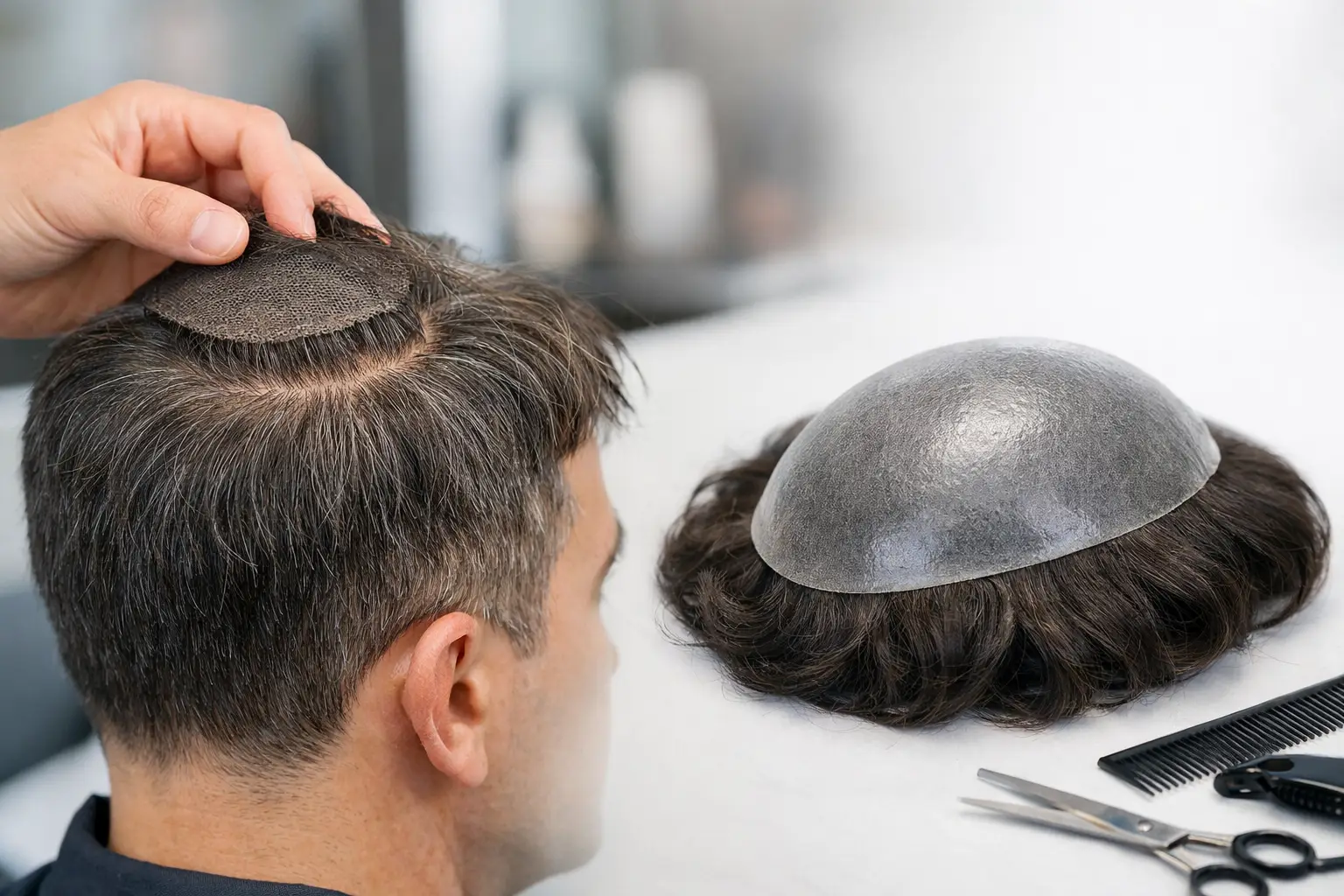
If you have been searching for a practical answer to hair patch vs toupee, you are probably less interested in labels and more interested in one thing – which option will look natural, feel comfortable, and fit your lifestyle. That is the right question to ask. In real consultations, people rarely walk in asking for a specific product name. They want to know what will suit their level of hair loss, daily routine, budget, and comfort with maintenance.
The confusion is understandable because the terms are often used interchangeably. In everyday conversation, many people call any non-surgical hair replacement piece a toupee. Others use hair patch to describe a more customized system designed to blend with existing hair. The difference matters because the right choice is usually not about terminology. It is about construction, coverage, attachment, realism, and how personalized the solution needs to be.
Hair patch vs toupee: the basic difference
A toupee traditionally refers to a hairpiece that covers partial hair loss, most commonly on the top or crown. It may be ready-made or semi-custom, and it is often designed for men with localized thinning or balding. Modern toupees are far more natural-looking than older versions, but the category still tends to suggest a smaller, removable top piece.
A hair patch usually refers to a customized non-surgical hair replacement system created to match the wearer’s scalp size, hair density, texture, and style goals. It is often cut and fitted more precisely, then attached in a way that allows it to blend with surrounding hair. In specialist settings, a hair patch is less of an off-the-shelf product and more of a tailored solution.
That said, there is overlap. Some providers use one term more than the other for marketing reasons. This is why a consultation matters. Two services can sound similar online but differ quite a bit once you look at the base material, hair quality, attachment method, and maintenance plan.
Which looks more natural?
For most people, the answer depends on customization.
A well-made toupee can look very natural, especially if the hairline is not heavily exposed and the piece is matched properly to your existing hair. But if the piece is generic in size, density, or color, it can be harder to blend convincingly. The result may still be good from a distance, but less convincing up close or under bright light.
A hair patch usually has the advantage here because it is often built around your exact pattern of hair loss. The base can be shaped to fit the thinning area precisely, and the hair can be selected to match your texture, wave pattern, and natural density. That level of detail tends to create a more believable finish, especially for professionals or image-conscious adults who want confidence in close-contact settings.
The hairline also plays a major role. If you like styling your hair back or to the side, the front edge needs careful design. A specialist-fitted patch often performs better here than a standard partial hairpiece. If your style keeps the front covered, the difference may be less noticeable.
Comfort and daily wear
Comfort is where personal preference really comes in.
Some people want the freedom to remove their hairpiece at night or whenever they choose. A toupee may suit them well, especially if they prefer a lighter commitment and want a quicker entry point into hair replacement. This can feel less intimidating for first-time users.
A hair patch is often chosen by people who want a more integrated solution. Depending on the attachment method, it may be worn continuously for days or weeks at a time and maintained on a schedule. Many clients like this because it feels closer to having their own hair back. They can wake up, shower, go to work, and continue their day without needing to put it on each morning.
The trade-off is maintenance. The more secure and natural the system, the more important proper upkeep becomes. A poorly maintained hair patch can become uncomfortable, loosen early, or look less clean at the base. That does not mean it is difficult, but it does mean professional aftercare matters.
Lifestyle matters more than people expect
The best choice is often the one that fits your routine, not the one that sounds more advanced.
If you travel frequently, work long hours, exercise often, or live in a humid climate, you may want a solution that stays secure and looks stable throughout the day. A custom hair patch is often the better fit for active lifestyles because it is designed around long-wear use and blending. This can be particularly helpful in Singapore, where heat and humidity can expose weaknesses in lower-quality systems.
On the other hand, if your hair loss is limited, your styling needs are simple, and you want something less involved, a toupee can still be a smart option. Not everyone needs a fully customized system. Sometimes a straightforward, well-fitted piece is enough to restore coverage and confidence.
This is also where honesty matters. If you know you are unlikely to follow a maintenance schedule, choosing a highly customized attached system may not serve you well. A good solution should feel manageable, not stressful.
Cost: upfront price vs long-term value
Price comparisons can be misleading because they often ignore longevity, servicing, and realism.
A toupee may cost less upfront, especially if it is ready-made or only lightly customized. That can make it appealing for people who are testing hair replacement for the first time or who want a lower initial commitment.
A hair patch generally costs more because it involves custom sizing, tailored matching, and professional fitting. But for many wearers, the higher upfront investment pays off in appearance, comfort, and confidence. If the system blends better and feels more secure, it may deliver more day-to-day value than a cheaper option that you never fully trust.
It is also worth asking what is included. Some providers quote a low product price, then charge separately for cutting, fitting, bonding, and maintenance. Others provide a more complete care plan. The real comparison is not just patch versus toupee. It is total experience versus sticker price.
Who is a good candidate for each?
A toupee may suit you if your hair loss is limited to the top, you want removable coverage, and you are looking for a simpler entry point into non-surgical replacement. It can also work well if you are still exploring whether hair replacement feels right for you.
A hair patch may be the better option if you want a personalized fit, stronger blending with existing hair, and a more secure everyday solution. It is especially useful for people with defined thinning areas who want results that hold up in professional, social, and close-up settings.
For women, terminology can be even more inconsistent. Many women who need partial coverage for thinning at the crown or top may be shown solutions that are technically similar in concept but described differently. What matters is the design, not the label. The right system should account for hair density, parting pattern, scalp visibility, and styling preferences.
The role of specialist consultation
This is one area where generic sellers and specialist providers are very different.
Buying a hairpiece based only on a photo or product description can lead to common problems: the density looks too heavy, the color match is slightly off, the base does not sit flush, or the hairline is too obvious. Those details are exactly what make a system look artificial.
A specialist consultation looks beyond coverage. It considers scalp condition, stage of hair loss, your natural growth pattern, and whether you may benefit from combining solutions. In some cases, a hair patch or toupee is the best answer right now. In others, it may work best alongside scalp micropigmentation, low level laser therapy, or a longer-term restoration plan. That broader view is one reason many clients prefer an experienced provider like HairSpec rather than a one-size-fits-all salon approach.
The goal should never be to sell the most expensive option. It should be to recommend the one you will actually feel good wearing.
So which one should you choose?
If you want the shortest answer to hair patch vs toupee, it is this: choose the option that matches your hair loss pattern, styling habits, comfort level, and expectations for realism. A toupee can be a solid solution when your needs are straightforward. A hair patch is usually the better choice when customization, blending, and secure daily wear matter most.
The right decision should make your life easier, not make you worry about your hair all day. When a solution is properly matched, people usually notice that you look fresher, younger, or more confident – not that you are wearing hair replacement.
If you are comparing options, focus less on the name and more on the fit. That is usually where the best result begins.