

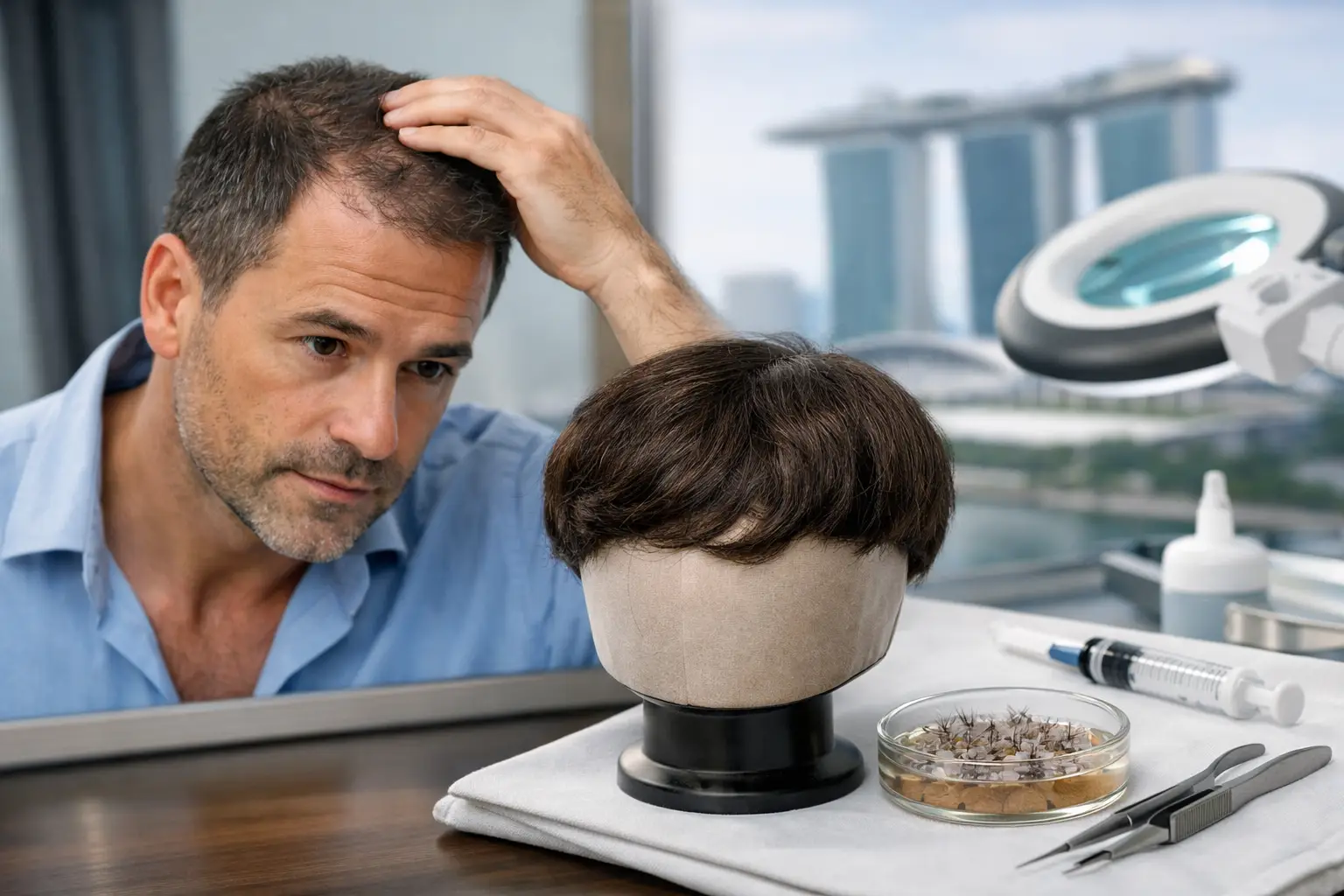
A changing hairline can alter more than a mirror reflection. It can affect how comfortable you feel in meetings, photographs, social settings, and the quiet moments when you are getting ready for the day. When people search for hair replacement singapore, they are often looking for an answer that feels convincing, private, and appropriate for their own lifestyle – not a one-size-fits-all fix.
Modern hair replacement has moved far beyond the obvious hairpieces many people remember. With the right system, fitting, density, color matching, and maintenance plan, it can create the appearance of a fuller head of hair without surgery or a long recovery period. The most suitable choice depends on why hair loss is happening, how quickly results are needed, and how much ongoing maintenance feels practical.
What Hair Replacement Can Do
Hair replacement refers to non-surgical methods that add the appearance of hair where density has been lost or where coverage is desired. A custom hair system may be designed around the hairline, crown, or broader scalp area, then blended with existing hair for a natural finish. It can be an option for men with pattern baldness, women with diffuse thinning, and people dealing with hair loss related to medical conditions or treatments.
The immediate benefit is visible coverage. Unlike treatments intended to stimulate existing follicles over time, a well-fitted hair system changes the look of the hair as soon as it is applied. That can be especially meaningful for someone preparing for a major life event, returning to work after medical treatment, or simply tired of styling around thinning areas each morning.
Still, hair replacement is not the same as regrowing hair. It is a cosmetic and confidence-focused solution that needs periodic care, refitting, and replacement as the system ages. Knowing that distinction helps you make a decision based on real expectations rather than a promise of permanent regrowth.
Hair Replacement in Singapore: Why Personal Fitting Matters
Singapore’s warm, humid weather makes comfort and attachment quality especially relevant. A hair system that looks excellent in a consultation room but feels hot, shifts during the day, or is difficult to maintain will not be the right long-term choice. The base material, attachment method, ventilation, density, and hairstyle should all be selected with daily life in mind.
A specialist consultation should begin with the scalp, not just the hairstyle. Hair loss can be related to genetics, stress, hormonal changes, traction, scalp conditions, medical treatment, or a combination of factors. A close assessment helps determine whether a non-surgical system is the best answer, whether supportive scalp treatments may help, or whether another pathway deserves consideration.
Natural-looking results also depend on restraint. Hair that is too dense, too dark, or too perfectly straight along the hairline can draw attention for the wrong reasons. The goal is usually to match your age, facial proportions, existing texture, and the gradual pattern of your hair loss. A good result should look like you, not like a dramatic change that is difficult to explain.
Understanding the Main Options
Non-surgical hair replacement is broad enough to suit very different needs. The following options may overlap, and a specialist may recommend a combination rather than a single service.
Custom Hair Systems and Toupees
Custom systems are designed to cover a defined area of hair loss and blend with the surrounding hair. They can be especially useful for receding hairlines, thinning crowns, and more advanced male pattern hair loss. Modern systems can use lightweight bases and carefully selected human hair to create movement and a realistic scalp appearance.
The trade-off is maintenance. Depending on the attachment method and your activity level, systems require scheduled servicing, cleansing, and eventual replacement. They are an excellent option for people who prioritize immediate fullness and are comfortable treating maintenance as part of their grooming routine.
Wigs and Medical Wigs
Wigs offer full-head coverage and may be appropriate when thinning is widespread or hair loss is temporary, unpredictable, or medically related. Medical wigs are particularly valuable for people experiencing hair loss during chemotherapy, from autoimmune conditions, or after other health-related changes.
The right wig should feel secure without causing pressure or irritation. Cap construction, breathability, fit, and hairline design all affect comfort. For many clients, having a private fitting and guidance on styling makes the experience far less overwhelming.
Nanospec Hair Replacement
Nanospec hair replacement is designed for clients seeking a refined, natural-looking solution with close attention to scalp appearance and hair integration. It can be suitable for those who want fuller coverage while maintaining a polished, understated result.
As with any system, suitability depends on the condition of the scalp, the area being covered, and the desired hairstyle. Someone who prefers a short, exposed hairline may need a different design from someone who wears longer hair with more built-in coverage.
Scalp Micropigmentation
Scalp micropigmentation uses detailed pigment placement to create the appearance of closely cropped follicles or added density between existing hairs. It does not add physical hair, but it can reduce the contrast between the scalp and thinning hair.
This can work well for people who keep their hair short, have a receding hairline, or want to make diffuse thinning less visible. It may also complement a hair transplant or non-surgical system in selected cases. The effect is highly dependent on skilled color selection, hairline planning, and a conservative approach.
When Treatment May Be the Better First Step
If hair follicles are still active, treatment may help preserve or improve the hair you have. Low-level laser therapy, mesotherapy, scalp care, and other restorative options may be considered depending on the cause and pattern of loss. Results generally take time, and no treatment can guarantee the same outcome for every person.
For more established pattern baldness, a hair transplant may be an option for eligible candidates with sufficient donor hair. It is a surgical procedure with its own recovery period, cost considerations, and expectations around growth timelines. A transplant can be valuable for the right person, but it is not automatically the best first choice simply because it is permanent.
This is where a full-spectrum provider matters. Someone with early thinning may benefit from a restorative plan. Someone with extensive loss may prefer immediate coverage through hair replacement. Another person may choose scalp micropigmentation, a transplant, or a combination designed around their goals. The strongest recommendation is the one that respects your circumstances rather than pushes a single service.
Questions Worth Asking Before You Commit
Before selecting a provider, ask how the solution will be customized to your scalp, hair texture, lifestyle, and preferred hairstyle. You should understand how often servicing is needed, what the ongoing costs may involve, how the system responds to sweating or exercise, and what happens if you need adjustments after fitting.
It is also reasonable to ask to see examples of hairlines and density levels that look natural in real life, not only under studio lighting. Discuss whether you can wash, style, swim, or work out as usual, and be honest about how much maintenance you are willing to manage. The best system on paper is not necessarily the best system for a busy professional, frequent traveler, or person who wants minimal daily effort.
Privacy matters too. Hair loss is personal, and a consultation should feel discreet and judgment-free. You should leave with clarity about the options, not pressure to make an immediate decision.
A More Confident Next Step
For more than 20 years, HairSpec has approached hair loss as both an aesthetic concern and a personal experience. A free scalp assessment can help identify the condition of your hair and scalp, explain the practical differences between available solutions, and set realistic expectations for the look you want.
The right hair solution should give you more freedom, not another source of worry. Start with an honest assessment, choose a method that fits your routine, and allow the result to be natural enough that your confidence takes center stage.