

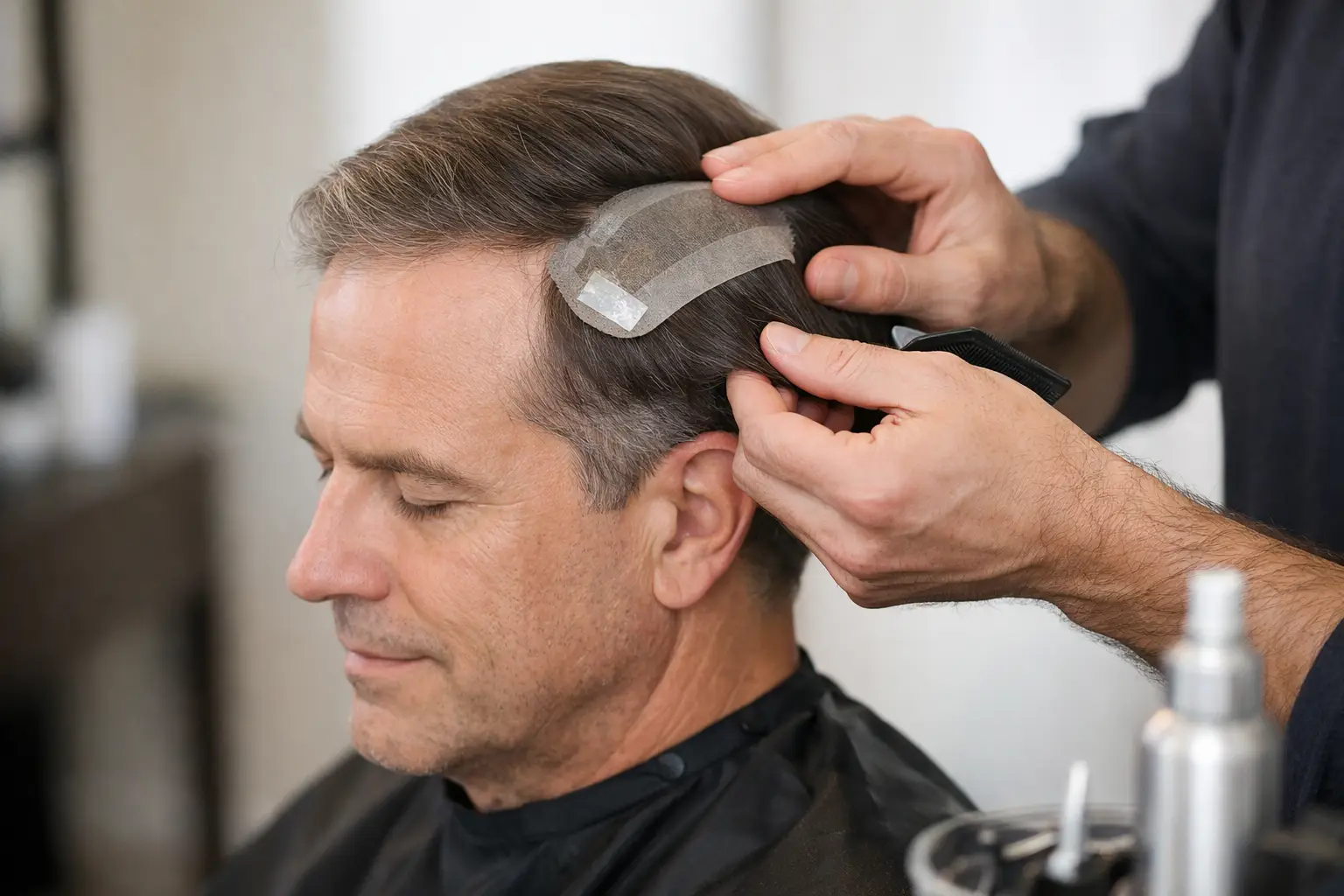
A toupee should feel like part of your routine, not something you need to worry about during a meeting, workout, or dinner out. Learning how to secure a toupee starts with choosing a method that suits your scalp, lifestyle, and the base of your hairpiece. The best attachment is not always the strongest one. It is the one that gives you a natural appearance, reliable hold, and comfortable wear without irritating your skin or placing unnecessary stress on existing hair.
For many people, professional fitting makes the biggest difference. A correctly sized, well-cut toupee with the right attachment method can sit flat, move naturally, and remain discreet throughout the day.
How to Secure a Toupee: Choose the Right Method
Toupees are usually secured with adhesive tape, liquid adhesive, clips, or a combination of these methods. Each option has benefits, and the right choice depends on whether you want to remove your hairpiece daily, wear it for several days, or maintain a more permanent routine.
Toupee tape for simple, dependable wear
Double-sided toupee tape is a popular choice because it is clean, relatively easy to apply, and available in different hold strengths. Some tapes are designed for daily wear and easy removal, while extended-wear varieties can provide a secure hold for days or weeks when maintained correctly.
Tape is especially useful for people who want control over their attachment routine without the learning curve of liquid glue. It also works well around the perimeter of many lace and polyurethane bases. However, heat, humidity, oil production, and active exercise can reduce its holding power. If you live in a humid climate or perspire heavily, choose a tape formulated for stronger hold and replace it before the edges begin to lift.
Liquid adhesive for a close, natural hairline
Liquid adhesives can create an exceptionally close bond, particularly along a lace front hairline. They are often preferred by wearers who want the option of styling hair away from the face with a natural-looking finish.
Application requires patience. The adhesive must be applied in thin, even layers and allowed to become tacky or clear according to the product instructions before the toupee is placed. Applying the hairpiece too early can weaken the bond, while using too much glue can create a messy finish that is difficult to clean.
Liquid adhesive can offer excellent security, but it is not the best first option for everyone. People with sensitive skin, scalp conditions, or a history of contact dermatitis should patch-test any adhesive before full application. If itching, burning, redness, or swelling occurs, remove the product gently and seek professional advice.
Clips for removable, adhesive-free attachment
Toupee clips attach to your existing hair rather than directly to the scalp. They are convenient for people who prefer to remove their hairpiece at night and avoid adhesive residue. Clips can provide a stable fit when there is enough healthy, dense hair around the attachment area.
The trade-off is that clips may not be suitable for very fine, fragile, or thinning hair. Repeated tension in the same place can cause breakage or traction-related hair loss. If you choose clips, make sure they are positioned securely but never painfully, and vary their placement when possible.
Prepare Your Scalp Before Attachment
A secure toupee begins with proper preparation. Natural scalp oils, sweat, skincare products, and residue can interfere with tape and adhesive. Even a high-quality bonding product will struggle to perform on an unclean surface.
Start by cleansing the scalp with a gentle shampoo, then dry it completely. Avoid applying conditioner, moisturizer, styling cream, or oil near the attachment area. If you use a scalp protector or skin-prep product, allow it to dry fully before applying tape or adhesive. This can help create a cleaner surface while providing an additional barrier between the adhesive and skin.
If you shave the attachment area, do so carefully and give your skin time to settle before applying a strong adhesive. Fresh nicks or irritated skin should never be covered with bonding products. A comfortable hold is always safer than forcing an attachment when your scalp needs a break.
Apply the Toupee With Care
Whether you use tape or liquid adhesive, alignment is the step that determines how natural the final result looks. Before removing the backing from your tape or placing the hairpiece onto adhesive, position the toupee loosely and check the hairline, temple points, and overall balance in a mirror.
Most wearers find it easier to begin at the front hairline and press backward, or to anchor the back first and lower the front into place. The best technique depends on the base design and your own level of comfort. Work slowly and use gentle, firm pressure rather than pulling or stretching the base.
For a lace-front toupee, avoid touching the adhesive area with your fingers. Oils from the skin can affect the bond and leave visible residue. A comb with a tail handle can help guide the lace into position more precisely.
Once the toupee is in place, press along the perimeter for several seconds to activate the bond. Do not style aggressively, expose the area to steam, or exercise heavily immediately afterward if your adhesive needs curing time. Follow the specific product instructions, as drying and setting times vary.
Make the Hairline Look Natural
Security and appearance go together. A toupee that is attached firmly but placed too low or too straight at the front can still look unnatural. Your hairline should suit your age, facial proportions, and original growth pattern rather than follow a one-size-fits-all template.
A slightly irregular hairline is often more realistic than a perfectly straight edge. The density at the front also matters. A lighter, graduated density can mimic the way natural hair grows, especially when styling the hair away from the forehead.
This is where a specialist consultation can be valuable. The base material, hair direction, density, color blend, cut, and attachment method all influence the finished result. A customized hair replacement system can make daily styling feel much easier than trying to adapt a generic toupee to your scalp and lifestyle.
Maintain a Secure Hold Between Appointments
Even a well-applied toupee needs regular care. Check the perimeter daily for lifting, particularly at the temples, nape, and front hairline. Do not keep pressing a loose edge down with extra glue over old adhesive. This can create buildup, compromise the bond, and make removal more difficult.
To help your attachment last, avoid oily products near the base and use hair products sparingly. If you exercise, pat sweat away from the hairline instead of rubbing it. Swimming is possible with many professionally fitted systems, but chlorine and salt water may shorten adhesive life and dry the hair. Rinse thoroughly afterward and schedule maintenance sooner if needed.
You should also clean the base thoroughly between reattachments. Adhesive residue, scalp oils, and product buildup can affect comfort and reduce the lifespan of the hairpiece. Use a remover designed for the attachment method, work slowly, and never pull the toupee off abruptly.
When Professional Help Is the Better Choice
A home attachment routine can work well once you are familiar with your hairpiece. Still, professional support is worth considering if the toupee repeatedly lifts, feels tight, causes irritation, or does not blend naturally with your existing hair.
At HairSpec, a personalized assessment can identify whether tape, adhesive, clips, or another non-surgical hair replacement approach is best suited to your scalp condition and desired wearing schedule. This is particularly helpful for people with significant thinning, sensitive scalps, medical hair loss, or an active lifestyle that demands stronger performance.
The goal is not simply to keep a toupee in place. It is to create a secure, comfortable result that lets you focus on your day with confidence. Start with a clean scalp, a properly fitted piece, and an attachment method you can maintain comfortably – then give yourself time to build a routine that feels completely your own.