

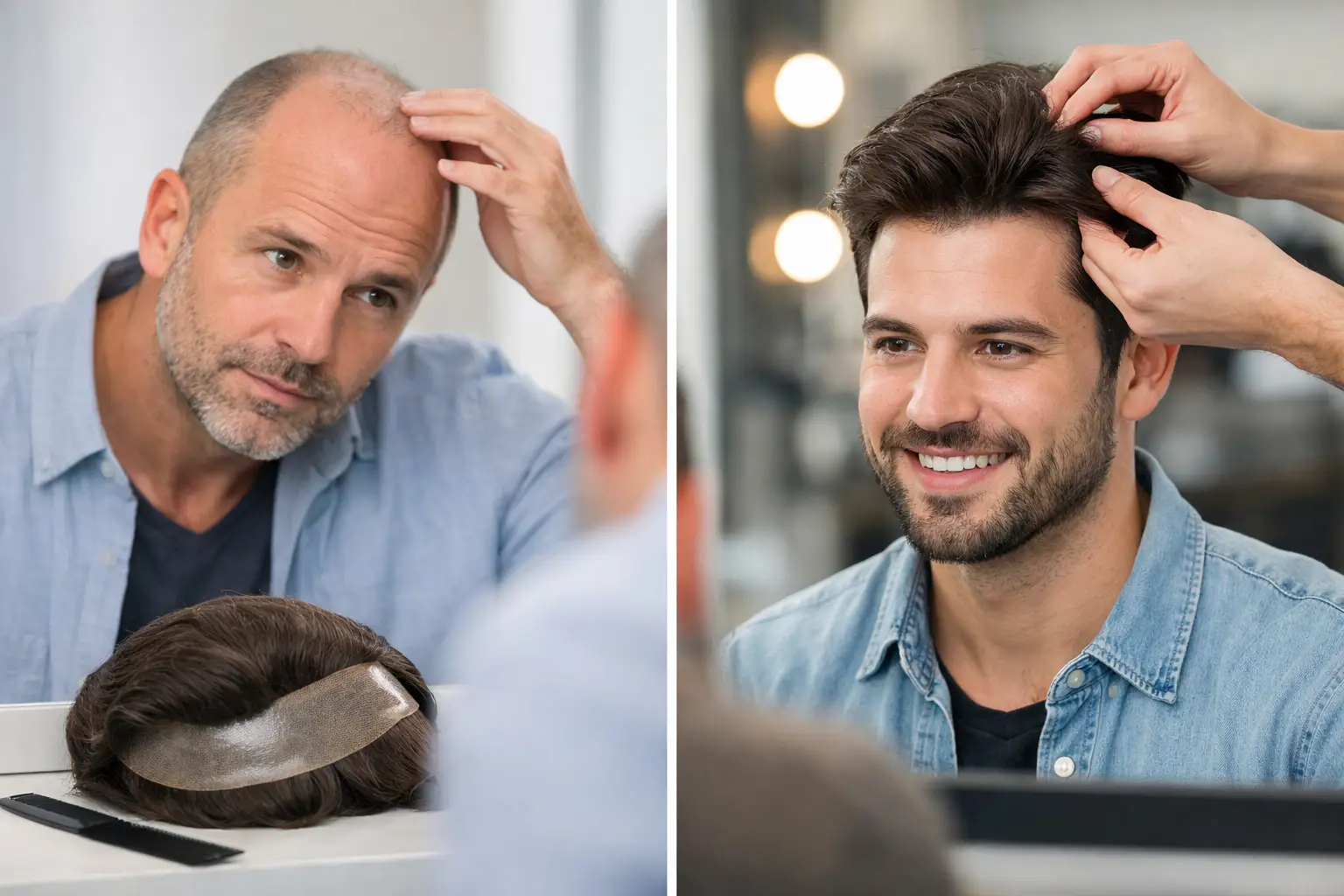
Some people want their hair back as quickly as possible. Others want more control, less downtime, and a result that looks natural without committing to surgery. That is usually where the question of the best candidates for hair replacement systems begins.
A hair replacement system is not a one-size-fits-all answer to hair loss. For the right person, it can create immediate density, restore a natural-looking hairline, and fit into a professional or active lifestyle with very little disruption. For the wrong person, it can feel high-maintenance or mismatched to their expectations. The key is knowing who tends to do well with this option and why.
Who are the best candidates for hair replacement systems?
The best candidates for hair replacement systems are men and women who want visible results right away, prefer a non-surgical approach, and are comfortable with routine maintenance. In most cases, they are dealing with thinning, patchy loss, advanced balding, or medical hair loss that affects confidence and daily life.
This option often suits people who are not ideal candidates for hair transplant surgery, do not want to wait months for regrowth, or need a flexible cosmetic solution while they explore longer-term treatment. It can also be a strong fit for people who still have healthy hair around the sides or back but have lost density on top, along the crown, or at the front hairline.
What makes hair replacement systems appealing is control. You can adjust the density, hairline design, texture, and overall style based on your face shape, lifestyle, and preferences. That level of customization matters, especially for people who want a natural result that does not look obvious in office lighting, social settings, or close-up conversations.
Best candidates for hair replacement systems by hair loss type
Pattern hair loss is one of the most common reasons people choose a hair replacement system. Men with receding temples, diffuse thinning on top, or extensive crown loss often do very well, especially if they want a fuller look immediately rather than waiting on medication or surgery. Women with diffuse thinning can also benefit, particularly when they still have some surrounding hair that helps blend the system naturally.
People with alopecia areata or other patchy hair loss conditions may also be good candidates, depending on how stable the condition is and how sensitive the scalp has become. In these cases, comfort and attachment method matter just as much as appearance.
Medical hair loss is another important category. Individuals going through chemotherapy, recovering from treatment, or managing hormone-related hair loss often want privacy, speed, and a natural appearance. A non-surgical system can provide those benefits without adding physical stress during an already difficult period.
There are also candidates who are not fully bald but are unhappy with how sparse their hair looks. If styling no longer hides the scalp, fibers are becoming less effective, and the person wants consistent coverage, a system can be a practical next step.
People who want immediate cosmetic improvement
One of the clearest signs that someone is a strong candidate is urgency. If you need a visible transformation now rather than six to twelve months from now, a hair replacement system makes sense. Professionals in client-facing roles, people preparing for major life events, and anyone whose confidence has been affected by rapid hair loss often value that immediate change.
This is especially relevant when hair loss has reached the point where it influences how someone dresses, socializes, or appears in photos. The emotional side of hair loss is real. Many people are not simply chasing vanity. They want to feel like themselves again.
People who are not ready for surgery
Hair transplant surgery can be effective for the right person, but it is not always the best first move. Some people do not have enough donor hair. Others do not want the cost, recovery time, or uncertainty of waiting for graft growth. Some simply prefer a non-invasive solution before making a permanent decision.
For these individuals, a hair replacement system offers a way to restore appearance without surgery. It can also act as a bridge solution while they undergo scalp treatment, laser therapy, or medical evaluation for underlying hair loss causes.
Lifestyle and personality traits that matter
The best candidates for hair replacement systems are not defined by hair loss alone. Lifestyle and expectations play a major role.
A good candidate is usually realistic, detail-oriented, and open to maintenance. Hair systems are designed to look natural, but they are not maintenance-free. You will need cleaning, repositioning, replacement over time, and professional servicing to keep the look consistent. If someone expects to install it once and forget about it for months, they may end up disappointed.
On the other hand, if you already invest time in grooming, styling, skincare, or salon visits, the routine may feel very manageable. Many clients find that once the system is properly fitted and tailored to their daily life, upkeep becomes straightforward.
Activity level matters too. People who exercise regularly, spend time outdoors, or work long hours can still be good candidates, but the system needs to be matched to sweat levels, climate, and lifestyle habits. In a humid environment, for example, base material and adhesive choice become more important. A specialist assessment helps avoid the trial-and-error approach that often leads to poor results.
When a hair replacement system may not be the best fit
Not everyone is an ideal candidate, and that is worth saying clearly.
If your scalp is highly irritated, inflamed, or affected by an untreated skin condition, it may be better to stabilize scalp health first. If your hair loss is temporary and likely to recover soon, a short-term option such as a medical wig may make more sense than a long-wear bonded system.
A hair replacement system may also be a poor fit if you want a completely permanent solution with no ongoing maintenance. In that case, other pathways such as transplant planning, scalp micropigmentation, or combined treatment may be more aligned with your goals.
There is also the question of comfort with routine. Some clients love the flexibility of changing style, density, or hairline design over time. Others would rather not think about upkeep at all. Neither preference is wrong, but it does affect whether this option will feel convenient or frustrating.
The role of scalp condition and existing hair
Scalp condition can influence candidacy more than many people expect. A healthy scalp supports better comfort, better adhesion, and a more predictable wearing experience. Excess oil, severe dandruff, or active sensitivity does not always rule out a system, but it can affect the type of base and attachment method that should be used.
Existing hair also matters. Some systems blend beautifully with natural side and back hair, creating a very convincing result. If surrounding hair is weak, sparse, or rapidly shedding, the plan may need to account for future changes so the system continues to look natural over time.
This is one reason an in-person assessment is valuable. The best result usually comes from matching the system to the person, not forcing the person to adapt to a generic product.
Why consultation matters more than the product itself
People often focus on the system itself – lace or skin base, human hair or synthetic blend, adhesive strength, density, and style. Those details matter, but consultation matters more.
The best candidates for hair replacement systems are usually the ones who have had their scalp, hair loss pattern, lifestyle, and expectations properly evaluated before anything is fitted. A well-designed system can look exceptionally natural. A poorly matched one can look dense in the wrong places, feel uncomfortable, or demand more upkeep than the client expected.
That is why specialist guidance makes a difference. A consultation should cover more than appearance. It should address scalp health, routine, maintenance schedule, privacy concerns, and whether a system should be used on its own or alongside treatments aimed at preserving existing hair.
In a specialist setting such as HairSpec, that broader view matters because hair loss rarely falls neatly into one category. A person may need cosmetic coverage now and restorative treatment later. Another may need a medical wig first, then transition into a more customized non-surgical system once the scalp is ready.
Choosing the right candidate mindset
The strongest candidates usually share one quality: they are looking for the right solution, not just the fastest one. They want natural results, but they also want honest guidance about maintenance, comfort, and long-term planning.
If you want fuller-looking hair without surgery, value privacy, and are willing to follow a maintenance routine, a hair replacement system can be an excellent option. If you are unsure, that uncertainty is actually a good reason to get assessed rather than guess.
The best result starts with clarity. When you understand your hair loss pattern, scalp condition, and lifestyle needs, the next step becomes much easier – and much more personal.