

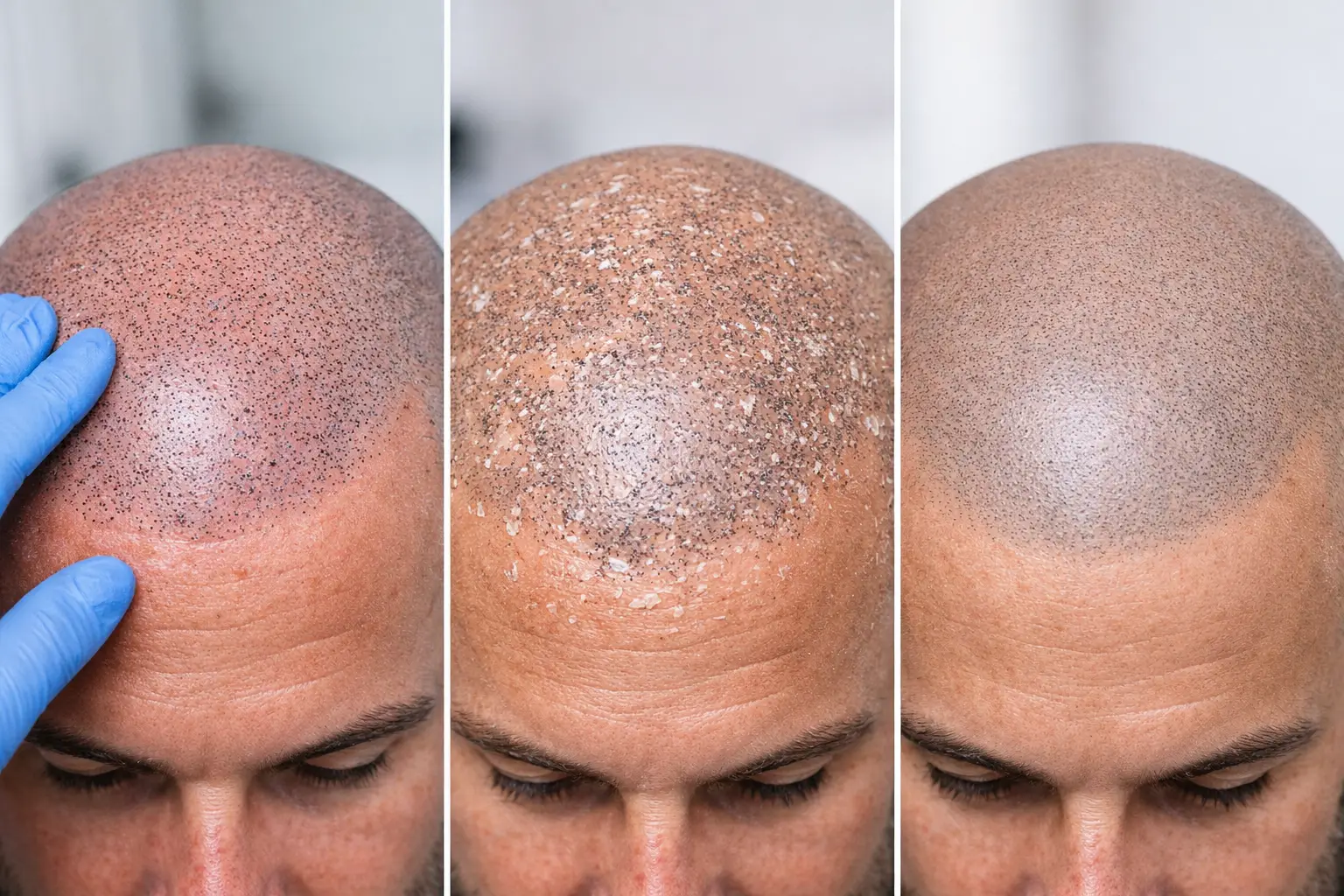
If your scalp looks darker right after treatment and then seems to fade unevenly a few days later, that usually is not a problem. It is one of the most common concerns people have about scalp micropigmentation healing stages, especially after a first session when every small change feels significant.
Scalp micropigmentation, or SMP, is a cosmetic tattoo technique that places detailed pigment impressions into the scalp to create the look of closely shaved hair or added density. The results can be striking, but they do not look fully settled on day one. Healing happens in phases, and understanding those phases helps you judge your result more accurately and avoid unnecessary worry.
What happens during scalp micropigmentation healing stages
SMP healing is not usually dramatic, but it is active. Your skin has been treated with tiny pigment deposits, and the scalp responds the same way skin does after any controlled cosmetic procedure – with mild inflammation, repair, and gradual surface renewal.
In the first 24 to 72 hours, the scalp may look darker, sharper, or more intense than expected. Some clients notice mild redness or tightness, particularly if they have sensitive skin. This early appearance is temporary. Fresh pigment often sits more visibly at the surface before the skin begins to calm down.
Around days 3 to 7, many people enter the stage that causes the most second-guessing. The scalp can start to look flaky, dry, or slightly patchy. The pigment may appear lighter in some areas, and clients sometimes worry that it has disappeared. In most cases, the healing skin is simply obscuring the true result while the outer layer renews itself.
By the second week, flaking and dryness usually settle. The scalp tends to look calmer, and the pigment starts to appear more natural and balanced. This is often the point when the treatment begins to blend better with your skin tone and hair pattern, though it is still early to judge the final result.
Between weeks 3 and 4, the pigment generally looks more stable. Any initial surface haze has cleared, and the scalp has had enough time to recover from the treatment process. If a second or third session is planned, this healing window gives your practitioner a much clearer view of pigment retention, density, and where refinement is needed.
Week-by-week expectations after SMP
Days 1 to 3
Expect the scalp to look freshly treated. The impressions may seem darker and crisper than the final outcome. Mild redness is common, especially around the hairline, and some clients feel slight tenderness when touching the area.
This stage is usually short. The most important thing here is restraint. Avoid washing the scalp too soon, sweating heavily, scratching, or exposing the area to direct sun.
Days 4 to 7
This is the phase where peeling or dryness may show up. Not everyone flakes visibly, but many do notice a dry texture or faint shedding of surface skin. The pigment can appear softer or lighter than it did right after treatment.
That change does not automatically mean poor retention. Healing skin changes the way the color reads, and SMP almost always softens as it settles. A natural result depends on that softening.
Week 2
By now, the scalp usually looks less reactive. Redness should be gone or nearly gone. The treated area may still seem a little lighter than expected, but the overall look becomes more believable and less freshly done.
For density treatments, this stage can feel especially encouraging because the pigment starts integrating with existing hair rather than sitting on top of inflamed skin. For shaved-look treatments, the hairline and frontal zone often begin to look more realistic at this point.
Weeks 3 to 4
This is when most people get a more honest read on their results. The skin barrier has largely recovered, and any temporary dryness is gone. If your treatment plan includes additional sessions, this is the stage when adjustments for density, shape, softness, and balance are made with more precision.
It is also why experienced SMP providers rarely try to make everything overly dark in one session. Layering the result over multiple appointments allows for better control and a more natural finish.
Why SMP often looks lighter after healing
A lot of clients expect SMP to stay exactly as dark as it looked on day one. That is not how healthy healing works. Fresh treatment sits in recently stimulated skin, so it appears bolder at first. Once the scalp calms and the outer skin renews, the result softens.
That softening is part of what creates realism. Hair follicles are not flat blocks of color. They are subtle, and a well-executed SMP result should settle into the scalp rather than shout from it.
There is also an individual factor. Oily skin, dry skin, sun exposure, immune response, and aftercare habits can all affect how pigment appears during healing. This is one reason consultation and treatment planning matter. Two people can receive the same technique and still heal a little differently.
Aftercare can affect the healing process
Good aftercare supports clean healing and more predictable pigment retention. It does not need to be complicated, but it does need to be followed carefully.
In the first few days, your practitioner may advise keeping the scalp dry and avoiding intense exercise. Heavy sweating can interfere with healing, and premature washing can irritate the area. You should also avoid swimming, steam rooms, and prolonged sun exposure during the early healing period.
Once you are cleared to wash the scalp, gentle care matters. Avoid aggressive scrubbing or exfoliating products. If your scalp feels dry later in the healing cycle, use only products recommended by your practitioner. A common mistake is overloading the scalp with oils or creams too soon, which can cause irritation or affect the healing environment.
Sun protection matters even after the initial recovery period. UV exposure can alter the appearance of scalp pigment over time, especially in climates with strong year-round sun. For many clients in Singapore, where heat and humidity are part of daily life, this is a practical point rather than a minor detail.
When to be patient and when to ask questions
Some variation during scalp micropigmentation healing stages is normal. Slight unevenness, temporary dullness, or areas that seem lighter before your next session are all common. SMP is typically built in layers, so the first session is often the foundation rather than the finished look.
That said, you should contact your provider if you notice unusual swelling, persistent pain, signs of infection, or irritation that seems to worsen instead of improve. Healing should trend toward calm, not escalation.
It is also reasonable to ask questions if you feel uncertain about fading or patchiness. A reputable clinic should explain what is expected at each stage and help you understand whether what you are seeing is part of normal healing or something that needs review.
Healing timelines can vary by scalp type and treatment goal
Not every SMP client heals on the same schedule. A person getting a soft density treatment around thinning hair may experience healing differently from someone having a full shaved-head style recreated. Skin sensitivity, previous scalp conditions, lifestyle, and how closely aftercare is followed all influence recovery.
Clients with oily scalps may notice a different visual progression from those with drier skin. People who exercise heavily or spend long periods outdoors may need to be especially disciplined during the first week. If you have a history of scalp irritation, psoriasis, or dermatitis, your provider should factor that into treatment timing and aftercare guidance.
This is where specialist care makes a difference. A clinic that works across hair restoration options can assess whether SMP is the right stand-alone solution or whether it should complement other services. At HairSpec, that broader perspective helps clients choose a treatment path based on the look they want, the maintenance they can commit to, and how their scalp is likely to respond.
The final result takes shape over sessions, not overnight
One of the best ways to approach SMP is to treat it as a process, not a single reveal. The first session establishes pattern and baseline density. Healing shows how your scalp retains pigment. Follow-up sessions refine the finish.
That approach may feel slower if you are eager for immediate change, but it usually leads to a better result. More control means a softer hairline, better blending, and a look that stays believable in natural light and at close distance.
If you are considering SMP, try not to judge it by the first few days alone. The early appearance is only one chapter of the process. Give your scalp time to settle, follow aftercare closely, and let the result develop with the same patience you would want from any treatment designed to look natural.