

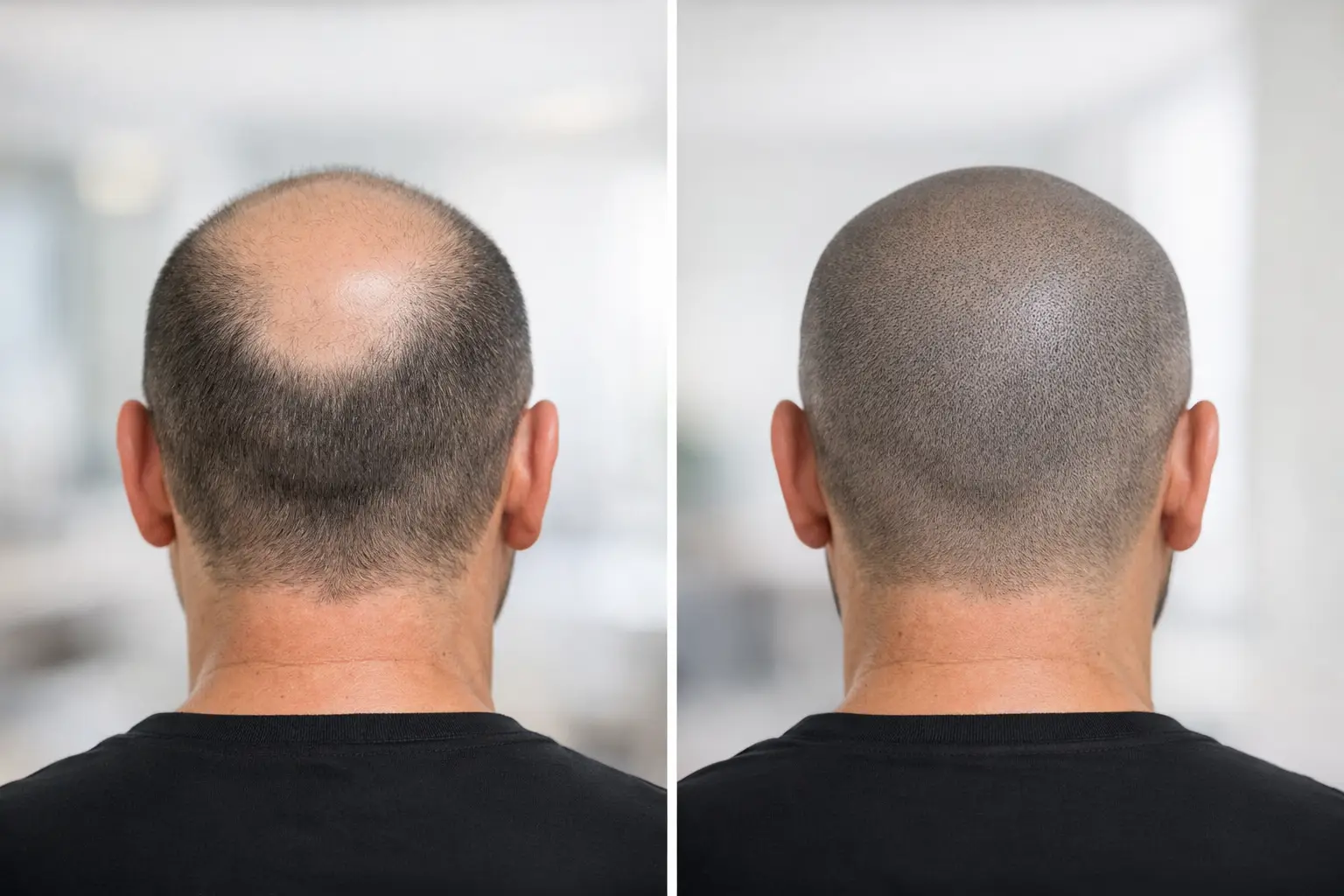
A lot of people search for scalp micropigmentation before and after photos when they are really asking a deeper question: Will this look natural on me? That is the right question to ask, because the value of scalp micropigmentation is not just in the immediate visual change. It is in how convincingly it restores the look of density, shape, and definition in everyday life.
For some, the change is subtle. A receding hairline looks cleaner and more intentional. Thinning areas appear fuller. For others, the difference is dramatic, especially when the scalp has become highly visible under bright light or from overhead angles. The best results do not look like obvious cosmetic work. They look like a stronger hairline, a more even scalp tone, and a more confident overall appearance.
What scalp micropigmentation before and after really shows
Scalp micropigmentation, often called SMP, is a non-surgical treatment that places tiny pigment impressions into the scalp to replicate the look of natural hair follicles. It does not regrow hair, and it does not replace longer strands. What it does very well is create the visual effect of density.
That distinction matters when you look at before and after results. If someone is fully bald and chooses a closely shaved style, the after result may look like a sharp, freshly buzzed head with a defined hairline. If someone still has hair but struggles with thinning, the after result can make sparse areas look less exposed by reducing the contrast between hair and scalp.
In other words, scalp micropigmentation before and after images are not all measuring the same thing. One person may be restoring the appearance of a fuller crown. Another may be rebuilding a receded temple area. Someone else may be camouflaging transplant scars or creating the illusion of a denser hairline after ongoing hair loss.
The biggest changes people notice after SMP
The first noticeable change is usually structure. Hair loss often makes the face look less framed, especially when the hairline has become irregular or the temples have receded. SMP can reintroduce that structure in a way that looks clean without appearing harsh.
The second change is balance. Thinning hair tends to create uneven visibility across the scalp. Under sunlight, office lighting, or camera flash, that contrast can become more obvious than people realize. After SMP, the scalp usually appears more uniform because the pigment softens the difference between areas of strong growth and areas of reduced density.
The third change is psychological, and it should not be overlooked. Many clients say they spend less time adjusting their hair, checking mirrors, or worrying about how their scalp looks from different angles. That kind of everyday relief is often just as meaningful as the visible cosmetic improvement.
Who gets the best scalp micropigmentation before and after results?
The strongest results usually come from matching the treatment plan to the right hair loss pattern and style goals. Men who prefer a shaved or very short hairstyle are often ideal candidates because SMP can mimic the look of natural stubble extremely well. For them, the after result can be striking and very believable.
Women with diffuse thinning can also benefit, especially when they want the scalp to appear less visible through longer hair. In these cases, the goal is not to create a shaved-head effect. It is to add the impression of density beneath existing hair so part lines and thin sections look less exposed.
People with scars from past procedures or injuries may also see meaningful improvement. SMP can reduce the visibility of linear transplant scars or patchy areas by blending them into the surrounding scalp. Results depend on scar texture, skin condition, and placement, so this is one of those situations where an in-person assessment matters.
What affects before and after results
Technique is the biggest factor. Good SMP requires precise control of pigment depth, dot size, spacing, and hairline design. If the impressions are too large, too dark, or too uniform, the result can look artificial. Natural hair follicles are not perfectly symmetrical, so realistic work should never look stamped on.
Hairline planning also has a major impact. A younger, lower, very sharp hairline may seem appealing at first, but it is not always the most natural long-term choice. A softer, age-appropriate design often looks better over time and blends more convincingly with facial features.
Skin type matters too. Oily skin, dry skin, scar tissue, and different levels of melanin can all influence how pigment settles and heals. That does not mean one skin type is unsuitable. It means the practitioner should adapt the treatment approach rather than apply the same formula to everyone.
Existing hair loss progression is another factor people sometimes miss. SMP can look excellent after treatment, but if natural hair continues thinning, the relationship between the pigment and the remaining hair may change. That is why some clients combine SMP with other hair loss strategies, depending on the cause and stage of loss.
What to expect right after treatment and after healing
The immediate after result is not always the final result. Right after a session, the pigment usually looks darker and more defined. Over the next several days, the scalp heals and the impressions soften. This is normal.
Most SMP treatments are completed over multiple sessions rather than one appointment. That layered approach allows the practitioner to build density gradually, refine the hairline, and adjust the tone for a more natural finish. It also gives clients time to see how the scalp responds before adding more depth.
The healed result is what matters most. A proper scalp micropigmentation before and after comparison should show improvement not only on day one, but after the skin has settled. Good SMP still looks balanced in daylight, under indoor lighting, and from close conversational distance.
Natural-looking results depend on restraint
One of the most common concerns is whether SMP will look too obvious. That concern is valid. Like any appearance-based treatment, success often comes from restraint rather than excess.
A natural result usually means the pigment color is carefully matched, the density is built progressively, and the hairline suits the individual instead of following a trend. It also means respecting the limits of the treatment. SMP is excellent at creating the illusion of density, but it is not meant to imitate long strands or replace every aspect of a full head of hair.
This is where experienced consultation makes a difference. The right plan should account for your haircut preferences, skin condition, age, facial structure, and how much maintenance you are comfortable with. At HairSpec, that personalized approach matters because the best cosmetic result is the one that still feels right months later, not just immediately after the procedure.
Before and after photos can help, but they do not tell the whole story
Photos are useful for understanding style options and realistic outcomes, but they have limits. Lighting, camera angles, and haircut length can all influence how dramatic a result appears. A trustworthy consultation should explain what those photos mean in practical terms for your own scalp and hair pattern.
It also helps to ask the right questions. Was the photo taken right after a session or after healing? Is the client wearing their hair the same way before and after? Are you looking at density enhancement, hairline restoration, or scar camouflage? Those details matter because they change what success looks like.
Is scalp micropigmentation worth it?
For the right person, yes. SMP can deliver a major visual improvement without surgery, downtime, or the daily effort that some cosmetic cover-up methods require. It is especially appealing for people who want a low-maintenance solution that looks polished and intentional.
That said, it is not a one-size-fits-all answer. If you want longer hair volume, another treatment may be more suitable. If your hair loss is actively progressing, you may need a broader plan. If your expectations are based on heavily filtered images, a professional assessment can help reset them to something more realistic and more useful.
The best scalp micropigmentation before and after results are not the ones that look most dramatic online. They are the ones that hold up in real life – at work, in daylight, in photos, and in the moments when you stop thinking about your hair altogether. If that is the kind of change you are looking for, a tailored consultation is the smartest place to start.