

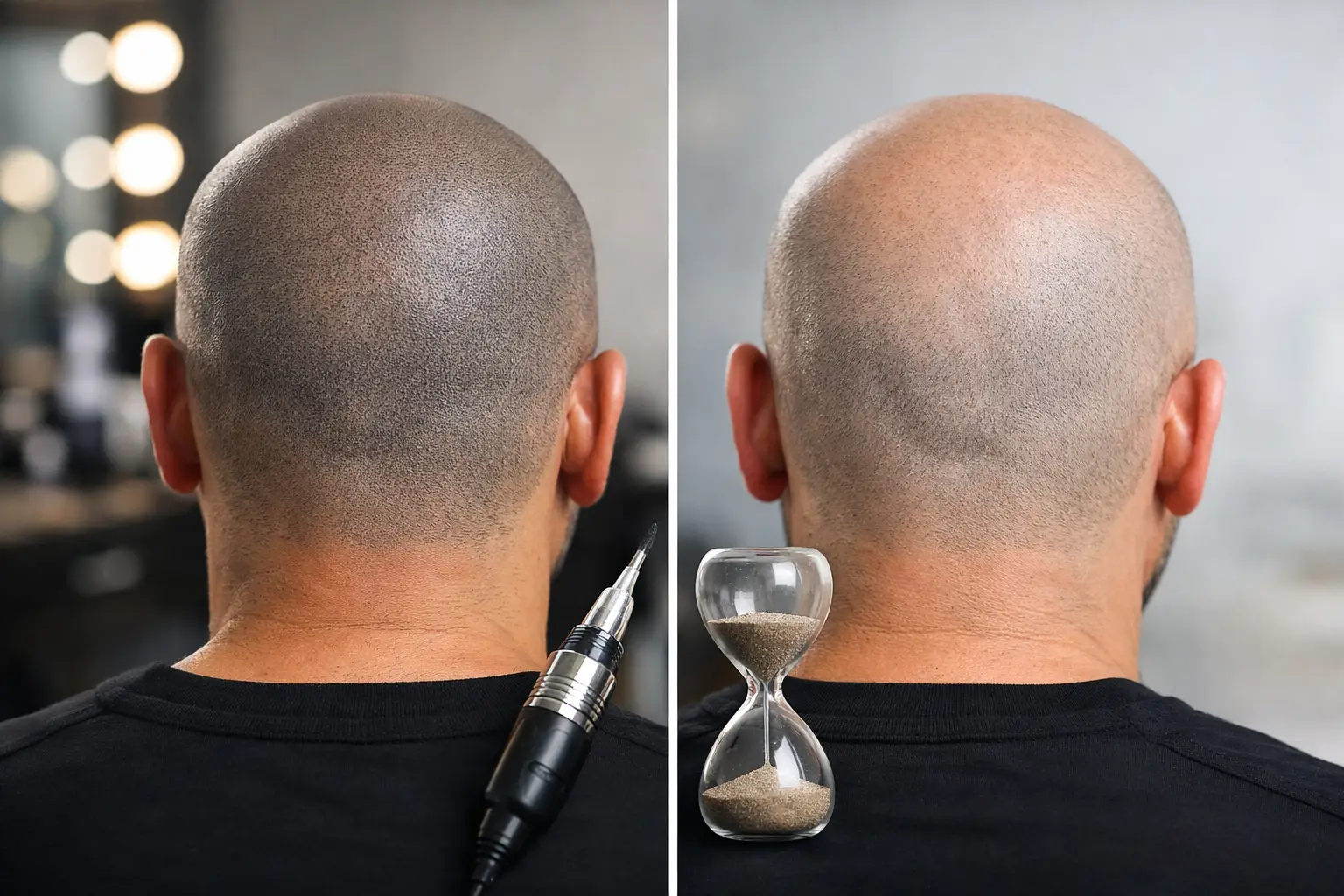
If you are considering scalp micropigmentation, one of the first questions you will probably ask is this: does scalp micropigmentation fade? The honest answer is yes – but that is not necessarily a bad thing. In fact, well-performed SMP is designed to soften gradually over time rather than stay harsh, blue, or unnatural.
That distinction matters. People looking for a realistic hairline or fuller-looking density usually want a result that ages naturally with their skin, style, and preferences. Fading is part of the long-term behavior of the treatment, but the speed and degree of fading depend on several factors, including pigment choice, skin type, sun exposure, aftercare, and the experience of the provider.
Does scalp micropigmentation fade naturally?
Yes, scalp micropigmentation fades naturally over the years. SMP is not the same as a traditional body tattoo, even though both involve placing pigment into the skin. The technique, pigment formulation, depth, and aesthetic goal are different.
With SMP, the aim is to create the look of tiny hair follicles or add the appearance of density in thinning areas. Because the treatment is performed more superficially and with a softer cosmetic outcome in mind, the pigment will gradually lighten. A good SMP result should fade evenly and remain believable, not turn into a block of color.
For many clients, this is actually reassuring. It means you are not locked into a rigid look forever. If you prefer to adjust your hairline, keep your style softer, or refresh certain areas later, touch-ups can be planned around how your scalp and appearance change over time.
How long does SMP usually last?
Most people can expect scalp micropigmentation to hold its appearance for several years before a refresh is needed. A common range is about four to six years before noticeable fading prompts a touch-up, although some people come in sooner and others later.
There is no single timeline that fits everyone. Oily skin may break down pigment faster than drier skin. Frequent sun exposure can also accelerate fading. If you exfoliate the scalp often, use active skincare ingredients near the hairline, or spend a lot of time outdoors in Singapore’s strong UV conditions, your results may soften earlier.
On the other hand, careful aftercare and good sun protection can help preserve the crispness and contrast of the treatment for longer.
What makes scalp micropigmentation fade faster?
When clients ask does scalp micropigmentation fade, what they usually want to know is whether it will fade too fast or look patchy. In most cases, noticeable early fading comes down to a mix of skin behavior, lifestyle, and treatment quality.
Sun exposure is one of the biggest factors. UV light breaks down pigment over time, and the scalp is often more exposed than people realize, especially with shaved styles or thinning hair. Regular sun protection makes a real difference.
Skin type also matters. Oily skin can cause impressions to heal softer and may require a different approach during treatment. The same is true for people with larger pores, heavy sweating, or certain scalp conditions.
Aftercare plays a role too. Picking at the scalp, washing too aggressively during healing, or returning to intense exercise too soon can interfere with pigment retention. Even after the healing phase, harsh exfoliants and frequent chemical irritation may shorten the lifespan of the result.
Then there is technique. If pigment is implanted too deeply, the result can blur rather than fade attractively. If it is placed too lightly or inconsistently, it may disappear faster than expected. This is why provider experience is not a small detail – it directly affects how natural the treatment looks over time.
Good fading vs bad fading
Not all fading is the same. This is where expert assessment becomes especially important.
Good fading is gradual, soft, and even. The follicle impressions become lighter, but the overall look still makes sense. The hairline remains natural, and the scalp does not develop obvious color shifts.
Bad fading tends to show up as uneven loss of definition, patchiness, blurring, or an unnatural tone. Sometimes this happens because poor-quality pigment was used. Sometimes the issue is incorrect depth or spacing. In other cases, the original design was too hard or too dark for the client’s skin tone and age progression.
A well-planned treatment takes future fading into account from the beginning. That means choosing a conservative hairline, using the right shade, and building density gradually across multiple sessions rather than forcing an overly dark result too early.
Will scalp micropigmentation turn blue or green?
This is another common concern, and it is understandable. Many people have seen old tattoos shift in color over time and worry SMP will do the same.
Modern scalp micropigmentation, when performed correctly with appropriate pigments, should not age like a traditional tattoo. High-quality SMP is designed to heal into a natural-looking charcoal or soft shadow effect that matches the appearance of shaved follicles or denser roots.
That said, poor technique and unsuitable pigment can create unwanted color changes. If the provider uses traditional tattoo ink, implants too deeply, or goes too dark, the result may age poorly. This is one reason consultation and practitioner selection matter so much. The goal is not just a result that looks good next month, but one that still looks credible years later.
Can you prevent scalp micropigmentation from fading?
You cannot stop fading completely, but you can slow it down.
The most effective step is protecting your scalp from the sun. If your scalp is exposed, daily SPF or physical coverage such as a cap can help preserve the treatment. This is especially relevant in a warm, sunny climate where UV exposure is part of everyday life.
Following aftercare closely during healing also improves retention. That includes keeping the scalp clean, avoiding scratching, limiting sweat and friction in the first days, and waiting until the skin has settled before resuming certain products or routines.
Long-term scalp health matters as well. If you deal with dandruff, inflammation, sensitivity, or excess oil, those issues should be managed properly. Healthy skin tends to hold cosmetic treatments more predictably.
When should you get a touch-up?
A touch-up is usually appropriate when the result has softened enough that you notice reduced definition or density, but before it becomes a major correction issue. For some people, that may be around the three-year mark. For others, it may be later.
There is an advantage to maintaining SMP with light refresh sessions rather than waiting for a dramatic fade. Small touch-ups tend to be more controlled and more natural-looking. They allow the practitioner to reinforce the original pattern without overloading the scalp.
This is also a good time to reassess your look. Some clients want the same hairline restored. Others prefer a slightly softer edge or a different density balance as their facial features, age, or hair loss pattern changes.
Is fading different for hairline work and density work?
Yes, sometimes it is. Hairline-focused SMP on a shaved scalp can show fading differently because the treatment is more visible and relies on precise contrast. If the scalp is fully exposed every day, UV and skincare habits may have a bigger effect.
Density SMP, which is used to reduce contrast between the scalp and existing hair, can be a little more forgiving visually. Because natural hair helps blend the result, gradual fading may be less obvious at first. Still, the treatment should be monitored, especially if ongoing hair loss changes the surrounding area.
This is why a personalized plan matters. Someone with advanced baldness, diffuse thinning, scarring, or active hair loss may need a different strategy for maintenance.
Why consultation matters before treatment
The best answer to does scalp micropigmentation fade is not just yes or no. It depends on who performs it, how your skin heals, and whether the treatment was designed for long-term realism.
A proper consultation should cover your hair loss pattern, scalp condition, medical history, daily routine, and appearance goals. It should also include a realistic conversation about maintenance. SMP is low maintenance compared with many alternatives, but it is not a one-time decision that never needs attention again.
At HairSpec, this is why the planning stage matters as much as the procedure itself. A natural result starts with choosing the right treatment approach for the individual, not simply applying the same pattern to everyone.
Scalp micropigmentation does fade, but that does not make it temporary in a disappointing way. It makes it adaptable. When done well, it gives you a realistic look now and the flexibility to refresh it later, on your terms. If you are considering SMP, the right next step is not guessing how it might age – it is getting a professional assessment that maps out how it can age well.