

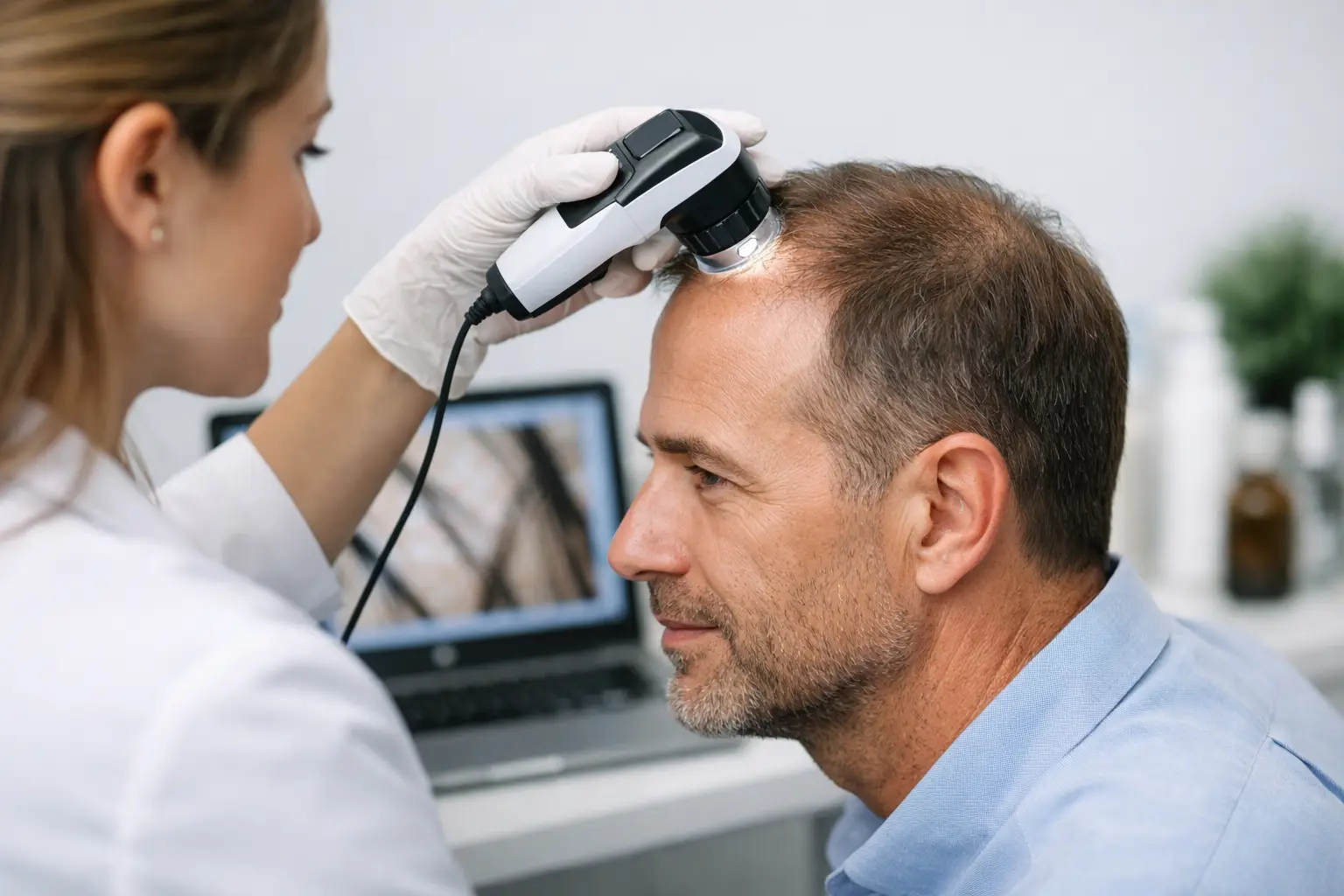
Hair thinning rarely starts with a dramatic moment. More often, it shows up in small ways – more strands on your pillow, a widening part, less coverage under bright office lighting, or a hairstyle that suddenly stops sitting the way it used to. That is exactly why a free scalp assessment for hair loss can be so useful. It gives you a clearer picture of what is happening before you spend time, money, or energy on the wrong solution.
For many people, the hardest part is not the treatment itself. It is figuring out where to start. Hair loss can be caused by genetics, stress, hormonal shifts, medical conditions, scalp issues, styling habits, or a mix of several factors. When the cause is unclear, buying random products or chasing trends often leads to frustration. A professional assessment helps replace guesswork with direction.
What a free scalp assessment for hair loss actually does
A proper scalp assessment is not just someone glancing at your hair and making a quick recommendation. It is the first step in understanding the condition of your scalp, the pattern of thinning, and the likely reasons behind it. That matters because hair loss is not one single problem with one single answer.
In a specialist setting, the assessment usually focuses on visible scalp health, follicle activity, density changes, and the way hair loss is progressing. You may also be asked about family history, recent stress, pregnancy, menopause, illness, medication, or changes in diet and sleep. These details can shape what happens next.
This is where many people realize an important truth. Hair loss treatment is rarely about choosing the most advanced option. It is about choosing the most suitable one. Someone with early-stage thinning may do well with non-invasive support, while someone with significant loss may be better served by scalp micropigmentation, hair replacement, or transplant planning. The assessment helps separate those paths.
Why starting with assessment saves time and money
People often come in after trying shampoos, supplements, oils, or social media advice that promised fuller hair in a few weeks. Sometimes those products are harmless. Sometimes they are simply not relevant to the actual cause. If the scalp is inflamed, if shedding is linked to hormonal changes, or if follicles have already become inactive in certain areas, a generic product can only do so much.
Starting with an assessment can prevent that cycle. Instead of buying five different products and hoping one works, you get a professional view of your current condition and what is realistically possible. That can save money, but more importantly, it can save months of delay.
There is also an emotional benefit. Hair loss often affects confidence in quiet ways. People change how they style their hair, avoid bright lighting, or become overly aware of photos and close conversations. A consultation gives that concern a place to be taken seriously, without pressure to make a rushed decision.
What to expect during a free scalp assessment for hair loss
Most first-time clients want to know whether the appointment will feel clinical, sales-driven, or uncomfortable. In a well-run specialist environment, it should feel none of those things. It should feel informative, private, and tailored to you.
The process usually starts with a conversation about what you have noticed and how long it has been happening. From there, the specialist may examine your scalp closely, check the distribution of thinning, and look for signs such as excess oil, dryness, irritation, miniaturized hairs, or patchy loss. If your concerns are connected to styling damage or tension, that may also become obvious during the review.
The next part is interpretation. This is where the appointment becomes valuable. A specialist can explain whether your concern looks like pattern hair loss, temporary shedding, density reduction, scalp-related hair loss, or a condition that should be medically investigated further. Sometimes the best recommendation is treatment. Sometimes it is monitoring. Sometimes it is referral. Honest guidance matters.
Not every hair loss case needs the same solution
One reason assessments matter so much is that the right answer can look very different from person to person. A working professional with early thinning at the crown may want low-commitment treatment and gradual improvement. Someone dealing with visible frontal recession may want a stronger cosmetic result faster. A person experiencing hair loss after a medical event may need a gentle, confidence-restoring option rather than a long treatment plan.
That is why a full-spectrum provider tends to be more helpful than a business built around one service only. If every consultation leads to the same recommendation, the consultation is not really personal. When multiple pathways are available, the advice can be based on suitability rather than limitation.
Depending on the findings, options may include low level laser therapy, mesotherapy, scalp micropigmentation, non-surgical hair replacement, medical wigs, hair integration solutions, or hair transplant planning. Some clients benefit from combining approaches. For example, treatment may support existing hair while cosmetic enhancement improves visible density immediately.
The trade-offs to understand before choosing a treatment
A good consultation should not make every option sound perfect. Each approach has strengths, limitations, and lifestyle considerations.
Treatment-based options may support hair retention and improve scalp condition, but they usually require consistency and patience. Cosmetic solutions can create immediate visual change, but maintenance and personal styling preferences matter. Hair transplants can deliver lasting results for the right candidate, but they are not appropriate for everyone and still depend on donor hair quality, scalp condition, and expectations.
This is where expert guidance becomes especially valuable. The right plan is not only about what can be done. It is about what fits your comfort level, budget, timeline, and daily routine. A discreet, natural-looking result often comes from making a smart decision early, not the most aggressive one.
Who should book a scalp assessment sooner rather than later
If you have been seeing more shedding for a few weeks, you may be tempted to wait and see. Sometimes that is reasonable. Temporary shedding can happen after stress, illness, travel, or major hormonal change. But if the shedding continues, the scalp becomes visible, or your hair texture and density are clearly shifting, it is worth getting checked.
The same applies if you have a family history of hair loss, notice a widening part, thinning at the crown, a receding hairline, or patchy areas that were not there before. Early action can expand your options. Once follicles stop producing hair for a prolonged period, treatment choices may become more limited.
Even if your concern is mainly cosmetic, an assessment still helps. Many clients are not asking, “Why am I going bald?” They are asking, “What can make my hair look fuller again in a way that feels natural?” That is a valid goal, and it deserves a professional answer.
Why privacy and comfort matter in hair loss care
Hair loss is personal. For many adults, especially those balancing work, family, and social life, the idea of discussing it publicly feels uncomfortable. That is one reason consultation-led specialist care matters. The setting should allow you to ask practical questions, discuss appearance goals honestly, and explore options without embarrassment.
A modern provider understands that people are not only looking for a diagnosis. They are looking for reassurance, clarity, and a treatment path that respects their lifestyle. That includes realistic advice, natural-looking outcomes, and enough flexibility to decide at their own pace.
At HairSpec, that approach is central to the consultation experience. The goal is not to push one fix. It is to help clients understand their hair and scalp condition, then recommend the option that makes the most sense for their stage of loss and desired result.
The real value of a first assessment
The strongest reason to book is simple: clarity changes everything. Once you know whether you are dealing with early thinning, progressive pattern loss, scalp-related issues, or a cosmetic density concern, the next step becomes much easier. You can stop guessing, stop comparing yourself to someone else’s situation, and start focusing on what is realistic for your own hair.
A free scalp assessment for hair loss is not a commitment to treatment. It is a chance to get informed before making one. And when hair loss is affecting how you look, feel, or present yourself each day, getting that clarity early is often the most useful step you can take.
If your hair has been changing and you have been putting off answers, this is a practical place to begin – private, informed, and centered on what will actually work for you.