

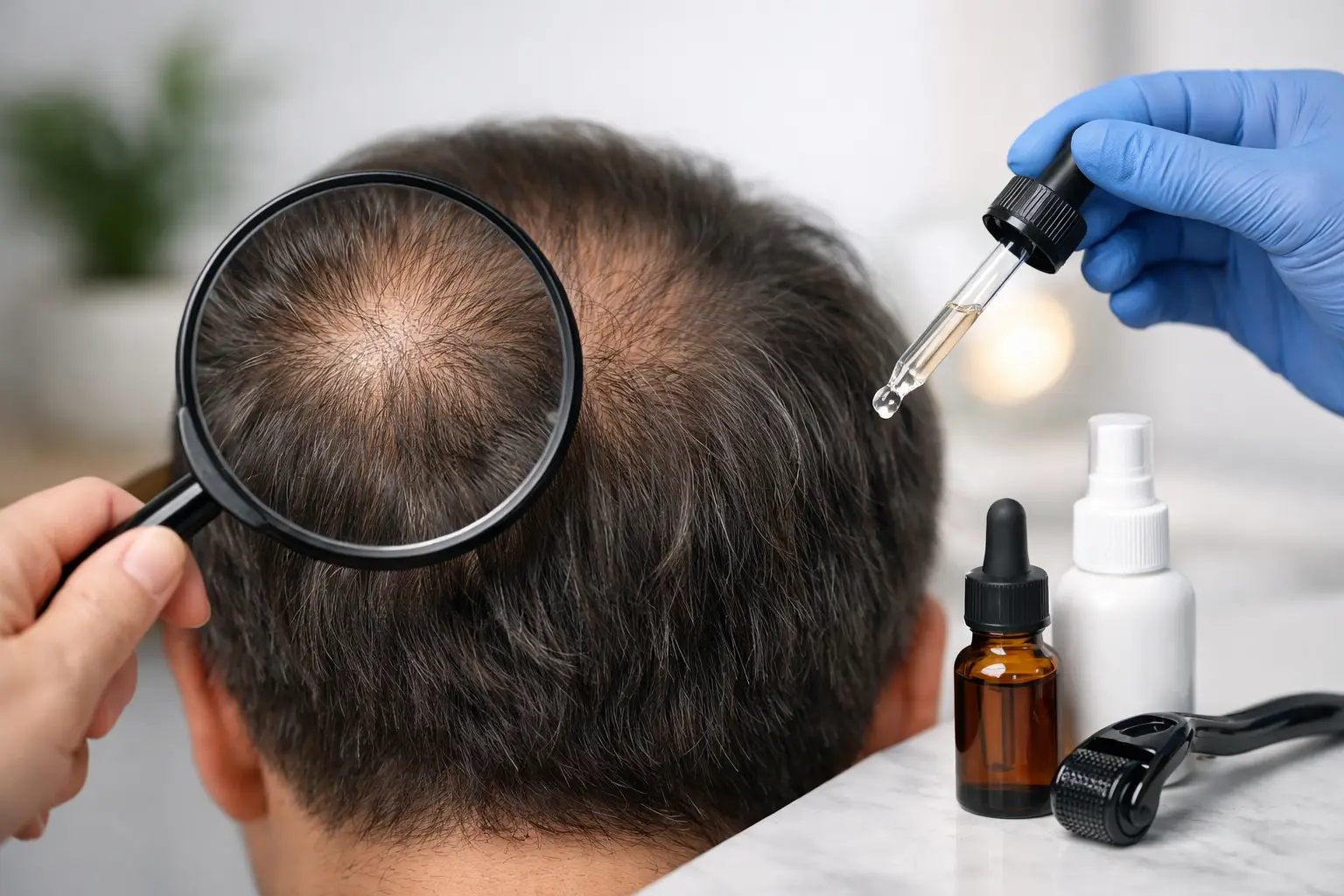
You usually notice thinning hair in ordinary moments, not dramatic ones. A wider part, more scalp under bright office lighting, a ponytail that feels smaller, or a hairline that looks slightly different in photos. When that change starts to affect how you style your hair, your confidence, or how much time you spend trying to cover sparse areas, the question becomes very practical: what is the best treatment for thinning hair?
The honest answer is that the best treatment depends on why your hair is thinning, how advanced it is, and what kind of result you want. Some people want to slow shedding and support regrowth. Others want immediate density, better scalp coverage, or a natural-looking cosmetic solution while they explore longer-term care. The right path is rarely one-size-fits-all, which is why specialist assessment matters.
What is the best treatment for thinning hair?
If you are looking for a single universal answer, there is not one. The best treatment for thinning hair is the option that matches the cause of your hair loss and your expectations for speed, maintenance, and appearance.
For early-stage thinning, non-invasive treatments that support scalp health and stimulate weakened follicles can be a strong starting point. For more visible density loss, combination care often works better than relying on one method alone. And for people who want immediate cosmetic improvement, non-surgical hair replacement or scalp micropigmentation may provide the most satisfying result, especially when regrowth is limited or unpredictable.
This is where many people lose time and money. They try random products, follow generic advice, and wait too long to get a proper scalp evaluation. Thinning hair can be caused by androgenetic hair loss, stress, hormonal shifts, medical conditions, nutritional issues, traction, postpartum changes, or age-related miniaturization. The treatment only makes sense once the pattern is clear.
Why the cause of thinning hair changes the treatment
Not all thinning looks the same, and it should not be treated the same way. Diffuse thinning across the scalp calls for a different strategy than recession at the temples or patchy loss from medical treatment. Even when two people have similar visible thinning, one may still have active follicles that can be strengthened, while the other may need a cosmetic density solution because the loss is more advanced.
That distinction matters because expectations need to be realistic. Some treatments are designed to preserve and improve existing hair. Others are designed to restore the appearance of fullness, even when natural regrowth is no longer likely. Neither approach is better in every case. The best choice is the one that gives you a result you can actually live with.
A professional scalp assessment can help identify whether your follicles are miniaturized, dormant, inflamed, or no longer producing meaningful growth. That information often saves months of trial and error.
Best treatment for thinning hair in the early stages
When thinning is mild to moderate, the goal is usually to protect what you still have and improve the quality of existing growth. This is often the stage where low level laser therapy, mesotherapy, and targeted scalp care can play a useful role.
Low level laser therapy is a non-invasive option that uses light energy to support follicle activity and circulation. It is popular because it does not require downtime, and for suitable candidates it can help strengthen weak follicles over time. The trade-off is patience. Results are gradual, and consistency matters.
Mesotherapy is another option often considered for thinning hair. It involves delivering active ingredients into the scalp to support hair health and follicle function. For some clients, this can be a valuable part of a broader plan, especially when the scalp environment needs improvement. It is not magic, and it works best when paired with a clear diagnosis rather than used as a catch-all fix.
Hair spa and scalp-focused treatments can also help when buildup, irritation, or poor scalp condition is contributing to weaker hair. These are supportive treatments, not stand-alone cures for pattern hair loss, but they can improve the scalp environment and make other therapies more effective.
When visible thinning needs more than regrowth support
There is a point where “wait and see” becomes frustrating. If your crown is clearly visible, your part has widened significantly, or your hairline no longer frames your face the way it used to, you may need more than follicle stimulation.
This is where non-surgical hair replacement becomes one of the most practical answers. For many men and women, it offers what medical or regenerative options cannot promise quickly: immediate, natural-looking density. Modern systems are far more refined than the outdated ideas many people still have. Done well, they can look seamless, feel comfortable, and give you control over style, coverage, and maintenance.
Nanospec hair replacement is an example of a more advanced non-surgical approach designed for realism and comfort. This kind of solution can be especially valuable for clients who want privacy, predictable results, and no recovery period. If the emotional toll of thinning hair is high, getting an immediate improvement in appearance can be just as meaningful as treating the condition itself.
That does not mean non-surgical replacement is the right answer for everyone. It requires upkeep, and some clients prefer to focus on preserving biological hair for as long as possible. But for those who want a reliable cosmetic outcome now, it can be one of the best options available.
Where scalp micropigmentation fits in
Scalp micropigmentation is often overlooked in conversations about thinning hair, but it can be extremely effective in the right case. It works by creating the visual effect of greater density or a closely shaved look through precise pigment placement on the scalp.
For men with pattern thinning, it can reduce the contrast between hair and scalp, making sparse areas far less noticeable. For women with diffuse thinning, it can help make the part line appear denser. It can also complement a hair transplant or non-surgical hair replacement plan.
The advantage is that the result is immediate and low maintenance compared with some other approaches. The limitation is that it does not create actual hair. It improves appearance, not growth. For many clients, that distinction is perfectly acceptable because looking better is the priority.
Is a hair transplant the best treatment for thinning hair?
Sometimes it is. Sometimes it is not.
A hair transplant can be an excellent option for suitable candidates with stable donor hair and realistic expectations. It is often considered for pattern baldness, receding hairlines, or more defined areas of loss where transplanted follicles can create lasting coverage.
But a transplant is not ideal for everyone with thinning hair. Diffuse thinning can be more complex, especially if the donor area is weak or the loss pattern is still progressing quickly. It also involves cost, healing time, and a longer road to visible growth. If you want immediate density for a major event or a confidence boost right away, transplant surgery may not match your timeline.
This is why the best providers do not push a transplant as the default. They look at scalp condition, donor quality, progression of loss, and whether a non-surgical or combination approach may serve you better first.
Why combination treatment often works best
The most effective plan for thinning hair often combines restoration and appearance-based solutions. A person might use low level laser therapy or mesotherapy to support existing follicles while also choosing scalp micropigmentation to reduce visible scalp show-through. Another might wear a custom hair system while addressing the underlying condition with specialist care.
This approach is practical because thinning hair usually has more than one dimension. There is the biological issue, and then there is the day-to-day reality of how you want to look and feel right now. A modern hair specialist should be able to address both.
That full-spectrum approach is especially helpful for adults who want discretion, personalized guidance, and natural-looking results rather than a generic treatment pitch. At HairSpec, this is exactly why consultation-led care matters. The best outcome often comes from matching the right technology, aesthetic solution, and treatment timeline to the individual in front of you.
How to choose the right next step
If you are comparing treatments, ask a few straightforward questions. Is your goal to slow thinning, regrow hair, improve scalp coverage, or get immediate fullness? How much maintenance are you comfortable with? Do you want a medical, non-invasive, cosmetic, or mixed solution? And are you choosing based on your actual scalp condition, or just on what you saw advertised online?
Those answers usually narrow the field quickly. People with early thinning may do very well with non-invasive therapies and close monitoring. People with advanced thinning may be happier with a cosmetic solution that delivers instant improvement. Others are best served by combining both.
The most helpful step is not buying another product. It is getting a professional assessment from a specialist who offers more than one type of answer. When the clinic only provides a single service, every problem starts to look like it needs that service.
Thinning hair can feel deeply personal, but the path forward does not have to be confusing. The right treatment should fit your scalp, your lifestyle, and your expectations, and when it does, progress starts to feel much more possible.