

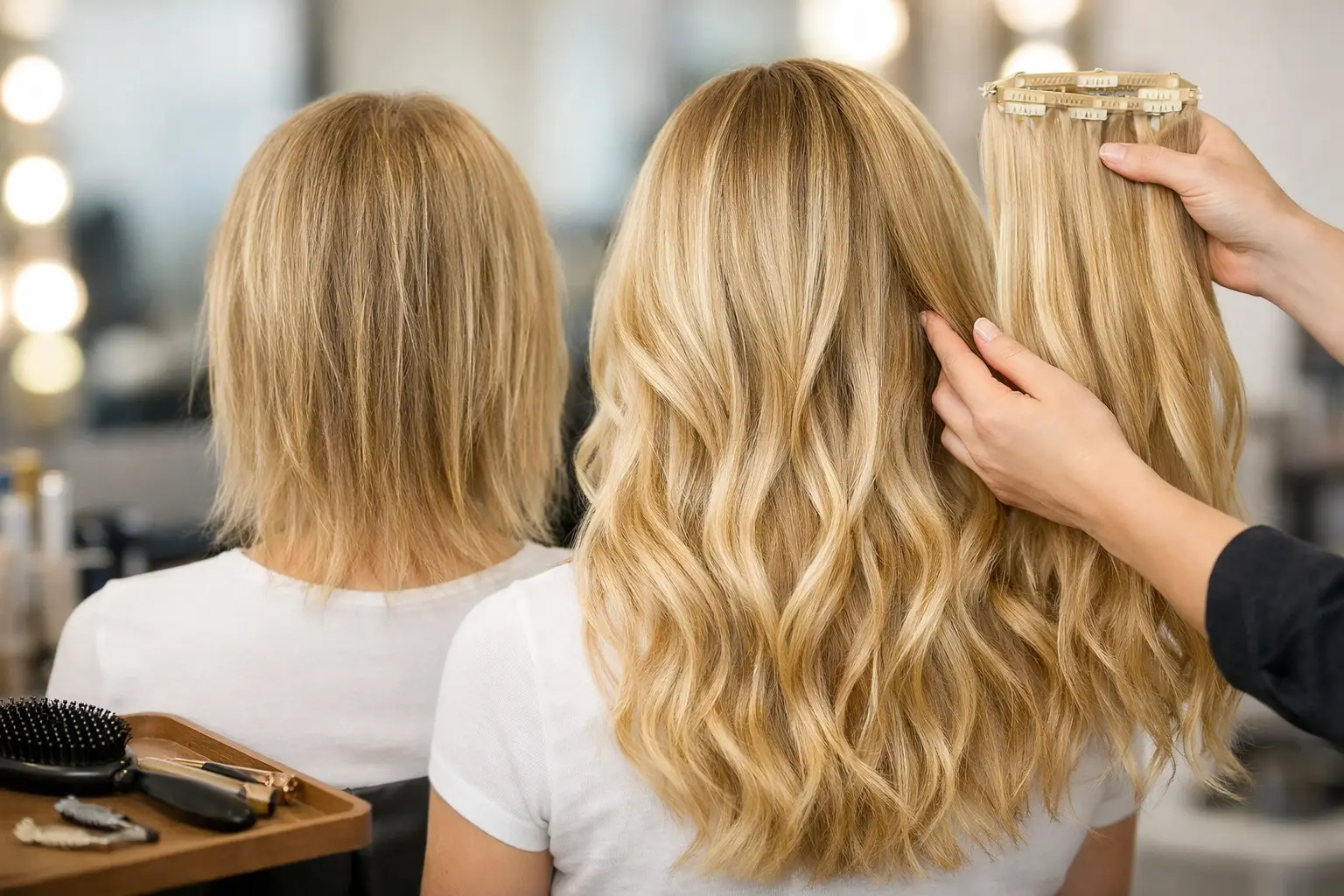
If you have thin hair, you already know the frustration of styles that look full in photos but fall flat in real life. So, are hair extensions good for thin hair? The honest answer is yes – sometimes. The better answer is that it depends on why your hair is thin, how fragile it is, and which extension method you choose.
For some people, extensions can add the density they have been missing for years and make styling much easier. For others, the wrong method can place too much tension on delicate strands and make thinning more noticeable over time. That is why thin hair should never be treated like a standard extension case.
Are hair extensions good for thin hair, really?
They can be, but only when the application is tailored to low-density hair. Thin hair usually has less coverage, weaker anchor points, and less ability to hide bonds, tapes, or wefts. What looks natural and secure on medium-density hair may feel heavy and obvious on finer strands.
This is where professional assessment matters. Thin hair is not one single category. Some people have naturally fine hair but plenty of it. Others have visible scalp show-through, active shedding, pattern hair loss, or thinning caused by stress, hormones, medication, or medical treatment. Those differences change what is safe.
If your hair is thin but otherwise healthy, carefully selected extensions may work very well. If your hair is actively falling out, breaking easily, or showing scalp sensitivity, extensions may need to be postponed or replaced with a lighter solution.
When extensions can help thin hair look fuller
The main benefit is visual density. Extensions can fill out sparse ends, create the look of thicker ponytails, and help hair appear more balanced from root to tip. This matters because many people with thinning hair do not just want extra length. They want fullness where their natural hair looks wispy.
The right extensions can also make day-to-day styling less stressful. Thin hair often struggles to hold volume, and many clients compensate with teasing, hot tools, and styling products that still do not create the look they want. Added density can reduce that daily effort and help hairstyles sit better.
There is also an emotional benefit that should not be overlooked. Hair thinning can affect confidence at work, socially, and in photos. A good hair solution is not only about appearance. It is about feeling comfortable and like yourself again.
When hair extensions are not the best choice
Extensions should be approached carefully if you have active hair loss or a sensitive scalp. If the hair is shedding heavily, the scalp is inflamed, or the strands are too weak to support attachment points, even a lightweight method may add too much stress.
This is especially true for traction-related issues. Thin hair is more vulnerable to pulling, and any method that creates continuous tension can increase breakage or worsen thinning around the attachment area. If you already notice tenderness, hairline weakness, or miniaturized hairs, caution is essential.
In these cases, it may be better to treat the scalp and hair first, or consider alternatives such as hair toppers, non-surgical hair replacement, scalp micropigmentation, or medical-grade support depending on the cause of the thinning. For many people, the best cosmetic result comes from combining aesthetic enhancement with actual hair restoration planning.
The best types of extensions for thin hair
Not all extension methods are equal, especially for finer hair.
Clip-ins can work well for occasional wear because they are not attached full time. They give flexibility and can be removed at the end of the day. The downside is that thin hair may not hide the clips easily, and repeated clipping in the same area can still stress fragile sections.
Tape-in extensions are often considered a better option for thin hair because they lie relatively flat and can distribute weight more evenly than some other methods. However, they still need enough healthy hair to support them, and poor placement can make them visible.
Hand-tied or lightweight wefts may be suitable in some cases, but only when the base hair is strong enough. On very low-density hair, they can feel bulky or expose the attachment row.
Fusion or bonded methods are usually more technique-sensitive on thin hair. If the bonds are too large or too heavy, they can create strain on a small amount of natural hair. They can look beautiful in the right hands, but they are not automatically the safest choice for every thinning pattern.
Halo-style extensions can be a good cosmetic option for some people because they do not rely on attaching to your natural hair strand by strand. They are not ideal for everyone, but they can be useful when the goal is occasional fullness with minimal stress.
The best method is usually the lightest one that gives enough coverage without asking too much from the natural hair.
What makes extensions look natural on thin hair
Density matching matters more than length. If someone with very fine hair chooses extensions that are too thick, the result can look disconnected – light at the top and heavy at the bottom. A natural result comes from blending the extension density with your existing hair, not overwhelming it.
Color matching is also critical. Thin hair reflects more scalp, so any mismatch can stand out quickly. The same goes for bond placement. Extensions for thin hair need strategic positioning so the attachments stay hidden when the hair moves, parts, or is tied back.
Cutting and blending should never be an afterthought. Even premium extensions can look obvious if they are installed correctly but finished poorly. A soft, customized shape usually works better than blunt length on finer hair.
How to know if your hair is strong enough
The biggest mistake people make is judging suitability by how much hair they want, not by how much hair they have to support it. Thin hair can still be healthy, but the signs of weakness are usually easy to spot. If your hair snaps easily, tangles excessively, feels gummy when wet, or leaves large amounts in the shower, it needs assessment before any extension service.
Scalp condition matters too. Oil imbalance, flaking, inflammation, and tenderness can all affect comfort and retention. If thinning is concentrated at the crown, hairline, or temples, a standard extension method may not address the real cosmetic concern.
This is why specialist consultation is so valuable. A proper assessment looks at strand strength, scalp health, thinning pattern, lifestyle, and styling habits before recommending any solution. At HairSpec, that kind of individualized approach is especially important because some clients need extensions, while others are better candidates for hair replacement, treatment, or a combination plan.
How to wear extensions safely if you have thin hair
A lighter install is usually a better install. That means fewer pieces, smaller sections, and realistic expectations about volume. Trying to create dramatic thickness on very fine hair often backfires because it increases strain and makes the extensions harder to conceal.
Maintenance also matters. Thin hair should not be left too long between appointments, because grown-out attachments can shift tension and create tangling. Gentle brushing, proper washing technique, and sleeping with the hair secured all help reduce stress.
It is also wise to give the hair breaks when needed. Continuous wear without monitoring can lead to preventable damage. If your scalp starts to feel sore or the hair begins to break around the attachment points, that is a sign to stop and reassess.
A better question than are hair extensions good for thin hair
The better question is whether they are good for your thin hair. That answer depends on your hair density, scalp health, and long-term goals.
If you want occasional fullness and your hair is stable, extensions may be an excellent option. If your thinning is progressive or medically related, a more protective solution may give you a better result with less risk. The right plan should improve how your hair looks without compromising what is already fragile.
Fuller-looking hair should never come at the cost of your natural hair health. The safest path is not the trendiest method or the fastest fix. It is the one designed around your scalp, your hair condition, and the result you want to live with comfortably every day.