

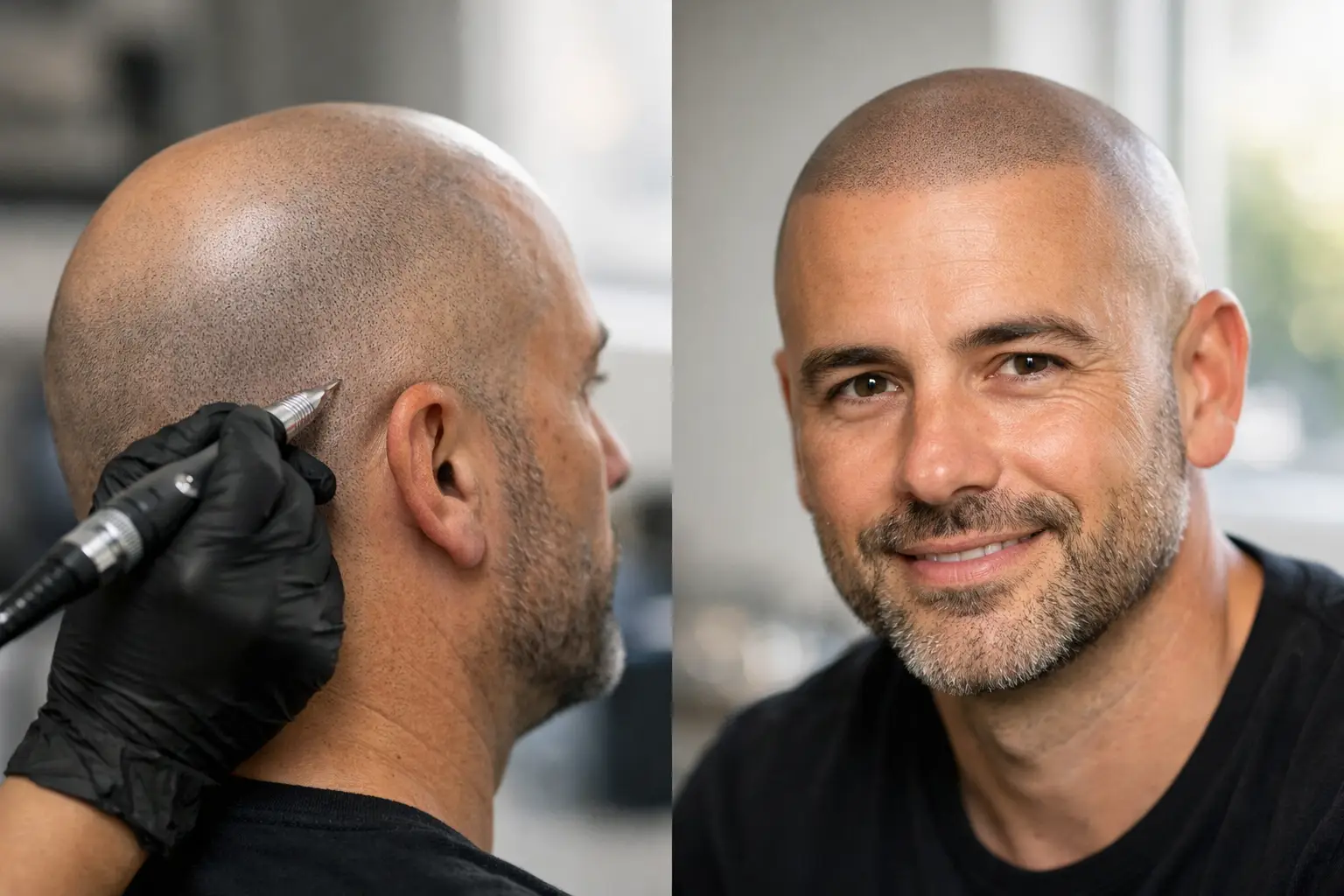
A natural result is not about making the scalp look darker. It is about recreating the visual cues of real hair follicles: soft density, subtle variation, and a hairline that belongs to the person wearing it. That is how scalp micropigmentation looks natural when it is planned and performed with the right level of technical care.
Scalp micropigmentation, often called SMP, uses specialized pigments placed in the upper layers of the scalp to create the appearance of closely cropped follicles. It can add the look of density to thinning hair, reduce the contrast of visible scalp, camouflage scars, or create a clean shaved-head style. The treatment is non-surgical, but it is still highly detailed work. The difference between a believable result and an obvious one comes down to design, pigment selection, technique, and patience.
Why Natural SMP Starts With a Personal Design
No two scalps, skin tones, hair colors, or hair-loss patterns are the same. A skilled practitioner begins by looking beyond the area of thinning. They consider your current hairline, age, facial proportions, skin undertone, hairstyle, and whether you intend to keep existing hair short or grow it longer.
For someone with a receding hairline, the goal may be to restore structure without creating a hairline that looks too low or too sharp. For someone with diffuse thinning, the priority is usually blending pigment between existing hairs so the scalp shows through less. A person with a transplant scar may need a softer, more selective application that reduces contrast without overfilling the area.
This is why an in-person scalp assessment matters. A good plan reflects your appearance now and gives you a result you can continue to wear comfortably as your hair changes over time.
The Hairline Should Look Lived In, Not Drawn On
A natural hairline is rarely perfectly straight or uniformly dense. Even people with full heads of hair have tiny irregularities at the front edge, with a gradual transition from lighter density to fuller coverage behind it.
With SMP, this transition is created by placing lighter, more dispersed follicle impressions at the hairline and gradually building density farther back. The practitioner may introduce slight asymmetry and restrained irregularity to prevent a stamped-on appearance. This does not mean the hairline should look messy. It should look intentional, age-appropriate, and consistent with your features.
A very low, dark, or sharply geometric hairline can be tempting, especially when hair loss has affected confidence. However, it may look less convincing in bright light or become harder to maintain naturally over the years. A conservative, well-proportioned design generally offers the most timeless outcome.
How Scalp Micropigmentation Looks Natural in Different Light
SMP should be evaluated in more than a treatment room mirror. Natural-looking work holds up in daylight, office lighting, photos, and close conversations because it manages contrast rather than relying on a single flat shade.
The pigment is selected to complement the appearance of your hair follicles and skin, not simply to match the darkest hair strand on your head. Hair that appears black can contain cool, warm, or neutral undertones, while the scalp itself may have redness, olive tones, or deeper pigmentation. A practitioner who understands these variables can choose and dilute pigment appropriately so it heals into a soft follicular effect.
Depth also matters. SMP pigment is placed more superficially than a conventional body tattoo. When the placement, dot size, and spacing are controlled, the result resembles the shadow created by very short hair. When dots are too large, too deep, too close together, or too dark, the scalp can take on a solid or bluish appearance instead.
Layering Creates the Appearance of Real Density
One appointment is rarely enough for a refined result. Natural density is built gradually, often across multiple sessions, allowing the practitioner to see how the pigment settles in your skin before adding more depth.
The first session typically establishes the overall pattern with a lighter foundation. Later sessions can strengthen areas that need more density, improve the blend into existing hair, and refine the hairline. This measured approach is especially valuable for clients with oily skin, sensitive skin, sun exposure, or a history of scalp treatments, as pigment retention can vary.
More pigment is not always better. The aim is to reduce the difference between hair and scalp without making the treated area look like a block of color. For diffuse thinning, subtle layering allows natural hairs to remain visually present. For a shaved look, it creates the impression of a closely clipped, even hair shadow rather than a painted surface.
Existing Hair Makes Blending Especially Important
SMP can work beautifully with remaining hair, but the haircut and expected styling routine need to be part of the conversation. If you have thinning hair on top and fuller hair on the sides, your practitioner must blend the density through the transition zones so the result does not stop abruptly.
Many men choose a short buzz cut to make SMP and natural follicles read as one. Others keep slightly longer hair and use SMP to reduce scalp visibility. Women with diffuse thinning may use carefully placed scalp shading to create the appearance of fuller coverage between strands. Each approach can look natural, but the pigment pattern must match the way the hair is worn.
Hair loss can continue after treatment. SMP does not stop future thinning, so a plan should account for possible changes. Choosing a flexible hairline and avoiding excessive density at the outset makes later adjustments easier if needed.
The Practitioner’s Technique Is the Difference You Can See
Natural SMP requires more than a machine and pigment. It takes an understanding of skin behavior, follicle distribution, facial balance, and the visual effect of thousands of tiny placements.
An experienced practitioner varies the pressure, spacing, and saturation across different parts of the scalp. The temple area, frontal hairline, crown, and scar tissue may each respond differently. Scars, for example, can retain pigment unpredictably and may require several cautious passes to achieve a soft blend.
The right practitioner will also be willing to say no to a design that is likely to look unnatural. That guidance is part of personalized care. A result should suit your goals, but it should also be technically realistic for your skin, hair-loss pattern, and long-term appearance.
At HairSpec, a consultation-led approach helps clients compare SMP with other options, including non-surgical hair replacement, hair transplant services, and restorative treatments. For some people, SMP is the most direct answer. For others, it works best as part of a broader plan for thinning or hair loss.
Aftercare Protects a Natural Finish
The healing period affects the final appearance. Fresh pigment can look darker immediately after a session, then soften as the skin heals. Following aftercare guidance gives the treated area the best chance to retain pigment evenly.
You may be asked to avoid washing the scalp, heavy sweating, swimming, and direct sun exposure for a short period after treatment. Picking, scrubbing, or using harsh products can interfere with healing and create uneven retention. Once healed, sun protection is particularly helpful because repeated UV exposure can fade pigment and affect the contrast between the scalp and hair.
Maintenance needs vary. Many clients enjoy their result for years, although a touch-up may eventually be useful as pigment naturally fades, skin changes, or hair loss progresses. A soft, layered treatment is easier to refresh than a heavily saturated one.
When SMP May Need a Different Approach
Scalp micropigmentation is versatile, but it is not a one-size-fits-all solution. Active scalp irritation, infection, certain skin conditions, or uncontrolled medical concerns should be addressed before treatment. People with very long hair may also find that SMP offers less visible benefit unless it is being used specifically to reduce the look of scalp show-through.
Expectations matter as well. SMP creates the appearance of hair follicles and density. It does not grow hair, change hair texture, or provide the movement of longer hair. If your goal is a fuller style with length and volume, a medical wig, hair replacement system, extensions, or another treatment pathway may be more suitable.
The most reassuring next step is a private assessment where you can discuss your hair history, lifestyle, desired look, and concerns without pressure. A natural result begins with an honest plan – one that helps you recognize yourself in the mirror, only with less attention drawn to hair loss.