

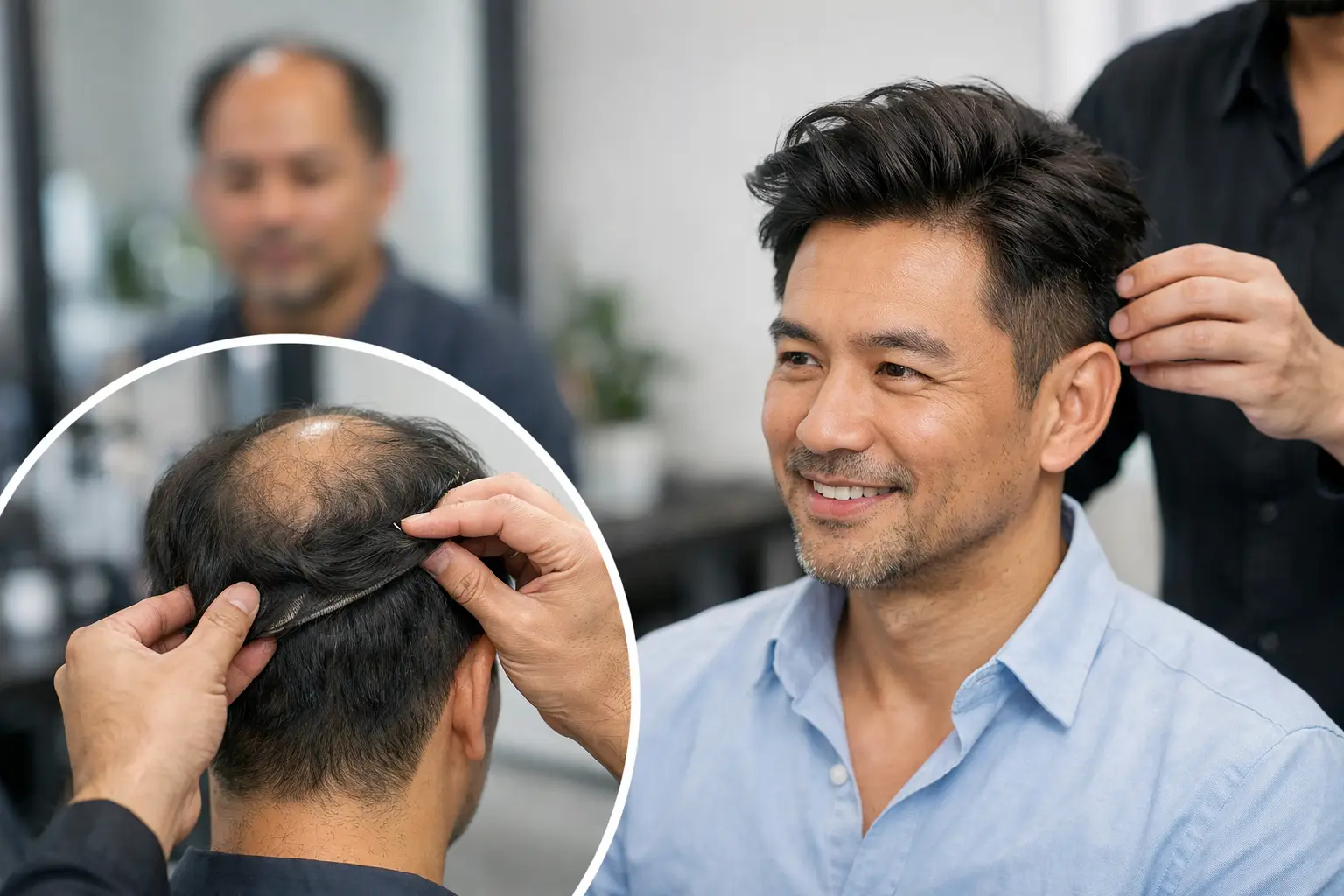
A search for “hair weaving singapore men” usually starts with a practical concern: how can you make thinning hair look fuller without surgery, a lengthy recovery period, or a result that draws attention for the wrong reasons? For many men, hair weaving offers an immediate, non-surgical way to address visible hair loss while retaining control over the look, density, and style of their hair.
Hair loss can affect more than a mirror check before work. A widening part, thinning crown, or receding hairline may change how comfortable you feel in meetings, photos, and social settings. The right solution should not simply cover the concern. It should suit your pattern of hair loss, scalp condition, lifestyle, and expectations for maintenance.
What Is Hair Weaving for Men?
Hair weaving is a non-surgical hair replacement technique that adds a carefully selected hair system to existing hair. The replacement hair is integrated with your natural hair using a secure attachment method, creating the appearance of greater density or coverage across areas affected by thinning or baldness.
For men, the goal is rarely an overly dense or dramatic transformation. A skilled specialist considers how your hairline has naturally matured, the texture and color of your existing hair, the direction it grows, and how you normally wear it. This makes it possible to create a result that looks appropriate for you rather than a generic hairstyle.
Unlike a hair transplant, hair weaving does not move follicles or require surgery. It delivers a cosmetic result immediately after fitting. That can make it appealing if you want coverage now, are not ready for a transplant, or do not have enough donor hair for surgical restoration.
Who May Benefit From Hair Weaving in Singapore?
Hair weaving can be suitable for men with moderate to advanced thinning, a bald crown, diffuse thinning across the top of the scalp, or a receding hairline that has become difficult to style around. It can also help men whose hair loss is not yet stable and who prefer not to commit to a permanent surgical procedure.
It is especially worth considering if you want flexibility. The density, hairline design, length, and style can be tailored to your preferences. If your desired look changes later, a hair system can be adjusted or replaced without altering your natural follicles.
That said, weaving is not automatically the best answer for every type of hair loss. Men with active scalp irritation, severe dandruff, open skin conditions, or sudden unexplained shedding should first have their scalp assessed. In these cases, treating the underlying issue may be a necessary first step. A specialist consultation can also distinguish between pattern hair loss, stress-related shedding, and hair loss linked to medical factors.
Why a Personalized Consultation Matters
A convincing hair weave depends on much more than selecting hair that looks close to your natural color. The attachment base, the amount of density, the placement of the hairline, and the blend with surrounding hair all influence the final result.
For example, a man with fine, straight hair generally needs a different density and texture from someone with thick, wavy hair. Adding too much hair can make the result appear unnatural. Using a hairline that is too low or too sharp can have the same effect. A thoughtful design often looks more natural because it respects the way male hair loss commonly develops over time.
Your daily routine matters as well. If you exercise frequently, wear a helmet for work, swim regularly, or travel often, the fitting and maintenance plan should account for this. A well-planned solution should feel secure and comfortable during normal life, not create constant worry about checking your hair.
At HairSpec, a private scalp assessment helps determine whether hair weaving, a nonsurgical hair replacement system, scalp micropigmentation, low-level laser therapy, or another option better matches your needs. This broader approach is valuable because visible coverage and scalp or hair restoration can sometimes be combined rather than treated as competing choices.
The Hair Weaving Process for Men
The process begins with an assessment of your hair loss pattern, scalp health, lifestyle, and styling goals. Your specialist will discuss the level of coverage you want and evaluate the existing hair available for blending or attachment.
Next comes customization. The hair system is selected to complement your natural hair color, texture, wave pattern, and desired length. The base material is also important. Some men prioritize a particularly natural-looking hairline, while others may need a solution designed around durability, scalp sensitivity, or an active routine.
During fitting, the system is secured and blended with your existing hair. It is then cut and styled so that it works with your face shape and preferred grooming routine. The result should look like a coherent haircut, not like separate natural and replacement hair.
A good appointment also includes clear aftercare instructions. You should understand how to wash and style the hair, which products to use, how to protect the attachment, and when to return for maintenance. Confidence comes from knowing what is expected after you leave the clinic or salon.
What Hair Weaving Can and Cannot Do
Hair weaving can create immediate visible density, cover bald or thinning areas, and make many hairstyles possible again. It can be an effective option for men who want a fuller appearance without waiting months for possible treatment progress. It also does not require shaving the entire head, although preparation varies based on the chosen system and the area being covered.
However, hair weaving does not stop genetic hair loss or regrow follicles. If you still have natural hair around or beneath the system, that hair may continue to thin over time. Regular monitoring is helpful, especially if you are considering supportive options such as laser therapy, scalp treatments, or medically appropriate hair loss management.
It also requires commitment to upkeep. Natural hair grows, the scalp produces oil, and attachment materials need professional servicing. The maintenance schedule depends on the system, your skin type, activity level, and care habits. Men who want a very low-maintenance look may prefer a shorter hairstyle, scalp micropigmentation, or a different treatment route.
Choosing Between Hair Weaving and Other Options
The best choice depends on the outcome you want and how you feel about maintenance, permanence, and treatment timelines. Hair weaving is often the strongest fit when immediate coverage is the priority. It can provide substantial visual change in a single appointment and remains adjustable over time.
A hair transplant may be more suitable for men seeking to use their own growing hair and who have adequate donor supply. It is a surgical procedure, however, so it involves candidacy requirements, healing, cost considerations, and a longer timeline before visible growth develops.
Scalp micropigmentation uses specialized pigments to create the appearance of closely shaved hair follicles. It can be particularly effective for men who wear a buzz cut, have a receding hairline, or want to reduce the contrast between their scalp and thinning hair. It does not add length or physical hair density.
Low-level laser therapy and other restorative approaches may support hair quality or help address early thinning, but results are gradual and vary by individual. They may be used alongside a hair replacement solution when appropriate. The point is not to force one method to do everything. It is to choose a plan that aligns with your condition and the life you want to lead.
Questions to Ask Before You Commit
Before proceeding with hair weaving, ask how the system will be customized for your hairline and existing hair. Ask how often maintenance is needed, what ongoing care involves, and whether the solution is suitable for your work, sports, and travel habits. It is also reasonable to ask what happens if your natural hair continues to thin.
Pay attention to whether the provider discusses limitations as openly as benefits. A responsible recommendation should be based on scalp health and realistic expectations, not pressure to choose the most dramatic option. Privacy, hygiene, quality materials, and careful styling are all part of a service that should feel personal and professional.
Hair loss is personal, but your next step does not have to be uncertain. A private scalp assessment can give you a clearer view of what hair weaving can achieve for you, what maintenance will look like, and which path will help you feel most like yourself again.