

A widening part, more hair around the shower drain, or a ponytail that suddenly feels smaller can be easy to dismiss at first. Yet hair thinning often begins gradually, long before a visibly sparse area appears in photos. Understanding how scalp assessment detects thinning can help you move beyond guesswork and make a more confident decision about what to do next.
A professional scalp assessment looks at more than the number of hairs you notice shedding each day. It considers the condition of the scalp, the pattern of density changes, the caliber of individual hairs, and the signs that follicles may be producing finer strands. This fuller picture matters because thinning can have several causes, and the most appropriate solution depends on what the assessment reveals.
How Scalp Assessment Detects Thinning Before It Is Obvious
Hair loss is not always a matter of hairs falling out in large amounts. In many cases, follicles slowly produce thinner, shorter, and less pigmented hairs over time. This process, often associated with pattern hair loss, can reduce overall coverage even when you are not seeing dramatic shedding.
During a scalp assessment, a specialist examines areas where thinning commonly starts, including the hairline, temples, crown, mid-scalp, and part line. For women, a widening center part or reduced density across the top of the scalp may be more noticeable than a receding hairline. For men, changes may appear first at the temples or crown. These patterns provide useful clues, but they are only one part of the evaluation.
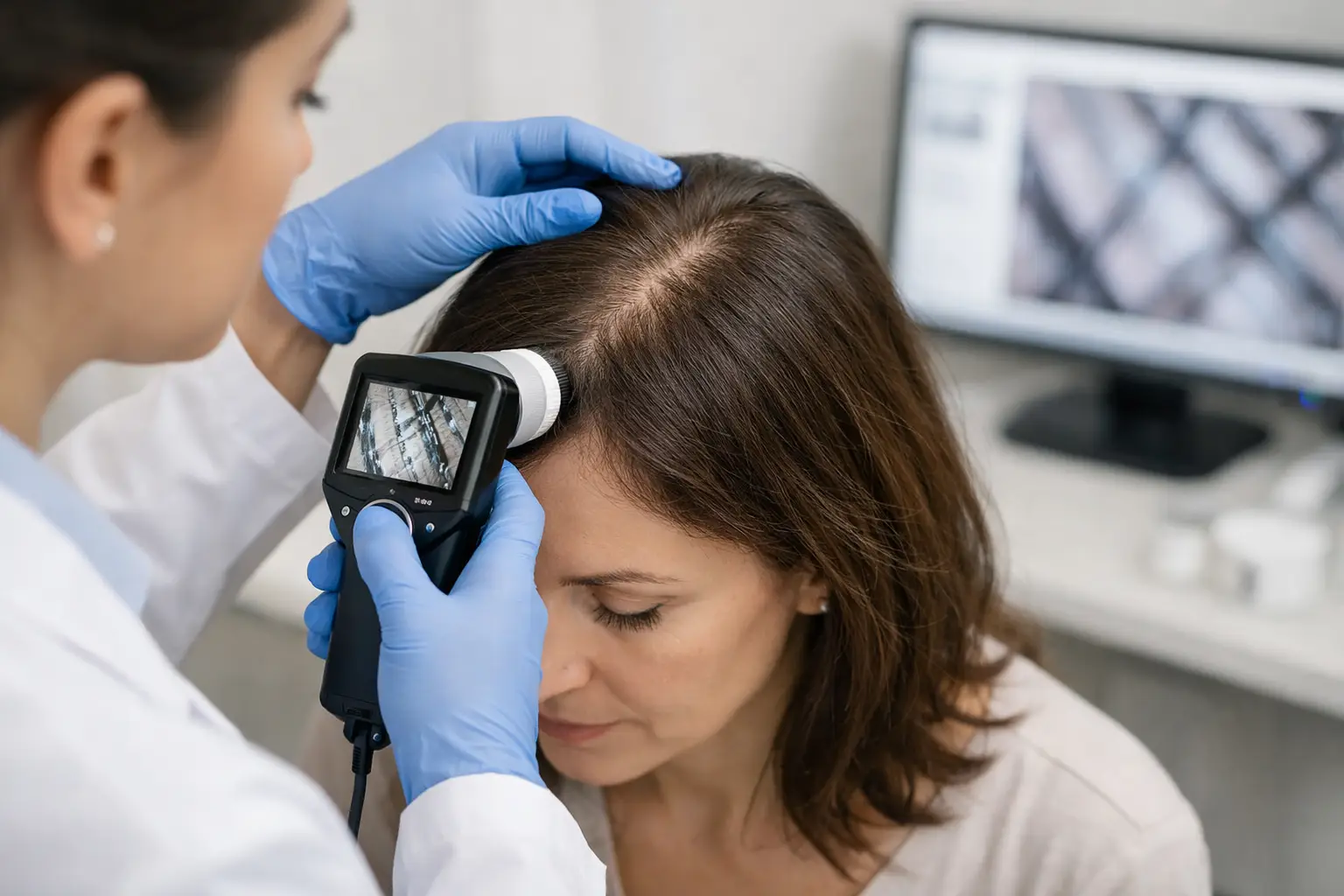
Magnified scalp imaging can make early changes easier to identify. It allows the specialist to compare the thickness and distribution of hairs in different areas. When some hairs in a region are consistently finer than neighboring hairs, or when there are more visible spaces between follicular units, this may indicate early thinning that is not yet apparent in everyday lighting.
What a Specialist Looks for During an Assessment
A thoughtful assessment combines close visual observation with a conversation about your hair history, health changes, and styling habits. The goal is not simply to label a concern. It is to understand what may be influencing your hair density and what can realistically improve its appearance or support healthier growth.
Changes in Hair Density
Density refers to how much hair is growing in a given area of the scalp. A specialist checks whether the scalp is becoming more visible at the part, crown, hairline, or throughout the head. Comparing one zone with another is often more useful than looking at a single area in isolation.
Diffuse thinning can be particularly difficult to spot on your own because the hairline may remain intact. You may only notice that your style no longer holds volume or that bright overhead light exposes more scalp. A scalp assessment can identify whether this reflects a true reduction in density, naturally fine hair, breakage, or a combination of factors.
Hair Shaft Thickness and Miniaturization
Healthy hair strands naturally vary somewhat in diameter. However, a marked mix of thick terminal hairs and much finer hairs in a pattern-prone area can suggest miniaturization. This means follicles are producing progressively narrower hairs, which provide less coverage even before the follicle stops producing a visible strand.
Miniaturization is a key reason early intervention can be valuable. Depending on the underlying cause and your goals, a specialist may discuss options intended to support the scalp and existing hair, such as low-level laser therapy or mesotherapy. If your priority is an immediate cosmetic change, non-surgical hair replacement, hair extensions, or scalp micropigmentation may be better suited to your needs. The right recommendation depends on whether you want to address hair appearance, scalp health, long-term restoration, or several of these at once.
Scalp Condition and Follicle Environment
A healthy-looking scalp supports a more comfortable hair care routine, but irritation or buildup can complicate the picture. During an assessment, the specialist may look for excess oil, flaking, redness, sensitivity, product buildup, or signs of inflammation. These issues do not automatically cause hair loss, but they can affect comfort, make hair look flatter, and deserve attention as part of a complete plan.
The scalp may also reveal signs that need medical evaluation. Sudden patchy hair loss, painful inflammation, scarring, sores, or rapid shedding should not be treated as a routine cosmetic concern. A hair specialist can help identify when a consultation with a physician or dermatologist is appropriate, particularly when a medical condition, medication, hormonal change, nutritional issue, or autoimmune process may be involved.
Shedding Pattern and Timeline
It is normal to shed hair daily. The more useful question is whether the amount has changed and whether new growth appears to be keeping pace. A specialist will usually ask when you first noticed the concern, whether it followed illness, stress, childbirth, weight changes, surgery, medication changes, or a major shift in diet.
Sudden shedding across the scalp can differ from gradual pattern thinning. For example, temporary shedding after a physical or emotional stressor may be more diffuse, while hereditary thinning often follows a predictable distribution and progresses over time. There can also be overlap. That is why a personal history is as valuable as magnified scalp observation.
Why a Professional Assessment Is Better Than Self-Diagnosis
Phone photos and bathroom mirrors can be useful for tracking changes, but they have limits. Hair can appear thinner because it is wet, oily, freshly colored, tightly pulled back, or photographed under harsh lighting. Conversely, styling products and careful positioning can disguise early thinning for a long time.
A professional assessment provides consistency. It evaluates your hair under controlled conditions and considers the places where hair is most likely to change first. It also separates thinning from breakage. Breakage can create uneven lengths, frizz, and a reduced sense of fullness, but the follicle may still be producing hair normally. Thinning, by contrast, involves a change in the amount, thickness, or growth cycle of hairs emerging from the scalp.
Just as importantly, an assessment should lead to options rather than pressure. There is no single best solution for everyone. Some people want to preserve and enhance the hair they have. Others want fuller-looking coverage right away for work, social occasions, or daily confidence. Someone with advanced hair loss may consider a hair transplant, while another person may prefer a discreet, non-surgical hair replacement system with a natural finish and greater control over their look.
What Happens After Thinning Is Identified
Once the assessment identifies a pattern and severity of thinning, the next step is setting realistic priorities. Those priorities may include slowing the visible progression of thinning, improving scalp comfort, increasing volume, restoring a hairline, concealing a sparse crown, or preparing for a medical consultation.
For early or mild concerns, supportive scalp-focused treatments and low-level laser therapy may be discussed alongside practical styling changes. For more noticeable loss, hair replacement systems, wigs, toupees, hair weaving, extensions, and scalp micropigmentation can create an immediate difference in density or coverage. These solutions are not second-best choices. For many people, they are the preferred path because they offer privacy, comfort, and visible results without surgery.
HairSpec approaches this conversation as a personalized process. A suitable plan should account for your hair loss pattern, scalp condition, lifestyle, desired maintenance level, and the result you want to see in the mirror. Natural-looking outcomes are not only about adding more hair. They rely on matching density, direction, hairline design, texture, and color to you.
When to Book a Scalp Assessment
Consider an assessment if you have noticed a widening part, increased scalp visibility, a receding hairline, a thinner ponytail, reduced volume at the crown, or a persistent change in shedding. It is also sensible to seek guidance before trying multiple products or treatments on your own. Using the wrong approach can be expensive, discouraging, and sometimes irritating to the scalp.
Early assessment does not mean you need to commit to a major treatment. It simply gives you clearer information while you have more choices. Whether the best next move is monitoring changes, improving scalp care, exploring a non-invasive density solution, or seeking medical advice, clarity can replace the worry of wondering what you are seeing.
Your hair concern is personal, and the next step should feel that way too. A careful scalp assessment can give you a clearer view of your current hair health and a practical path toward feeling more like yourself again.