

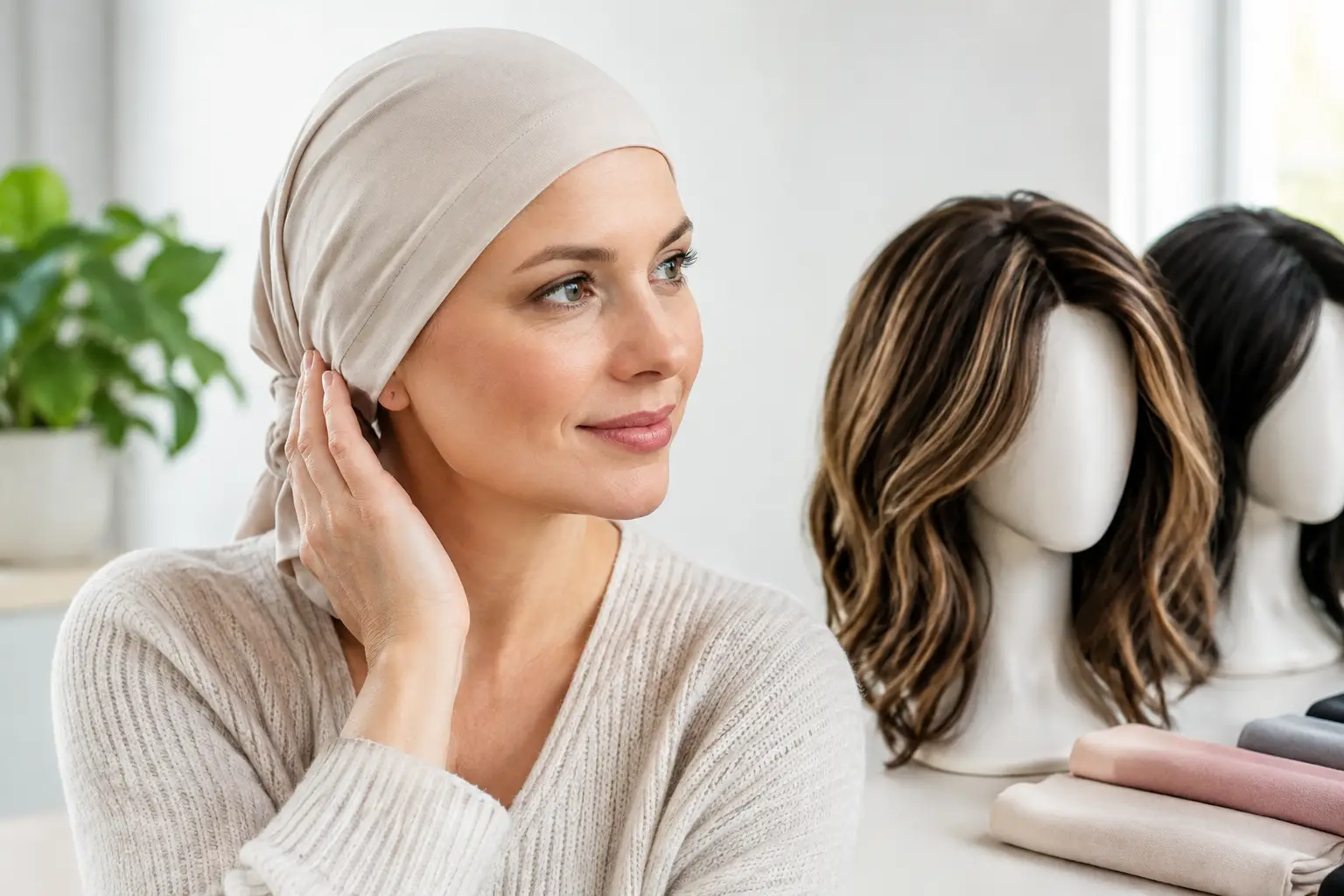
A medical wig can be beautifully styled and still feel wrong within an hour. When the scalp is tender from treatment, prone to sensitivity, or simply unused to wearing a wig, the material against the skin matters as much as the hair itself. The best medical wig materials are those that balance softness, breathability, security, and a natural appearance for your individual needs.
There is no single material that suits every person. A lightweight synthetic wig may be the most comfortable choice during hot, humid days, while a hand-tied human hair wig may offer the movement and styling flexibility someone wants for daily professional wear. The right choice begins with understanding what each material does and how it will feel over time.
What Makes a Wig Suitable for Medical Hair Loss?
Medical wigs are designed with the needs of people experiencing hair loss in mind, including hair loss related to chemotherapy, alopecia, hormonal changes, or scalp conditions. Unlike a standard fashion wig, a well-chosen medical wig should minimize friction, avoid unnecessary pressure, and sit securely on a scalp that may be more sensitive than usual.
The cap construction is especially significant. This is the inner base of the wig that rests against the scalp. Even the highest-quality hair can become difficult to wear if the cap is heavy, scratchy, or poorly fitted. For many clients, a soft cap and a breathable design are the difference between occasionally wearing a wig and feeling comfortable enough to wear one every day.
The Best Medical Wig Materials, Explained
Human hair: the most natural movement
Human hair wigs are valued for their realistic texture, natural shine, and versatility. They move like growing hair, can usually be heat-styled with appropriate care, and can be cut or colored by an experienced professional. For someone who wants to maintain a familiar look, human hair can provide a highly natural result.
The trade-off is maintenance. Human hair reacts to humidity, needs regular washing and conditioning, and often requires more styling time than synthetic hair. It also tends to cost more. The hair itself does not determine comfort, however. A human hair wig still needs a soft, well-designed cap to be suitable for a sensitive scalp.
Synthetic fiber: lightweight and low maintenance
Modern synthetic fibers have come a long way from the overly shiny wigs many people remember. Quality heat-friendly and premium synthetic options can closely mimic the look of natural hair while holding their style through the day. This makes them particularly practical for busy schedules, travel, and anyone who prefers a ready-to-wear style.
Synthetic wigs are often lighter than human hair wigs, which can be a real advantage when the scalp is tender or when wearing a wig in Singapore’s warm, humid climate. They generally require less upkeep, but they have less styling flexibility and can be damaged by heat if they are not specifically heat-friendly. Their lifespan is also typically shorter with frequent wear.
Bamboo: exceptionally soft for sensitive scalps
Bamboo is commonly used in wig caps, wig liners, and headwear rather than as the hair fiber itself. It is popular for its soft feel, moisture management, and breathable qualities. For individuals dealing with scalp tenderness, sweating, or irritation, bamboo can create a gentler layer between the wig and the skin.
A bamboo liner can also help reduce movement and absorb moisture, particularly during the adjustment period after sudden hair loss. It is worth checking that the liner fits smoothly. If it bunches underneath the cap, it may create pressure points instead of relieving them.
Cotton: familiar, absorbent, and practical
Cotton caps and liners are another comfortable option, especially for short-term wear and cooler indoor environments. The material is soft, readily available, and absorbent. It can help make a wig feel less direct against a bare scalp.
Pure cotton may retain moisture when the weather is hot or when you perspire heavily. For this reason, cotton is often most comfortable when blended with other fibers or used as a removable liner that can be washed frequently. Breathability depends on the weave and cap design, not just the material label.
Monofilament: a realistic scalp appearance
Monofilament is a fine, sheer mesh used at the top or throughout the cap. Individual hairs are hand-tied into the material, giving the impression that hair is growing directly from the scalp. It also allows the wearer to part the hair in different directions, which creates a more personalized, natural-looking finish.
For medical wig wearers, monofilament can be a strong choice because it is lightweight and usually smoother than basic machine-made cap constructions. Full monofilament caps offer the greatest flexibility but are generally more expensive. A monofilament part or crown can be a sensible middle ground when budget matters.
Lace: natural-looking hairlines with a lighter feel
Lace fronts use a delicate mesh along the hairline to create the illusion of hair growing from the forehead. This is especially useful for styles worn away from the face. A well-fitted lace front can look exceptionally natural without needing a heavy fringe to conceal the wig edge.
Because lace is fine, it requires careful handling. Some people with highly reactive skin may be sensitive to wig adhesives or tapes used with certain lace styles. Adhesive is not always necessary, particularly when the cap is fitted correctly, but this should be discussed during a professional fitting. Comfort and stability should never be sacrificed solely for a more invisible hairline.
Cap Construction Matters as Much as the Fiber
When comparing medical wigs, ask about the materials inside the cap as well as the hair fiber on the outside. A basic machine-made cap may be economical and durable, but its wefts can feel more noticeable against bare skin. A hand-tied cap is often softer, lighter, and offers more natural movement, although it comes at a higher cost.
A capless or open-wefted construction improves airflow and can feel cooler. This may suit clients whose scalp is not overly sensitive. For those with complete hair loss or tenderness, a softer closed-cap design, monofilament top, or comfortable liner may be preferable. The best option depends on whether your priority is maximum ventilation, a smooth interior, or the most realistic movement.
How to Choose the Right Material for Your Routine
Start with the condition of your scalp. If you have redness, itching, sensitivity, or active skin concerns, prioritize soft interior materials and avoid anything that feels abrasive during a fitting. A lightweight synthetic wig with a bamboo liner may be more comfortable than a heavier human hair wig, even if human hair is your preferred look.
Next, consider how often you will wear the wig. Daily wearers often benefit from having more than one wig, allowing each piece to rest between wears and making washing easier. Someone who needs a wig for work, social occasions, and special events may prefer a human hair option for styling versatility alongside a low-maintenance synthetic option for everyday convenience.
Finally, focus on fit. Adjustable tabs, silicone strips, and properly placed grips can help stabilize a wig without excessive tightness. A wig that slips is not necessarily the wrong material, but a wig that causes headaches, heat buildup, or persistent itching should be reassessed. Small adjustments can make a significant difference.
A Professional Fitting Brings the Materials Together
Choosing a medical wig is personal, and it can feel overwhelming when you are already managing hair loss. An experienced specialist can assess scalp sensitivity, face shape, lifestyle, desired hairstyle, and the amount of maintenance you are comfortable with. They can also help you compare cap constructions in person, because comfort is difficult to judge from photographs alone.
At HairSpec, a private consultation and scalp assessment can help narrow the options without pressure or guesswork. The aim is not simply to select a wig material that looks good on a stand. It is to find a comfortable, natural-looking solution that helps you feel like yourself when you step back into your routine.
Give yourself permission to prioritize comfort. The right medical wig should support your confidence, not demand that you tolerate discomfort for the sake of appearance.