

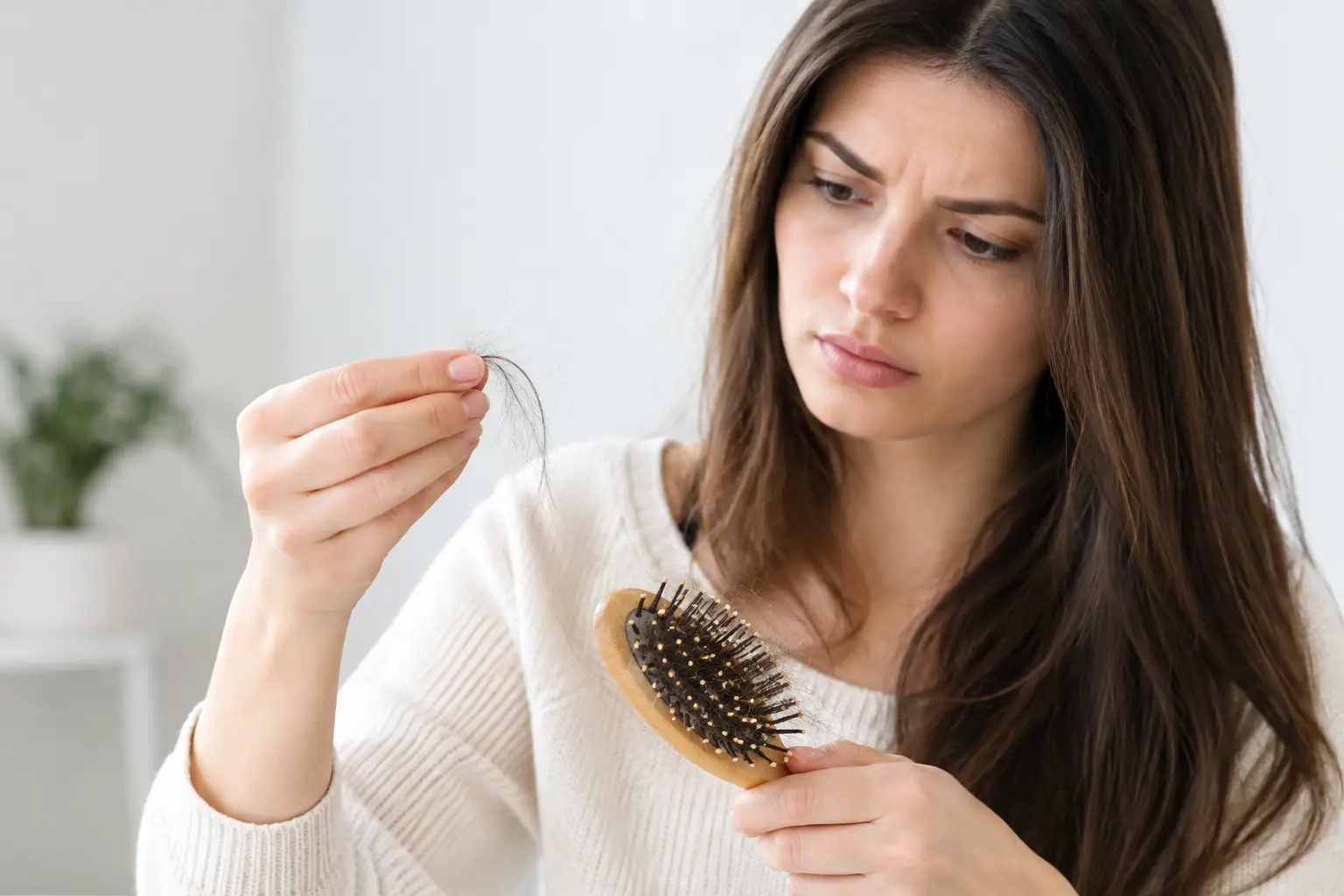
A few hairs on your pillow or in the shower drain can feel alarming, especially when you have started watching your hair more closely. Knowing how to assess hair shedding helps replace guesswork with useful observations. The goal is not to count every strand perfectly. It is to understand whether what you see fits normal hair cycling, a temporary increase in shedding, or a pattern that deserves professional attention.
Most people shed hair every day. Hair naturally moves through growth, transition, resting, and shedding phases, so a degree of hair fall is expected. What matters is the bigger picture: the amount you are losing, how long it has continued, where it is happening, and whether your overall density or scalp is changing.
Start by Separating Shedding From Breakage
Hair shedding means a complete strand has released from the follicle. If you look closely, a shed hair may have a tiny pale or white bulb at one end. This is often a club hair – a strand that has reached the end of its normal growth cycle.
Breakage is different. It happens when the hair shaft snaps somewhere along its length, leaving shorter pieces without a bulb. Heat styling, frequent bleaching, tight hairstyles, chemical processing, rough brushing, and dry or weakened hair can all contribute. Breakage can make hair look thinner, but it does not necessarily mean you are losing follicles or experiencing progressive hair loss.
This distinction matters because the solution changes. A hair-care routine that reduces breakage may improve the look and feel of damaged lengths. Noticeable shedding from the root, however, calls for a closer look at scalp health, recent changes in your body or lifestyle, and your pattern of density.
How to Assess Hair Shedding at Home
A single heavy wash day is not always meaningful. If you wash your hair only once or twice a week, loose strands can accumulate and come out together during shampooing. That can look dramatic without representing a sudden change in daily shedding.
Instead, observe your hair consistently for two to four weeks. Use the same conditions where possible. Notice what you see when washing, brushing, styling, and waking up. A simple note on your phone is more useful than relying on memory, particularly when anxiety makes every strand feel significant.
Pay attention to these practical signs:
- More hair than usual collecting in the drain, brush, on clothing, or on your pillow over several weeks
- A widening part, more visible scalp under normal lighting, or a ponytail that feels noticeably smaller
- Receding at the temples, thinning around the crown, or reduced density concentrated in one area
- Shedding that follows a clear event, such as illness, rapid weight loss, surgery, childbirth, major stress, or a medication change
- Scalp symptoms such as itching, burning, tenderness, scaling, redness, or painful bumps
Photos can make the assessment more objective. Take clear pictures of your hairline, center part, crown, and temples every four to six weeks. Use dry hair, similar lighting, the same angle, and the same hairstyle. A single photo can be misleading. A series of consistent images is much better at showing whether density is stable or changing.
Look for the Pattern, Not Just the Number of Hairs
There is no home count that can diagnose the cause of hair loss. People have different hair lengths, wash schedules, textures, and starting densities. A person with long, dark hair may notice each shed strand more than someone with short hair, even if their actual shedding is similar.
The distribution of hair loss is often more informative than the number of strands. Diffuse shedding tends to occur across the scalp and may make the whole head feel less dense. It can occur after physical or emotional stressors and may be temporary, although persistent diffuse thinning should still be assessed.
Pattern hair loss often develops gradually. For many men, the hairline recedes or the crown becomes less dense. For many women, the center part broadens, the top of the scalp looks more visible, or overall volume decreases while the front hairline is relatively preserved. These patterns can be subtle at first, which is why comparison photos and a professional scalp examination can be valuable.
Patchy hair loss is different again. Smooth round patches, sudden localized thinning, or areas with broken hairs may need prompt medical evaluation. Do not assume every patch is a cosmetic concern or try to cover it without understanding what is happening underneath.
Consider What Changed Two to Three Months Earlier
Hair follicles often respond to a trigger with a delay. You may notice increased shedding weeks or even months after the event that set it in motion. Looking back over the previous two to three months can provide helpful context.
Ask whether you had a high fever, infection, surgery, hospitalization, major work or family stress, restrictive dieting, significant weight change, or a new medication. Hormonal changes, including postpartum recovery or changes around menopause, can also affect the hair cycle. Low iron stores, thyroid issues, nutritional deficiencies, and some medical conditions may contribute as well.
This does not mean you should self-diagnose based on an online checklist. It means you can bring a clearer history to a qualified professional. A careful assessment may involve questions about health, family history, nutrition, medications, styling habits, and the timeline of your shedding. Where appropriate, a medical professional may recommend blood tests or further evaluation.
When Hair Shedding Needs Professional Attention
It is reasonable to seek help sooner rather than waiting for thinning to become obvious. Early assessment gives you more options, especially when there is a pattern of progressive loss or a scalp condition contributing to the problem.
Arrange a professional consultation if shedding remains elevated for more than a few months, you can see a clear change in density, or your scalp feels irritated or uncomfortable. You should also seek medical advice promptly for sudden patchy loss, scarring or shiny areas on the scalp, pain, pus, severe scaling, or hair loss accompanied by other symptoms such as fatigue, unexplained weight changes, or menstrual changes.
A specialist assessment should not feel like a sales pitch. It should begin with understanding your hair and scalp, your goals, and the likely cause of concern. Some people need medical referral or restorative treatment. Others may benefit from a plan that supports scalp health, reduces cosmetic stress on fragile hair, or creates fuller-looking coverage while they explore longer-term options.
What a Scalp Assessment Can Reveal
A professional scalp assessment can examine areas that are difficult to judge in a mirror. Magnified imaging may help identify differences in follicle density, hair shaft diameter, scalp buildup, inflammation, and the proportion of finer hairs in a particular area. These details can help distinguish between the appearance of low density and a true change in follicle activity.
The right next step depends on the findings and on your priorities. If hair is thinning but follicles are still active, non-surgical approaches such as low-level laser therapy, scalp-focused care, or mesotherapy may be considered as part of a tailored plan. If you want an immediate cosmetic improvement, hair replacement systems, hair extensions, wigs, or scalp micropigmentation can create the appearance of fuller hair without waiting for growth cycles.
There are trade-offs. Some solutions are designed to support existing hair over time, while others provide instant visual density. A hair transplant may suit certain patterns of permanent loss, but it requires adequate donor hair and is not the first choice for every person. The most natural-looking result usually comes from matching the approach to your scalp condition, lifestyle, budget, and comfort level rather than pursuing the same treatment as someone else.
Avoid Common Assessment Mistakes
Do not repeatedly perform aggressive pull tests at home. Tugging at your hair can increase worry and irritate an already sensitive scalp. It is also unhelpful to start several new supplements, medicated shampoos, or treatments at once. If your hair changes afterward, you will not know what helped, what caused irritation, or what made shedding worse.
Be cautious with before-and-after comparisons taken in different lighting. Wet hair, overhead light, flash photography, and oily roots can all make the scalp look more visible. Likewise, styling products and hair fibers can create impressive coverage but should not prevent you from monitoring a developing pattern underneath.
Hair shedding is personal, but it does not need to remain mysterious. If you are seeing a sustained change, a private scalp assessment can give you a clearer starting point and a plan that respects both your appearance goals and your peace of mind. At HairSpec, the focus is on understanding what your hair needs before recommending a path forward – so you can make decisions with greater comfort and confidence.