
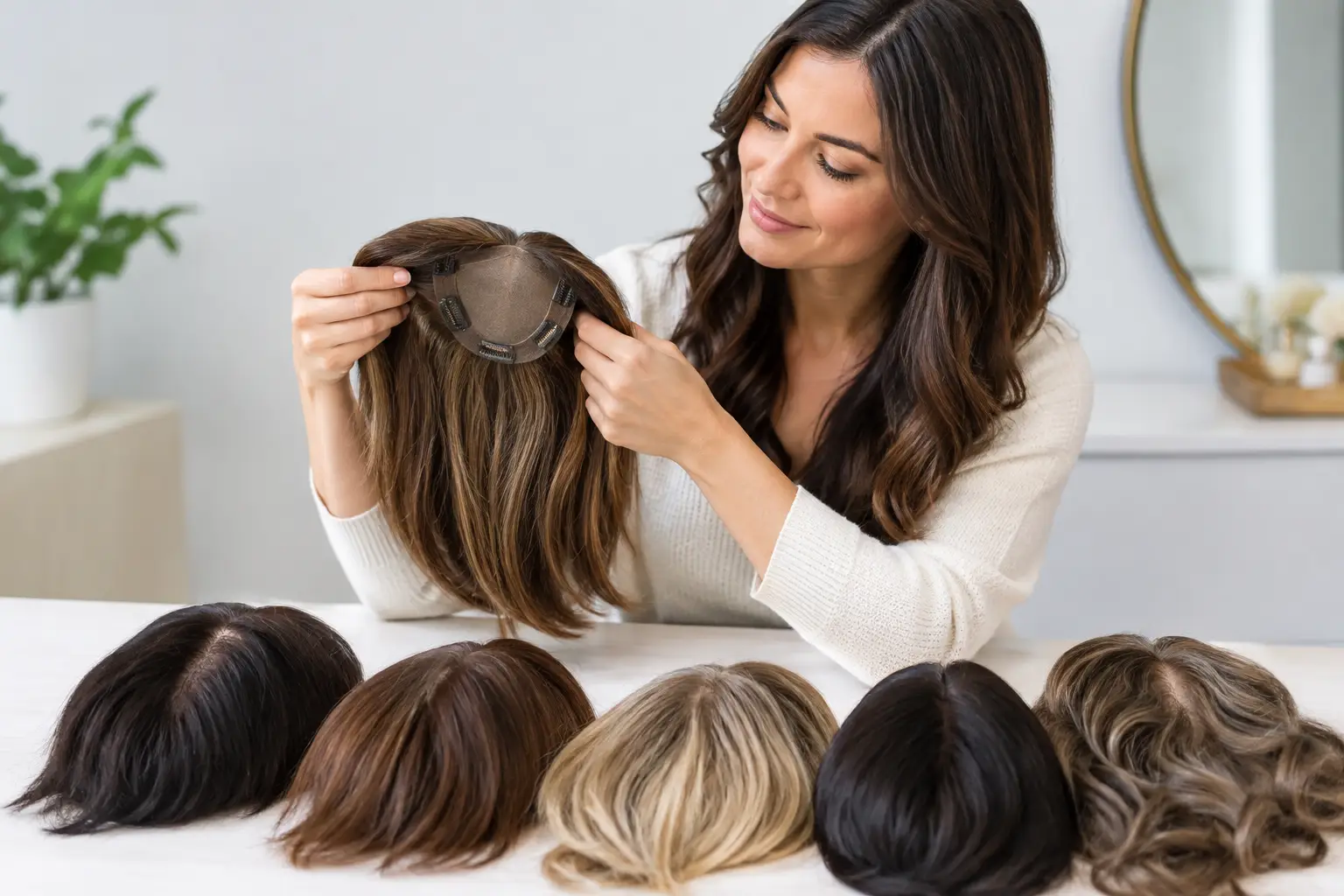
A hair topper can make the difference between styling around thinning areas and wearing your hair the way you want to. The many types of hair toppers are designed for different stages and patterns of hair loss, so the best choice is rarely the one with the most hair. It is the one that covers the right area, blends naturally, and feels comfortable enough to wear with confidence.
For people experiencing a widening part, thinning at the crown, diffuse shedding, or early pattern hair loss, a well-fitted topper offers an immediate, non-surgical way to create the appearance of fuller hair. Understanding the differences in coverage, base construction, hair fiber, and attachment helps you make a more informed decision before investing in one.
Types of Hair Toppers by Coverage Area
The first consideration is where your thinning is most visible. Toppers are available in several base sizes, measured by the area of the scalp they cover. A larger base does not automatically create a better result. If the topper extends far beyond the area of concern, it can feel heavier and may be harder to blend with your existing hair.
Part-line toppers
Part-line toppers are among the smallest options. They are designed to add density along a widening or highly visible part without covering the entire top of the head. This style can work well for early thinning, particularly when there is still enough surrounding hair to conceal the topper’s edges.
Because the coverage is limited, part-line toppers often look subtle and feel lightweight. However, they are not usually sufficient for thinning that extends across the crown or toward the front hairline.
Crown toppers
Crown toppers provide more coverage across the upper back portion of the scalp, where many people first notice reduced density. They are a practical choice for thinning around the vertex or crown while preserving a natural look through the front and sides.
The key is positioning. A crown topper should sit securely over the thinning area and have enough of your own hair around it for blending. If hair loss is more widespread, a larger design may create a more balanced result.
Top and crown toppers
Top and crown toppers cover a broader area, often extending from behind the hairline through the crown. They suit moderate thinning, diffuse hair loss on the top of the scalp, or a widening part combined with reduced volume at the crown.
This category gives stylists more hair to shape and layer, which can make it easier to create a fuller overall style. The trade-off is that a larger base requires more careful color matching, placement, and maintenance.
Full-top toppers
Full-top toppers are designed for advanced thinning across much of the top of the head. They can provide substantial volume while still blending into the natural hair at the sides and back. For someone who is not ready for a full wig but needs more coverage than a standard crown piece can offer, this may be the right middle ground.
A full-top topper needs professional customization to look convincing. The density, hairline, cut, and attachment method all matter, especially if you prefer to wear your hair away from your face.
Types of Hair Toppers by Base Construction
The base is the material that rests against your scalp. It influences how natural the topper appears, how breathable it feels, and how easy it is to part and style. This is one area where personal comfort and lifestyle should guide the decision.
Monofilament bases
A monofilament base is made with a fine mesh that allows individual hairs to be tied or knotted into the material. This creates the appearance that hair is growing directly from the scalp and allows more flexibility in how the hair is parted.
Monofilament toppers are a strong option for people who want a realistic scalp effect and styling versatility. They are often comfortable for regular wear, although their delicate construction means they require gentle handling.
Silk-top bases
Silk-top toppers use layers of material to conceal the knots where individual hairs are attached. The result is an especially realistic-looking scalp and part line, even at close range. This makes silk tops popular for people with very fine hair or visible scalp thinning.
The extra layering can make a silk base slightly less breathable and thicker than a lace option. It is a worthwhile trade-off for many wearers who prioritize realism at the part.
Lace-front bases
A lace-front topper is designed to create a softer, less detectable front hairline. Fine lace blends against the skin, allowing hair to appear as though it is growing from the front of the scalp. This is particularly useful if you enjoy off-the-face styles, side-swept bangs, or a more exposed hairline.
Lace is light and breathable, but it needs careful application and cleaning. It may not be the most practical choice for everyone, particularly those who want the fastest possible daily routine.
Polyurethane or skin bases
Polyurethane, sometimes called a skin base, is a thin material that resembles the scalp. It can offer a secure hold with certain adhesives and is easy to clean. These bases are commonly used when a smooth, close-to-the-scalp appearance is the priority.
Because polyurethane is less breathable than mesh or lace, it may feel warmer in Singapore’s humid weather or during exercise. It can still be an excellent choice when secure attachment and low visibility are more important than maximum ventilation.
Human Hair, Synthetic Hair, or a Blend?
The hair fiber affects both the look and the amount of daily styling required. Human hair toppers offer the most natural movement and can usually be heat styled, cut, and colored by an experienced professional. They are often the preferred choice for long-term wear because they blend well with natural hair and allow greater flexibility in styling.
Synthetic toppers are typically more affordable and can hold their style after washing, which saves time. High-quality synthetic fibers can look very natural, but many cannot tolerate high heat, and their color or texture cannot be altered as easily. They may also have a shorter usable lifespan than human hair.
Blended options combine human and synthetic fibers to balance realism, style retention, and cost. The right choice depends on how often you heat style your hair, the texture you need to match, and whether you want a ready-to-wear piece or a more customizable solution.
Attachment Methods Matter as Much as the Topper
Most hair toppers use pressure-sensitive clips that attach to your existing hair. Clips are convenient and allow you to remove the piece at home, making them suitable for occasional use or for people who want flexibility. They do require enough healthy hair for a secure grip, though, and they should never cause pulling or discomfort.
Some toppers can be secured with tape, adhesive, or integrated attachment methods. These approaches may suit people with more extensive thinning or those who prefer a more stable fit. They also require proper application, maintenance, and scalp care. If your scalp is sensitive, irritated, or affected by medical hair loss, professional guidance is especially valuable before choosing an attachment system.
How to Choose the Right Hair Topper
Begin with the pattern of your hair loss, not the style you have seen online. A topper should cover the thinning area with a margin for stability while leaving enough natural hair to blend the edges. Next, consider your routine. If you exercise frequently, commute in humid conditions, or want to wear your topper all day, breathability and attachment security become more important.
Color matching is equally critical. Match the topper to the mid-lengths and ends of your hair rather than only the roots, since natural hair often has variation throughout. Texture should also be considered. Straight hair, loose waves, tight curls, and chemically treated hair each need a topper that moves in a compatible way.
Finally, think beyond the first fitting. A topper should be cut, shaped, and styled to complement your face, preferred part, and usual hairstyle. A piece that looks natural in a product photo may need significant customization to look like it belongs on you.
At HairSpec, a personalized scalp assessment can help identify whether a hair topper is the most appropriate option, or whether another non-surgical solution may better suit your hair loss pattern and lifestyle. The goal is not simply more hair. It is a result that feels secure, looks like you, and gives you more freedom in front of the mirror.