

Hair loss rarely feels like a small issue when you see it every morning under bright bathroom lighting. This guide to scalp micropigmentation is for anyone who wants a realistic, low-maintenance way to create the look of fuller hair without surgery, lengthy recovery, or daily styling tricks that stop working by noon.
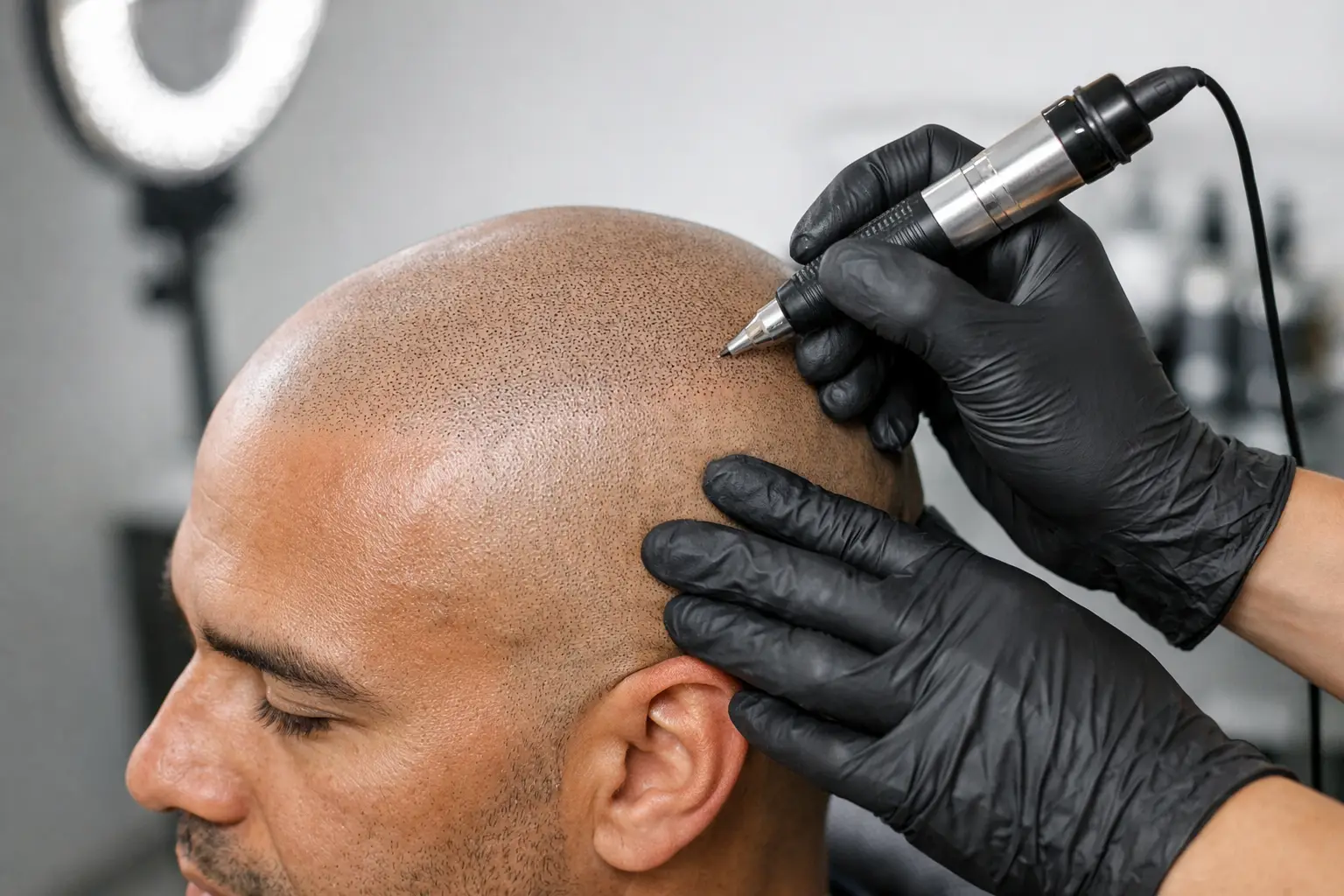
Scalp micropigmentation, often called SMP, is a specialized cosmetic procedure that places tiny pigment deposits into the scalp to replicate the appearance of natural hair follicles. Done well, it can create the effect of a closely shaved head, add the look of density to thinning areas, or reduce the contrast between scalp and hair in people with diffuse hair loss. The result is not new hair growth. It is a visual correction that can make hair loss look far less noticeable.
That distinction matters because SMP works best when expectations are clear. If you want to regrow hair, other treatments may be more appropriate. If you want a sharper hairline, better scalp coverage, and a more defined overall look, SMP can be an excellent option.
What this guide to scalp micropigmentation should help you answer
Most people considering SMP are trying to solve one of three problems. They want to make a receding hairline look more structured, make thinning hair look denser, or camouflage visible scalp after hair loss or transplant scarring. In each case, the goal is confidence through a natural-looking finish, not an obvious cosmetic change.
SMP suits a wide range of adults, including men with pattern hair loss, women with general thinning, and clients experiencing hair loss related to stress, hormones, medical conditions, or previous procedures. It can also appeal to busy professionals who want a polished look without committing to complicated upkeep.
The treatment is especially attractive if you value privacy and predictability. There is no dramatic post-surgical downtime, and the appearance tends to improve in stages as sessions are completed. For many clients, that feels more manageable than a one-step transformation.
How scalp micropigmentation works
SMP uses a device and specialized pigment to place micro-impressions into the scalp at a controlled depth. These impressions are designed to mimic the size, placement, and tone variation of real hair follicles. The artistry is as important as the technique. A natural result depends on hairline design, spacing, pigment choice, and the practitioner’s ability to match the treatment to your skin tone, age, face shape, and existing hair pattern.
This is why scalp micropigmentation should not be treated like standard tattooing. The scalp has its own texture, oil production, healing behavior, and visibility under different lighting. The pigment placement must account for how the result will look up close, at conversational distance, and under sunlight.
Most clients need two to four sessions. The first session establishes the foundation. Later sessions build density, refine the hairline, and adjust depth of color once the scalp has healed. Spacing treatments out gives the practitioner a chance to respond to how your skin retains pigment rather than forcing everything in one appointment.
Who gets the best results
The strongest SMP results usually come from matching the treatment style to the type of hair loss. For a shaved-head look, the effect can be very convincing because the pigment is meant to resemble freshly cut follicles. For longer hair, SMP works more like a density enhancer, reducing scalp show-through rather than replacing the appearance of actual strands.
That means it depends on your goal. If you have advanced balding and are comfortable keeping your hair very short, SMP can create a clean, intentional look. If you have thinning at the crown or part line, it can help hair appear fuller by lowering the contrast between the hair and scalp. If you wear your hair longer but expect SMP to look like thick new growth, you may be disappointed.
Skin type, lifestyle, and future hair loss patterns also affect the outcome. Oily scalps, heavy sun exposure, and certain skin conditions can influence how pigment settles and fades. Ongoing hair loss may also change how the treated area blends over time, which is why long-term planning matters.
What a natural result actually looks like
The best scalp micropigmentation is rarely the treatment you notice first. You notice the overall improvement. The face looks more framed. The hairline looks cleaner. Thin areas stop drawing attention. The result should fit your age and style rather than chasing an unrealistically youthful hairline.
A common mistake is asking for a shape that is too sharp, too low, or too dark. That can look striking on day one and less convincing over time. A better approach is subtlety – soft edges where appropriate, gradual density, and pigment tones that match your complexion and remaining hair.
Good practitioners also design with aging in mind. Hair loss often progresses, and a result that looks natural today should still make sense a few years from now. That may mean leaving room for future adjustments or combining SMP with other non-surgical or restorative solutions.
Pain, downtime, and aftercare
Most people describe SMP as uncomfortable rather than painful. Sensitivity varies by scalp area and personal pain tolerance, but the sensation is usually manageable. Compared with surgery, the recovery is light.
After each session, the scalp may look slightly red for a short time. You will usually need to avoid sweating, washing the scalp for a limited period, swimming, and direct sun exposure while the area settles. Your provider should give clear aftercare instructions, because proper healing supports even pigment retention.
Longer term, maintenance is straightforward. Sun protection matters because UV exposure can affect how pigment appears over time. Some clients also return for touch-ups after several years, depending on skin type, lifestyle, and how crisp they want the result to remain.
Scalp micropigmentation versus other hair loss options
One reason a consultation matters is that SMP is not automatically the best answer for every case. If your main concern is active shedding and you still have strong follicle potential, treatment aimed at preserving or stimulating growth may be worth exploring first. If you want real hair in bare areas and have suitable donor supply, a hair transplant may offer a different kind of improvement.
SMP is often strongest when viewed as part of a bigger plan, not an isolated trend. It can stand alone, especially for shaved styles, but it can also complement transplant work, camouflage scars, or enhance the appearance of thinning hair alongside other therapies. A full-spectrum hair specialist is better positioned to tell you when SMP fits and when another route would be more sensible.
Questions to ask before you commit
A quality consultation should cover more than price and availability. Ask how the hairline will be designed for your face and age. Ask how many sessions are likely, what the healing process looks like, and how fading is typically managed. Ask to see results on clients with similar skin tone, hair loss pattern, and hairstyle preference.
It is also reasonable to ask what happens if your hair loss progresses. An experienced provider should discuss future-proofing, not just the first set of sessions. This is particularly important for younger clients, whose hairline choices may need to accommodate change over time.
If you are comparing clinics, look for judgment, not just technical claims. The right provider will tell you when to go softer, when to stay conservative, and when SMP may not be your best option at all. That kind of honesty usually leads to better results.
Cost and value
SMP pricing varies based on the size of the area, the complexity of the hairline, the number of sessions needed, and the provider’s experience. While it can seem like a cosmetic expense, many clients view it differently after years of concealers, fibers, styling products, hats, or unsuccessful treatments.
Value comes from consistency. You wake up with the same improved appearance, your grooming routine gets simpler, and you no longer need to manage hair loss minute by minute. For professionals, that predictability can be a major benefit.
For anyone considering a guide to scalp micropigmentation in a clinic setting, the most important step is not choosing the lowest price. It is choosing a provider who understands facial balance, hair loss progression, pigment behavior, and how to create results that look believable in real life, not only in photos.
Hair loss can feel personal, but the solution should still be practical. When SMP is planned carefully and carried out by an experienced specialist, it offers something many people want more than complexity – a natural-looking result that helps you feel like yourself again.