

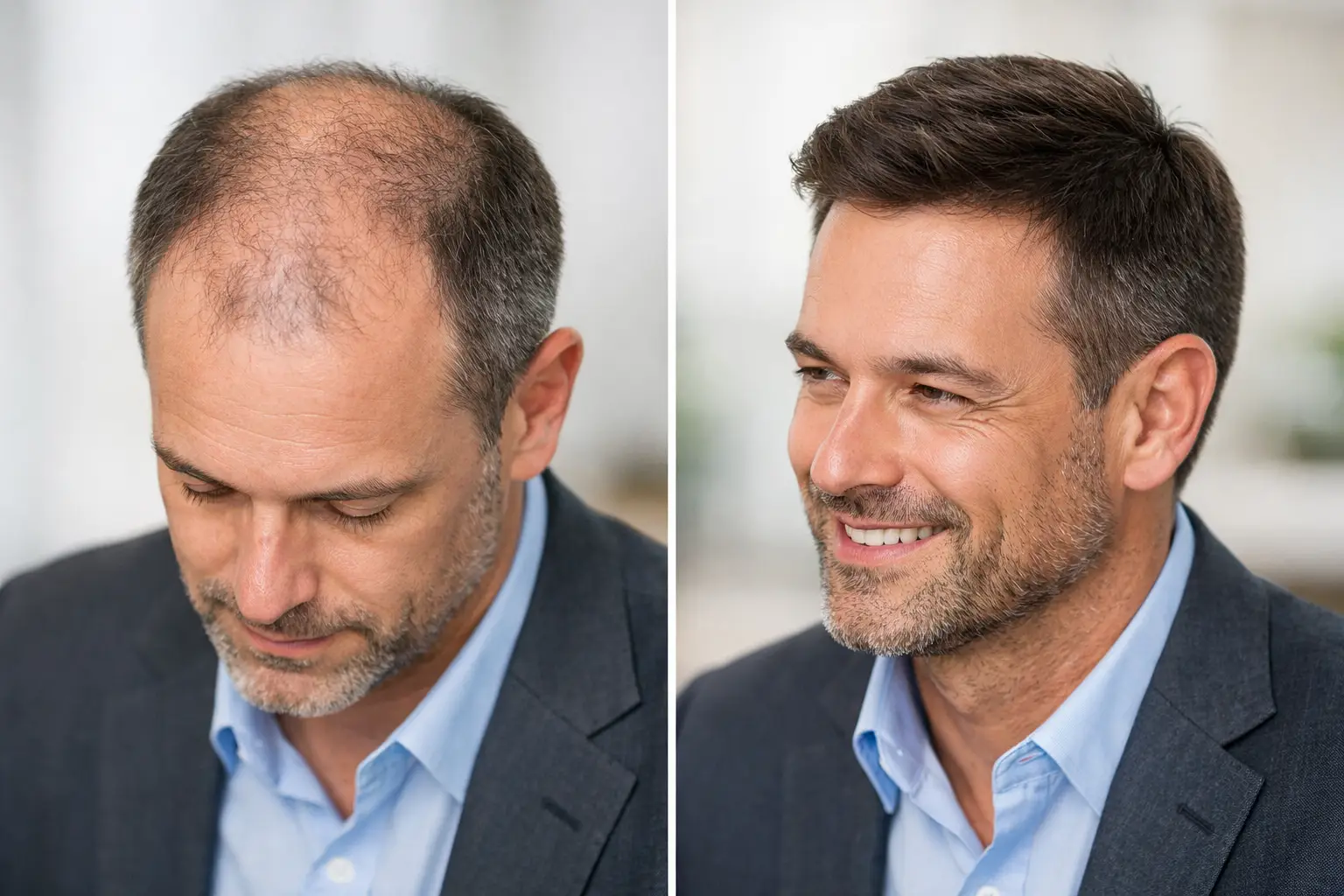
A bald spot rarely announces itself politely. More often, you notice it under office lighting, in a photo someone tagged you in, or in the mirror when your hair is still damp. If you are searching for how to hide bald spots, the real question is usually bigger than styling. You want something that looks natural, fits your routine, and helps you feel like yourself again.
That is why the best approach depends on two things: how visible the thinning is and whether you want a quick cosmetic fix, a longer-term solution, or both. Some people can improve coverage with a haircut and the right styling products. Others need more advanced support, especially when hair loss is progressing or the scalp is becoming easier to see under bright light.
How to hide bald spots based on the type of hair loss
Not every bald spot behaves the same way. A small thinning area at the crown needs a different strategy than a widening part, patchy loss from a medical condition, or diffuse thinning across the top of the scalp. The mistake many people make is choosing a solution before understanding the pattern.
If the issue is early-stage thinning, cosmetic camouflage often works well. Hair fibers, root cover powders, and volumizing styling techniques can reduce scalp show-through quickly. If the area is smooth, expanding, or linked to a medical or genetic cause, camouflage may help in the short term but usually will not be enough on its own.
This is where a tailored plan matters. You may need a combination of concealment and treatment rather than one or the other. For example, someone with crown thinning might use styling support now while exploring scalp micropigmentation, low level laser therapy, or non-surgical hair replacement for more consistent coverage.
Quick ways to make bald spots less visible
The fastest improvement often comes from reducing contrast between the hair and the scalp. When the scalp looks bright and exposed against darker hair, thinning appears more noticeable. Cosmetic cover products are designed to soften that contrast.
Hair fibers are one of the most common options. They cling to existing strands and create the look of fuller density. They work best when there is still some hair present, which means they are useful for thinning areas but less effective on completely bare skin. Powders and sprays can also help, especially around the hairline or part line, though the finish varies by product and skin type.
Your haircut also matters more than many people realize. Very long, flat hair can separate and reveal more scalp. Very short cuts can sometimes expose sparse areas if density is low. In many cases, a textured style with controlled volume gives the most natural result. The goal is not to force hair over the area in an obvious comb-over, but to create movement and lift that diffuses attention.
Blow-drying technique can make a visible difference too. Drying hair upward at the roots and using a lightweight volumizer often creates better coverage than heavy creams or oils, which can make the hair clump and expose the scalp. If you regularly use shiny or wet-look styling products, they may be making the bald spot look worse.
When temporary camouflage is not enough
Temporary solutions are useful, but they have limits. Humidity, sweat, rain, and long workdays can affect how well cover products hold up. They also require daily effort. For some people, that is manageable. For others, it becomes frustrating quickly.
If you find yourself constantly checking mirrors, adjusting your hairstyle, or avoiding certain lighting, it may be time to consider something more durable. This is especially true if the bald spot is growing, if your thinning is linked to pattern hair loss, or if the hair in that area has become too sparse for fibers to grip properly.
A longer-term solution does not always mean surgery. Many adults prefer non-surgical options because they want immediate visual improvement, privacy, and more control over the final look. That is often the turning point – when the goal shifts from hiding a problem each day to solving it in a way that feels reliable.
Professional options that hide bald spots more naturally
For people who want stronger, more consistent coverage, several specialist services can create a far more natural result than at-home camouflage alone.
Scalp micropigmentation
Scalp micropigmentation uses detailed pigment placement to reduce the contrast between hair and scalp. It can create the look of density in thinning areas or the effect of a closely shaved head, depending on the pattern of hair loss and your preferred style. This is especially effective for crown thinning, wider parts, and areas where the scalp shows through under strong light.
The benefit is that it does not rely on daily styling. The trade-off is that it is a visual density solution, not actual hair regrowth. It works best when performed with careful attention to hairline design, skin tone, and the surrounding density so the finish looks believable rather than flat or overly dark.
Non-surgical hair replacement
Modern non-surgical hair replacement is very different from the obvious systems people remember from years ago. A well-designed system can restore density, reshape the hairline, and blend naturally with your own hair. It is a strong option for larger bald spots or advanced thinning where styling tricks no longer provide enough coverage.
This approach gives immediate results, which is why many professionals prefer it. You do not have to wait months for regrowth. The key is customization. Base design, hair type, color match, and density all need to be tailored to your face shape, lifestyle, and grooming habits.
Hair toppers, wigs, and medical wigs
For women in particular, toppers and medical wigs can be an excellent way to hide bald spots while maintaining a natural, polished appearance. They can also be helpful for men and women experiencing medical hair loss, patchy shedding, or rapid thinning that makes styling unpredictable.
The right piece should feel secure, breathable, and realistic at the part line. This is where professional guidance matters. A generic off-the-shelf option may technically cover the area, but a customized fit usually looks better and feels more comfortable over time.
Can treatment help while you conceal the area?
Yes, and for many people that is the smartest route. If your bald spot is related to ongoing hair loss, treating the cause while improving appearance can give you both short-term confidence and long-term progress.
Low level laser therapy may support hair health in some cases of thinning by improving the scalp environment. Mesotherapy may be used to nourish the scalp and support weakened follicles. Hair transplant services may be appropriate for some candidates who want permanent restoration, though suitability depends on donor hair availability, the size of the affected area, and the pattern of future loss.
There is no single best treatment for everyone. Some clients need density support without surgery. Others are good candidates for transplantation but still want cosmetic coverage while waiting for growth. It depends on your stage of hair loss, expectations, timeline, and how much maintenance you are comfortable with.
How to choose the right solution for your lifestyle
The most effective answer to how to hide bald spots is the one you can actually live with. A person who exercises daily, commutes in humid weather, and wants a low-maintenance routine may not be happy relying on cover sprays every morning. Someone with mild thinning may not need a more advanced solution yet.
Think about your priorities honestly. Do you want same-day improvement? Are you open to maintenance appointments? Is your goal to restore the look of density, encourage regrowth, or both? How important is discretion during the process?
These questions matter because a natural-looking result is not only about appearance. It is also about fit. The right solution should suit your work schedule, your grooming habits, and your comfort level. That is why consultation-led care tends to produce better outcomes than self-diagnosing through trial and error.
If you are unsure where to start, a scalp assessment can help separate temporary styling concerns from active hair loss. At HairSpec, this kind of personalized evaluation is often what gives clients clarity. It allows you to see what can be improved with technique, what may need treatment, and what will give the most natural coverage for your specific pattern.
Bald spots can feel highly visible, even when other people barely notice them. What matters is that you do, and you deserve a solution that feels credible, comfortable, and true to you. The right fix is not always the most dramatic one. Often, it is the one that lets you stop thinking about your hair and get on with your day.