

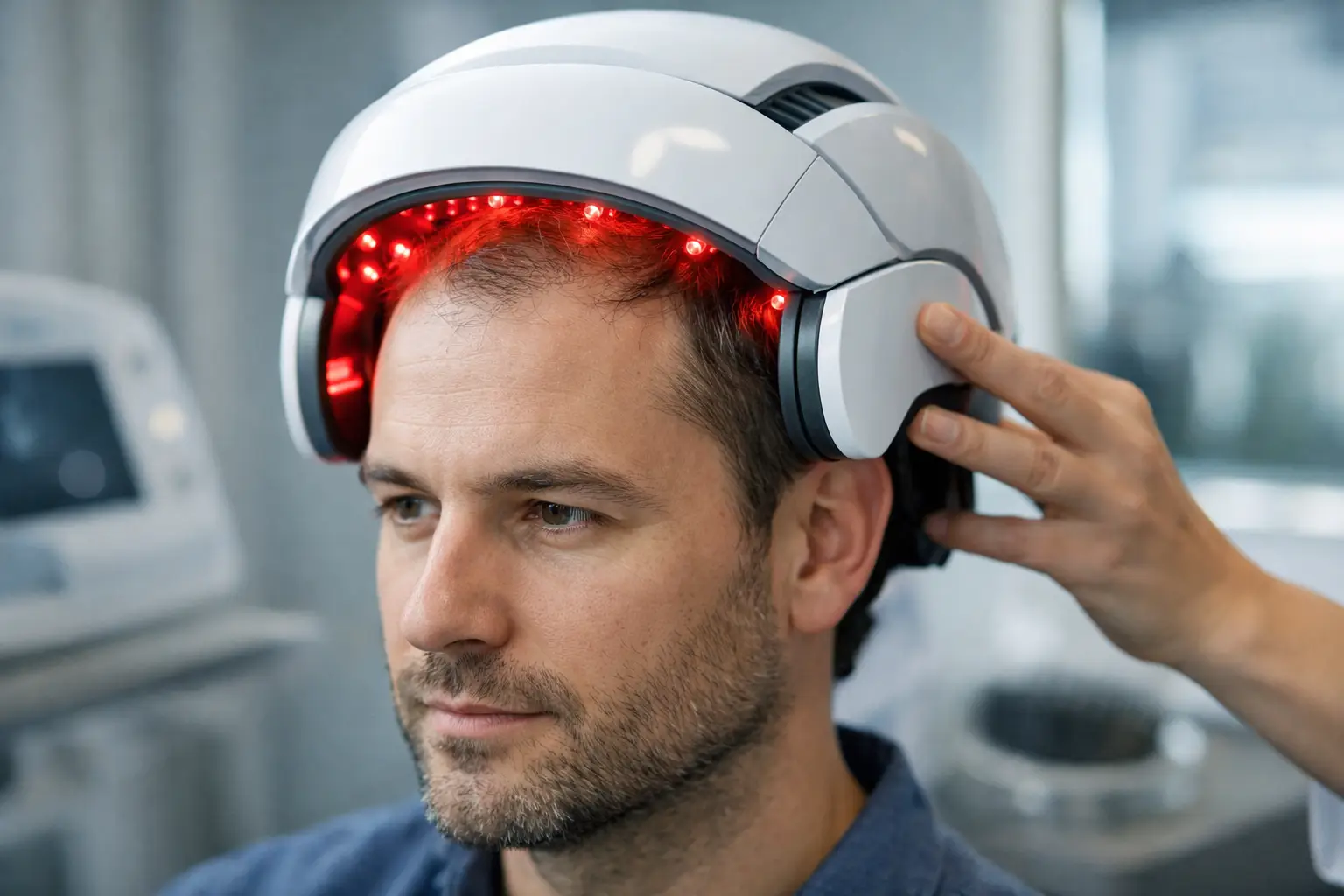
Hair thinning rarely starts with a dramatic moment. More often, it shows up in small ways – more scalp under bright bathroom lighting, a widening part, extra strands on your pillow, or a hairstyle that suddenly stops sitting the way it used to. For many people, that is when they begin looking into low level laser therapy for hair loss because it feels less intimidating than surgery and more targeted than hoping a shampoo will solve the problem.
That interest makes sense. Low level laser therapy, often called LLLT or red light therapy, is one of the most widely discussed non-invasive options for early to moderate hair thinning. It appeals to men and women who want a treatment that supports healthier growth without downtime, injections, or a major change to their routine. The real question is not whether the technology sounds impressive. It is whether it fits your type of hair loss, your expectations, and your broader treatment plan.
What low level laser therapy for hair loss actually does
Low level laser therapy uses specific wavelengths of light directed at the scalp. The goal is to stimulate hair follicles, improve cellular activity, and encourage a better environment for hair growth. In simple terms, it is designed to support follicles that are still alive but underperforming.
This matters because thinning hair is not always the same as dead follicles. In pattern hair loss, for example, follicles often shrink over time and produce finer, weaker strands before they stop growing visible hair altogether. LLLT is most useful in that window, when follicles are still active enough to respond.
The treatment itself is typically delivered through a laser cap, helmet, band, or in-clinic device. Sessions are short, usually repeated several times per week over a sustained period. It is not a one-time fix. Like most legitimate hair loss treatments, it works through consistency.
Who is a good candidate for low level laser therapy for hair loss
The best candidates are usually people in the earlier stages of hair thinning. Men with androgenetic alopecia and women with diffuse thinning often respond better than someone with advanced bald areas where follicles may no longer be viable.
It can also be appealing for people who want a gentle starting point. If you are not ready for a hair transplant, do not want needles, or prefer a non-surgical option first, LLLT can be a sensible place to begin. It is also commonly used as part of a broader hair restoration strategy rather than as a stand-alone answer.
That said, not every type of hair loss responds the same way. If shedding is driven by severe nutritional deficiency, a hormonal imbalance, active scalp inflammation, or a medical condition, laser therapy alone may not address the real cause. In those cases, the light is not the problem – the diagnosis is.
This is why a scalp assessment matters. Two people can describe the same symptom, “my hair is getting thinner,” and need very different solutions.
What results can you realistically expect?
This is where many people need a clearer picture. Low level laser therapy can help improve hair density, reduce excessive shedding, and support thicker-looking strands over time. It is not usually dramatic in the way social media transformations suggest. Good results tend to look natural, gradual, and cumulative.
Most people need several months before they can judge progress properly. Early changes may show up as reduced shedding or improved hair texture before visible density improves. For others, the main benefit is slowing further miniaturization, which is valuable even if regrowth is modest.
Expectation setting is important. If you have a shiny, completely bald scalp in certain areas, LLLT is unlikely to rebuild a full head of hair there. If you have noticeable thinning with surviving follicles, the chance of visible improvement is stronger. The technology supports growth potential. It does not create new follicles where none remain.
Why results vary from person to person
Hair follicles are influenced by more than one factor. Genetics, age, stress levels, scalp health, hormones, medical history, and treatment consistency all shape the outcome. That is why one person may see fuller coverage while another sees only stabilization.
Device quality also matters. Not all red light devices are built to the same standard, and not every product marketed for home use delivers the right wavelength or energy consistently. This is one reason professionally guided treatment tends to feel more reassuring. It gives you a better chance of using the technology correctly and in the right context.
Timing plays a role too. The earlier thinning is addressed, the better the odds of preserving and strengthening vulnerable follicles. Waiting until hair loss becomes advanced narrows the range of non-surgical options that are likely to help.
The pros and trade-offs of laser therapy
The biggest advantage of LLLT is that it is non-invasive. There is no surgery, no anesthesia, and typically no downtime. Many people like that it can be integrated into a busy schedule without interrupting work or social life. It also tends to be well tolerated, which matters when hair restoration requires patience.
Another advantage is flexibility. Laser therapy can complement other treatments, including topical or oral regimens, mesotherapy, scalp-focused care, and post-transplant maintenance. In a specialist setting, it often becomes one part of a more customized plan rather than the whole story.
The trade-off is that it requires commitment. You need regular sessions and realistic expectations. It can also feel frustrating if you approach it as a quick fix. Hair growth cycles move slowly, and even effective treatment can test your patience.
Cost is another practical factor. Over time, repeated sessions or device use represent an investment. For some people, that investment is worthwhile because they value a non-surgical option. For others, especially with more advanced loss, a different treatment path may offer a better return.
LLLT alone or as part of a combination plan?
For mild thinning, low level laser therapy may be enough to support better density and reduce progression. But in many real-world cases, the strongest outcomes come from combination treatment.
Someone with pattern hair loss may benefit from LLLT alongside scalp therapy or a medically guided regimen. A person with more visible cosmetic loss may use LLLT to support scalp health while also exploring non-surgical hair replacement or scalp micropigmentation for immediate visual improvement. A transplant patient may use it to support the surrounding native hair and maintain overall density.
This is the practical truth about modern hair restoration: one treatment does not need to do everything. The best plan is often the one that matches both the biology of your hair loss and the result you want to see in the mirror.
What a professional consultation should cover
A proper consultation should go beyond recommending a device. It should look at your pattern of loss, scalp condition, family history, lifestyle factors, and treatment goals. It should also discuss what LLLT can and cannot do for your stage of hair thinning.
That conversation is especially helpful if your hair loss affects confidence, work presentation, or day-to-day styling. Many adults are not just asking, “Can this grow hair?” They are asking, “Will this help me look more like myself again?” Those are different questions, and a specialist should be able to answer both.
At HairSpec, this is why a personalized scalp assessment matters. It helps identify whether laser therapy is a strong primary option, a supportive therapy, or simply not enough on its own.
When low level laser therapy may not be the right first choice
If hair loss is very advanced, if there is scarring on the scalp, or if the cause is still unclear, starting with laser therapy may delay more appropriate treatment. The same is true if your main goal is an immediate visual transformation. LLLT works gradually, and subtle improvement may not satisfy someone looking for fast cosmetic change.
There is also the issue of patience. Some people prefer treatments that provide instant coverage or a more defined structural result. In those cases, non-surgical hair replacement, scalp micropigmentation, or transplant planning may better match the outcome they want.
Choosing the right treatment is not about picking the most high-tech option. It is about choosing the option that makes sense for your scalp, your lifestyle, and your expectations.
Low level laser therapy for hair loss has earned its place because it offers a credible, comfortable, and non-invasive path for the right candidate. When used early, used consistently, and used as part of a thoughtful plan, it can make a meaningful difference. The smartest next step is not guessing from your bathroom mirror. It is getting a clear view of what your hair loss actually needs.