

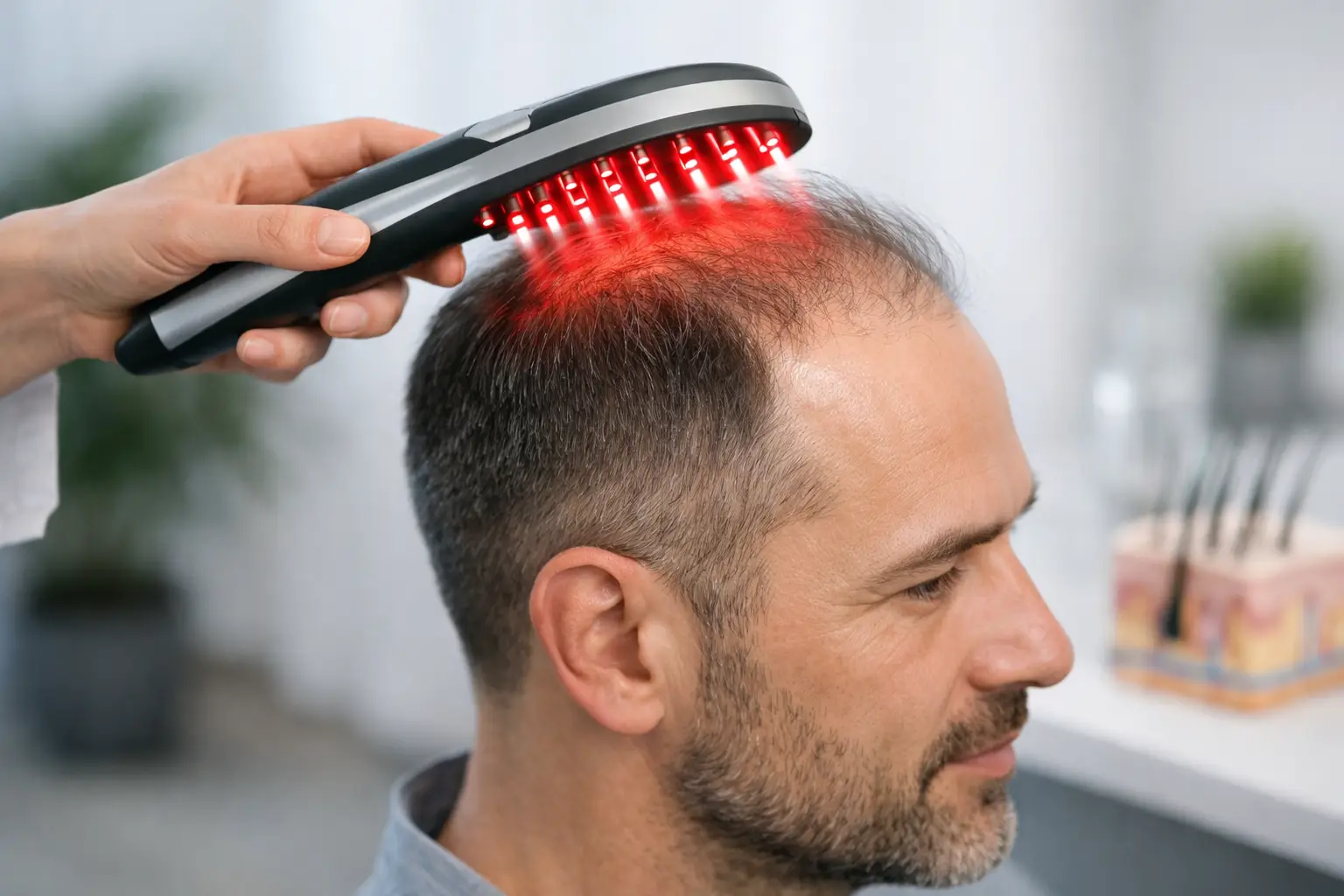
When your part looks wider in bright light or your hairline starts to feel less defined in photos, the first question is usually simple: does laser therapy regrow hair, or is it just another treatment that sounds promising but delivers very little? The honest answer is that low level laser therapy can help stimulate hair growth in the right candidates, but it is not a universal fix and it does not work the same way for every type of hair loss.
That matters because many people are not looking for hype. They want a treatment that fits real life – something non-invasive, discreet, and worth the time. Laser therapy has earned attention for exactly that reason. It is one of the few hair loss treatments that can support natural hair growth without surgery, downtime, or major disruption to your routine.
Does laser therapy regrow hair for everyone?
Not for everyone. Laser therapy is best understood as a hair growth support treatment, not a miracle cure.
Low level laser therapy, often called LLLT, uses specific wavelengths of light to stimulate the scalp. The goal is to improve cellular activity around the hair follicle, encourage blood flow, and help follicles stay in the active growth phase longer. When a follicle is still alive but underperforming, laser therapy may help it produce thicker, healthier strands.
That distinction is important. If a follicle has been inactive for too long or has already stopped functioning, laser treatment is far less likely to bring it back. In practical terms, people with early to moderate thinning usually have a better chance of seeing improvement than someone with long-standing smooth bald areas.
How laser therapy works on the scalp
Hair grows in cycles. Some hairs are actively growing, some are resting, and some are shedding. With pattern hair loss and certain thinning conditions, more follicles shift into shorter growth cycles and produce finer, weaker hair over time.
Laser therapy aims to interrupt that decline. The light energy penetrates the scalp at a low intensity and is thought to stimulate the follicles at a cellular level. This may support energy production in the cells, reduce inflammation in some cases, and create a healthier environment for hair growth.
For many patients, the result is not brand-new hair appearing all at once. It is more gradual than that. Existing miniaturized hairs may become stronger, shedding may slow, and overall density may improve over a series of months. The change can look subtle at first, then more noticeable as the treated follicles continue cycling.
Who tends to respond best
The strongest candidates are usually men and women with androgenetic alopecia, also known as pattern hair loss. This includes receding hairlines, thinning at the crown, and widening parts where follicles are still present but weakening.
People with stress-related shedding or diffuse thinning may also benefit, depending on the cause and whether the hair follicles are healthy enough to respond. Laser treatment can be especially appealing for patients who want a non-drug option or who are looking to complement another treatment rather than rely on a single approach.
Results are typically more limited for advanced baldness, scarring alopecia, or hair loss linked to untreated medical issues. If the scalp is inflamed, the body is under nutritional strain, or hormones are driving active shedding, laser therapy alone may not be enough. In those cases, the treatment plan has to address the root cause as well.
What kind of regrowth can you realistically expect?
This is where expectations matter. Laser therapy can help regrow hair in some cases, but the goal is often improved density rather than dramatic restoration.
A successful response might look like less shedding in the shower, fuller coverage at the crown, or thicker strands that make the scalp less visible under overhead lighting. Some patients notice their hair styling becomes easier because the texture feels denser and less fragile. Others see modest photographic improvement but not a complete reversal of hair loss.
That does not mean the treatment failed. It means the benefit was supportive rather than transformative. For many adults dealing with thinning, even moderate improvement can make a real difference in confidence and appearance.
How long laser therapy takes to show results
Hair growth moves slowly, so laser therapy requires consistency and patience. Most people need several months before they can fairly judge whether it is helping.
It is common to start noticing early changes around three to four months, with stronger visible improvement closer to six months or longer. Treatment schedules vary based on the device and treatment setting, but regular use matters. Sporadic sessions usually lead to disappointing outcomes.
This is one reason professional guidance helps. If the treatment is not being used often enough, or if it is being used for the wrong kind of hair loss, patients may assume laser therapy does not work when the real issue is the plan, not the technology.
Does laser therapy regrow hair better when combined with other treatments?
In many cases, yes. Combination treatment is often where laser therapy performs best.
Hair loss rarely has one single dimension. A person may have genetic thinning, increased breakage, scalp sensitivity, and a styling goal that requires faster cosmetic improvement. Laser therapy can support follicle activity, but it may not solve every part of that picture on its own.
That is why specialists often combine it with other options such as topical or oral treatments, mesotherapy, scalp care, hair replacement, or scalp micropigmentation depending on the stage of loss and the result the patient wants. Someone seeking stronger natural hair may benefit from a regenerative plan. Someone with more advanced loss may use laser therapy to support remaining hair while choosing a non-surgical hair system for fuller immediate coverage.
This personalized approach is often more effective than forcing one treatment to do everything.
The advantages of choosing laser therapy
One of the biggest strengths of laser treatment is that it is non-invasive. There is no cutting, no scarring, and no recovery time. For busy professionals or anyone who values privacy, that makes it much easier to start.
It is also generally comfortable. Most patients describe it as simple and easy to fit into a routine. That low barrier matters because hair restoration only works when treatment is realistic enough to maintain.
Another advantage is that laser therapy can support natural-looking outcomes. Instead of creating a sudden cosmetic change, it works with the hair you already have. For people in the early stages of thinning, that can be exactly the right level of intervention.
Its limits are just as important to understand
Laser therapy is appealing, but it should not be oversold. It does not create instant density, and it does not replace a proper diagnosis.
If the hair loss is caused by an untreated scalp condition, thyroid imbalance, nutritional deficiency, autoimmune issue, or hormonal shift, light therapy may only offer partial help. If the follicle is no longer active, stimulation alone may not produce regrowth. And if someone expects the coverage of a transplant from a non-surgical device, they are likely to be disappointed.
There is also the issue of commitment. Even when laser therapy works, results usually depend on ongoing maintenance. Hair loss is often progressive, so stopping treatment may allow thinning to return over time.
How to know if it is worth trying
The best question is not simply whether laser therapy regrows hair. It is whether it is the right fit for your type of hair loss, your timeline, and your goals.
If you are in the earlier stages of thinning, want a non-invasive option, and are prepared to stay consistent, laser therapy may be well worth considering. If your hair loss is more advanced or medically complex, it may still play a role, but usually as part of a broader plan.
A proper scalp assessment makes the difference. It tells you whether the follicles are likely to respond, whether another issue is getting in the way, and whether you should focus on regrowth, cosmetic density, or both. At HairSpec, this kind of personalized guidance is what helps patients avoid wasted time and choose a treatment path that matches their real needs.
Hair loss can feel personal very quickly, but the right solution is not always the most aggressive one. Sometimes the best next step is the treatment that supports your natural hair early, comfortably, and with a plan built around what your scalp can still achieve.