

When your hair starts looking thinner under office lighting or your part suddenly seems wider in photos, you want more than vague promises. You want a treatment that feels practical, targeted, and worth your time. That is why mesotherapy for hair loss benefits get so much attention among people who want a non-surgical option that supports healthier, fuller-looking hair.
Mesotherapy is often described as a scalp treatment, but that shorthand misses what makes it appealing. It is a technique that delivers a customized blend of ingredients directly into the scalp, where hair follicles live and where many hair loss concerns begin. For the right person, it can become part of a broader plan to reduce shedding, improve scalp condition, and support stronger regrowth.
What mesotherapy actually aims to do
Hair loss rarely has one simple cause. Genetics, hormones, stress, scalp inflammation, poor circulation, nutritional gaps, and medical changes can all play a role. Mesotherapy is designed to address the scalp environment more directly than topical products, which may sit on the surface, and more gently than surgery, which is a very different category of treatment.
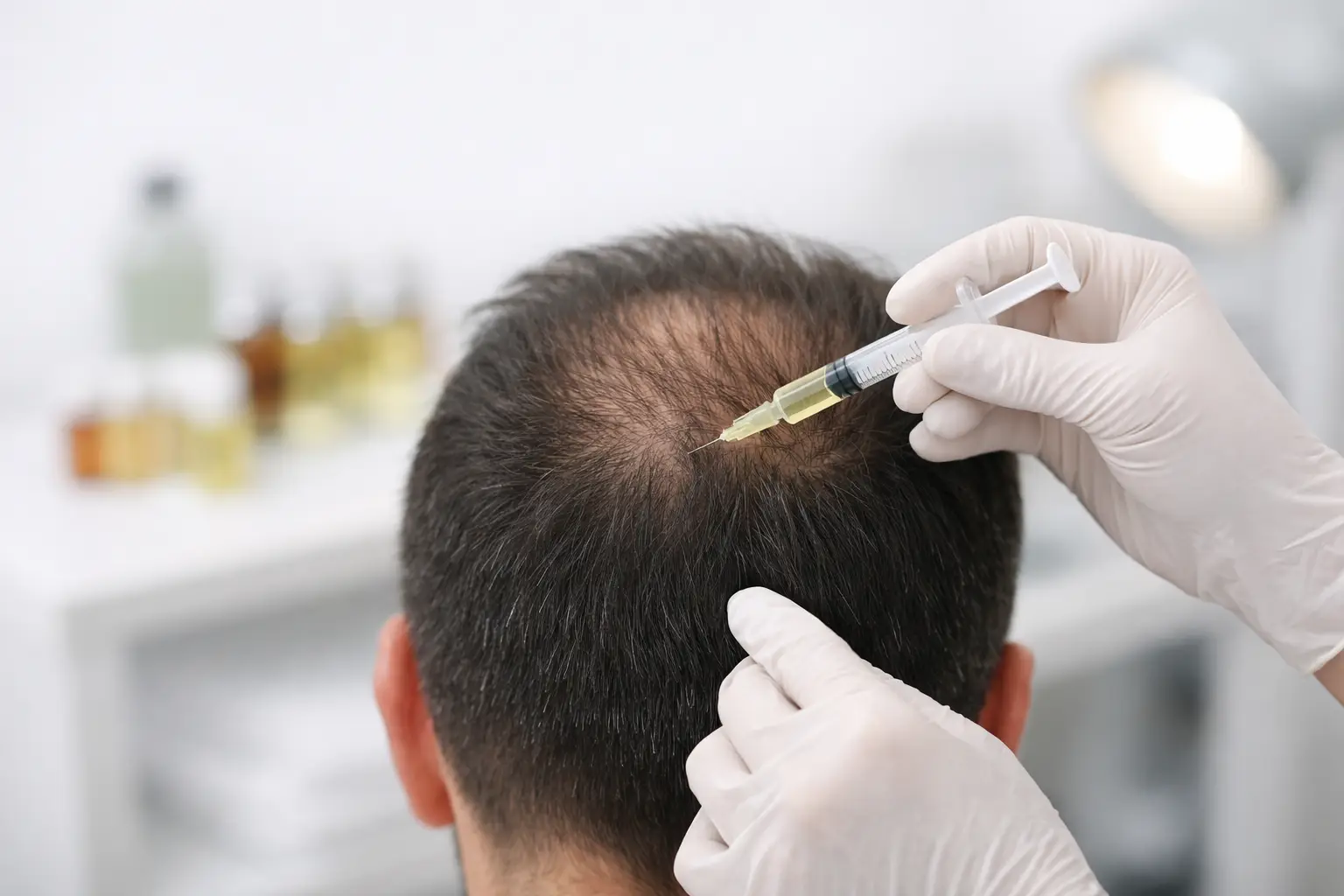
During treatment, small injections are placed into the scalp using a solution selected for the individual case. These formulas may contain vitamins, amino acids, minerals, peptides, or other active ingredients intended to nourish follicles and improve the local scalp condition. The idea is not magic and it is not instant. It is about giving weakened follicles better support in an area where support matters most.
That is an important distinction because mesotherapy is usually not a stand-alone answer for every type of hair loss. It works best when it is chosen after a proper scalp assessment and matched to the reason your hair is thinning.
Mesotherapy for hair loss benefits that matter most
The main reason people consider mesotherapy is that it is minimally invasive while still being treatment-driven. It does more than coat the hair shaft for cosmetic shine. It targets the scalp itself, which is where long-term hair quality is shaped.
One of the most valued benefits is improved scalp nourishment. When follicles are not functioning at their best, delivering supportive ingredients directly into the scalp may help create a healthier environment for growth. This can be especially useful for people dealing with early thinning, stress-related shedding, or diffuse hair loss that has not yet progressed to advanced baldness.
Another potential benefit is reduced hair fall. Many clients first notice excessive shedding before they notice visible bald patches. Mesotherapy may help calm this phase by supporting weakened follicles and improving scalp health. Results vary, but for some people, the first encouraging sign is not dramatic regrowth. It is seeing less hair on the pillow, in the shower drain, or on the brush.
Mesotherapy can also help improve hair thickness and texture over time. When follicles are still active but producing finer, weaker strands, supporting them early may lead to hair that looks denser and feels stronger. This is often where expectations need to stay realistic. If a follicle is dormant beyond recovery, mesotherapy may not bring it back. But if it is miniaturized and underperforming, treatment may help.
There is also the convenience factor. Compared with surgical interventions, mesotherapy involves little downtime and can fit more easily into a busy schedule. For working professionals or anyone who prefers discreet treatment, that matters. You can pursue scalp-focused care without committing to a major procedure.
Who is most likely to benefit from mesotherapy
Mesotherapy tends to be most helpful for people in the earlier or moderate stages of hair thinning, rather than those with extensive bald areas where follicles may no longer be active. Men and women with diffuse thinning often make strong candidates, especially when the goal is to strengthen existing hair and slow further loss.
It can also appeal to people who want to be proactive. If you have started noticing a change in hair density, waiting too long can limit your non-surgical options. Early intervention gives treatments like mesotherapy a better chance to support follicles before thinning becomes more advanced.
That said, the best candidates are not defined by age or gender alone. The real question is what is causing the hair loss. Telogen effluvium after stress or illness, postpartum shedding, pattern hair loss in its earlier stages, and certain scalp conditions may all respond differently. This is why a personalized assessment matters more than a generic online recommendation.
What mesotherapy can and cannot do
A modern hair loss clinic should be honest about trade-offs. Mesotherapy can be a valuable option, but it is not a cure-all.
What it can do is support scalp health, help reduce active shedding, and improve the quality of existing hair when follicles are still viable. It can also complement a broader treatment plan that includes lifestyle guidance, scalp care, medical support, or device-based therapies.
What it cannot do is guarantee full regrowth in every case. It also cannot replace a hair transplant when there is significant follicle loss in an area that is already bare. If your hairline has receded substantially or a crown area has been bald for years, a restorative strategy may need to include other options.
This is where specialist guidance becomes valuable. A treatment can be excellent and still not be the right first move for you. Good care is not about pushing one service. It is about matching the treatment to the scalp, the degree of loss, and the result you actually want.
How mesotherapy compares with other hair loss treatments
Mesotherapy sits in a useful middle ground. It is more intensive and targeted than over-the-counter serums, but far less invasive than surgery. That makes it attractive for people who want visible support without committing to a transplant.
Compared with topical treatments, mesotherapy offers direct scalp delivery. Some people prefer that approach because it avoids the inconsistency of home application and puts treatment in professional hands. Compared with oral medication, it may feel more localized, though medications and mesotherapy are sometimes used together depending on the case.
Compared with low level laser therapy, mesotherapy is different rather than better across the board. Laser therapy aims to stimulate follicles using light energy, while mesotherapy introduces active ingredients into the scalp. For some patients, combining treatment methods may provide a more complete approach than relying on one option alone.
If cosmetic improvement is the immediate priority, scalp micropigmentation or non-surgical hair replacement may produce a faster visual change. But those options work differently. Mesotherapy is designed to support your biological hair, not simply create the appearance of density.
What to expect from treatment and results
Mesotherapy is usually performed as a course of sessions rather than a one-time appointment. The scalp is treated in a structured way, and most people need a series of sessions to give the follicles consistent support. Maintenance may also be recommended depending on the pattern of hair loss and how the scalp responds.
The timeline for improvement varies. Some people notice reduced shedding first. Others begin to see better hair texture or signs of thickening after several sessions. Hair grows slowly, so patience is part of the process. A trustworthy provider should set that expectation clearly.
You may experience mild temporary sensitivity after treatment, but downtime is generally limited. This makes mesotherapy appealing to clients who want a treatment that fits around work, social life, and family responsibilities without drawing attention.
Why assessment matters before choosing mesotherapy for hair loss benefits
The phrase mesotherapy for hair loss benefits sounds straightforward, but the real value depends on correct diagnosis. Hair thinning caused by hormones, inflammation, nutritional deficiency, or scarring conditions will not all respond the same way. If you skip the assessment stage, you risk spending time on a treatment that is only partly aligned with the problem.
A specialist consultation should look at scalp condition, the pattern of thinning, your medical history, and your goals. Some people want to preserve what they have. Others want more visible density. Others need a discreet solution while they treat an underlying issue. Those are different pathways, and they deserve different recommendations.
At HairSpec, this kind of personalized planning is what turns a treatment menu into actual care. A modern clinic should help you understand not just what mesotherapy is, but where it fits within your broader hair restoration options.
Is mesotherapy worth it?
For the right candidate, mesotherapy can be a worthwhile part of a hair restoration plan because it is targeted, non-surgical, and supportive of natural hair growth. It is especially appealing if you are noticing early thinning, want to strengthen existing hair, and prefer a treatment that does not require major downtime.
The key is to think of it as a strategic treatment, not a miracle shortcut. Hair loss is personal, and good outcomes usually come from choosing the right combination of solutions at the right stage. If your scalp is showing early warning signs, acting sooner gives you more room to protect and improve what you still have.
A thoughtful next step is not chasing the loudest claim online. It is getting a professional opinion on what your scalp needs now, before temporary thinning becomes a more difficult problem to reverse.