

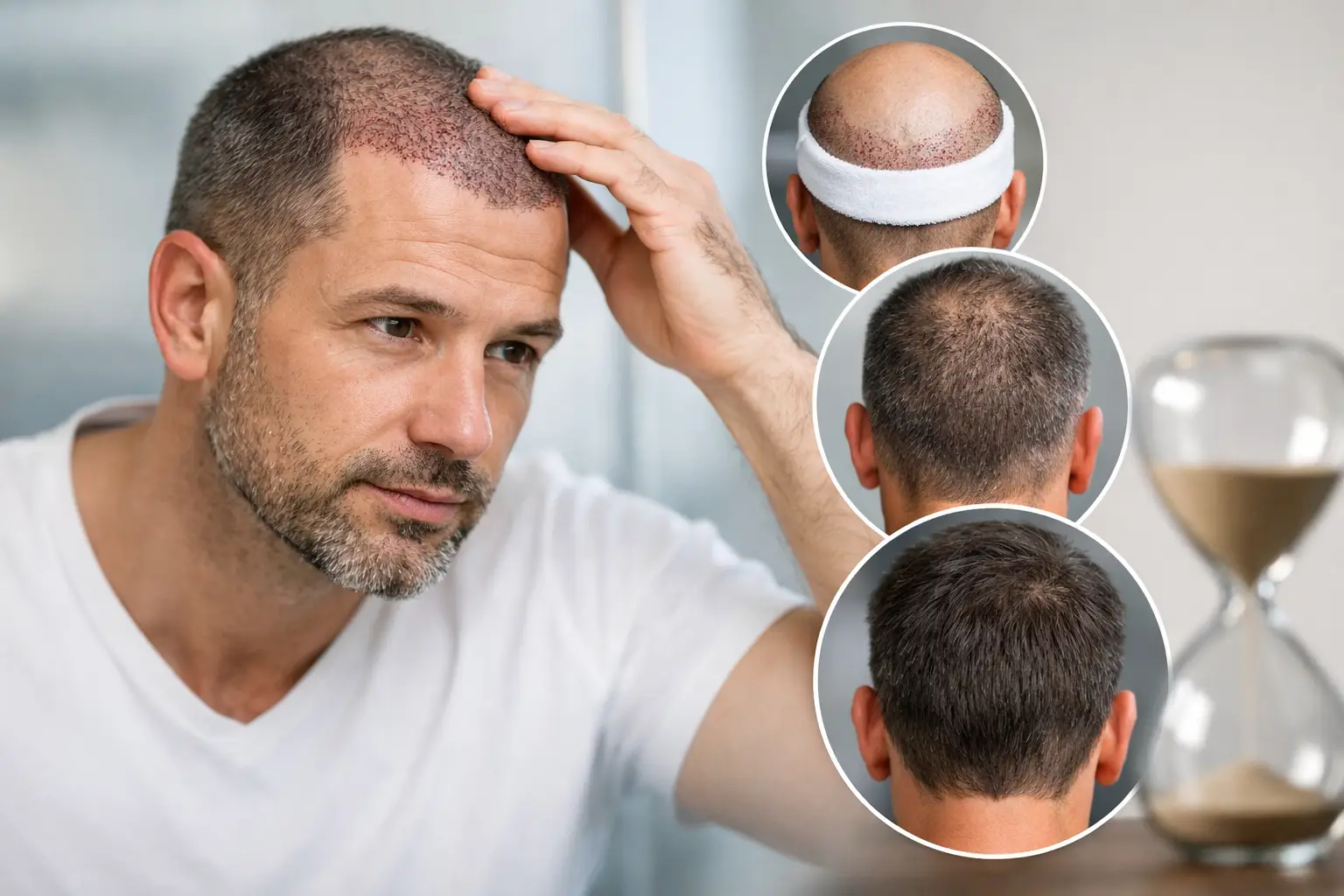
If you are planning a procedure, the hair transplant recovery timeline matters almost as much as the procedure itself. Most people are less worried about the day of treatment than the days and weeks after – when scabs form, shedding starts, and the mirror can feel a little confusing before real growth begins.
That uncertainty is normal. A transplant is a process, not an overnight cosmetic change. Knowing what usually happens at each stage can make recovery feel more manageable and help you spot the difference between expected healing and a reason to call your provider.
What the hair transplant recovery timeline really looks like
A realistic hair transplant recovery timeline has two parts. The first is skin healing, which happens relatively quickly. The second is hair growth, which takes much longer and requires patience.
This is where expectations often drift. The scalp may look calmer within days or weeks, but the newly transplanted follicles still need time to settle, rest, shed, and start growing again. For many patients, the hardest part is not discomfort. It is waiting through the awkward middle phase when things look less dramatic than they hoped.
Days 1 to 3: Tender scalp and early healing
In the first few days, mild swelling, redness, and tenderness are common. Tiny crusts or scabs form around the graft sites, and the donor area may feel sore or tight. If you had a follicular unit extraction procedure, these marks are usually small and scattered. If you had a strip procedure, the donor area may feel more noticeably tight for longer.
This period is mostly about protecting the grafts. Sleeping with your head elevated, avoiding friction, and following washing instructions carefully are standard parts of aftercare. Many people are able to return to light daily activities quickly, but they usually still look like they have had a procedure.
For professionals concerned about visibility, this is often the stage that requires the most planning. If your work involves in-person meetings, presentations, or public-facing roles, it is worth allowing a few days of privacy if possible.
Days 4 to 7: Scabs begin to loosen
By the end of the first week, swelling usually settles. Scabs remain visible but often start to dry out and lift as the scalp heals. Itching can show up at this stage, which is a normal part of recovery, but scratching can interfere with graft healing.
Some people feel encouraged during this week because the transplanted hairs are still in place and the area may look fuller than expected. That early appearance can be misleading. The follicles are secure, but the visible hairs attached to them often do not stay.
Gentle cleansing becomes especially important here. Too little washing can let crusts linger longer than necessary, while overly aggressive washing can irritate the scalp. The right balance depends on your surgeon’s protocol and your skin sensitivity.
Weeks 2 to 4: Shedding starts
This is the stage that catches many patients off guard. Around the second to fourth week, the transplanted hairs commonly shed. It can look like the treatment has failed, but in most cases this is a routine part of the cycle.
The follicles are not necessarily lost. What usually falls out is the hair shaft, while the follicle remains under the skin and transitions into a resting phase before producing new hair. This temporary shedding is often called shock loss, though that term can also refer to temporary shedding of nearby existing hair.
The emotional side of this stage should not be minimized. You have invested time, money, and hope into treatment, and then the visible hairs disappear. That can feel discouraging even when you were warned in advance. Clear guidance helps, but reassurance matters too.
Months 1 to 3: The quiet phase
During the first one to three months, the scalp generally looks more normal, but visible growth is usually limited. In some cases, the transplanted area can look patchy or thinner than expected because of shedding. Mild pimples or ingrown hairs may appear as new hairs begin to push through, although persistent inflammation should be assessed.
This is often the least rewarding part of the hair transplant recovery timeline because there is not much to see. Patients may wonder whether recovery has stalled. Usually, it has not. Follicles are biologically active beneath the surface even when the mirror suggests very little is happening.
It is also the stage when unrealistic comparisons become a problem. Looking at online before-and-after images without checking the timing can create false expectations. Most strong results are photographed much later, not at six or eight weeks.
Months 3 to 6: Early regrowth becomes visible
For many patients, the first meaningful signs of regrowth appear between months three and six. New hairs may start out fine, soft, and uneven. Density is still developing, so the result may not yet look polished.
This is a good moment to remember that growth is rarely perfectly synchronized. Some follicles activate earlier, others later. Hair texture may also look different at first. Curly hair can come in wiry, straight hair can appear softer, and both usually mature over time.
At this point, many people feel relief because progress is finally visible. Still, it is better to think of this as the beginning of the cosmetic payoff rather than the finished outcome. Haircuts, styling decisions, and overall satisfaction often improve further in the months ahead.
Months 6 to 9: Noticeable cosmetic change
Between six and nine months, the transplanted hair typically looks fuller and more natural. Density improves, the strands become stronger, and the shape of the hairline or restored area becomes easier to evaluate.
For some patients, this is the point where friends or colleagues start noticing a change without being able to identify exactly why. That subtle improvement is often the goal – a result that looks like better hair, not obvious work.
Not everyone moves at the same pace. Crown transplants often take longer than frontal hairline work to show meaningful density. If your procedure focused heavily on the crown, patience matters even more.
Months 9 to 12 and beyond: Maturing result
By nine to twelve months, many patients are close to their final result, especially in the frontal scalp. The hair usually thickens further, blends better with surrounding strands, and becomes easier to style naturally.
That said, some results continue to mature after the one-year mark. Crown areas may need 12 to 18 months to show their best outcome. This longer timeline does not mean something is wrong. It reflects how hair growth cycles vary by area and by individual biology.
What can speed up or slow down recovery
No two scalps heal in exactly the same way. Age, skin sensitivity, smoking, sun exposure, aftercare compliance, general health, and the type of procedure all influence the pace of recovery.
Technique matters too. FUE often involves a faster-looking recovery in the donor area, while FUT may require more downtime because of the linear incision. That does not automatically make one approach better than the other. The right method depends on your pattern of hair loss, donor supply, hairstyle preferences, and long-term plan.
This is also why a broader consultation can be valuable. A transplant is not always the only answer, and sometimes it works best as part of a larger hair restoration strategy. An experienced provider such as HairSpec may also discuss non-surgical support options when appropriate, especially if you want to protect existing hair while waiting for transplanted growth to mature.
When to contact your provider
A normal recovery includes redness, tenderness, shedding, and gradual regrowth. What deserves attention is severe pain, spreading redness, unusual discharge, fever, or swelling that worsens instead of improving. Persistent bleeding or signs of infection should never be brushed off.
It is also worth checking in if you are unsure whether your healing is on track. Reassurance is part of good aftercare. A patient should not have to guess whether a symptom is expected.
How to make the timeline easier to live with
Recovery tends to go better when you plan for both the physical and emotional side. Give yourself some calendar space, especially in the first week. Avoid major social events right away if you know visible scabbing will make you self-conscious. Follow washing and activity instructions closely, and do not judge your result in the first couple of months.
Most of all, treat the process with realistic patience. The best transplant results usually arrive gradually, not dramatically. When the timeline is understood from the start, it becomes easier to stay calm through the shedding phase and more satisfying to watch the new growth arrive on its own schedule.
If you are considering treatment, the most helpful next step is not guessing how your scalp will respond. It is getting a personalized assessment from a specialist who can explain what your recovery is likely to look like based on your hair loss pattern, donor hair quality, and goals.