

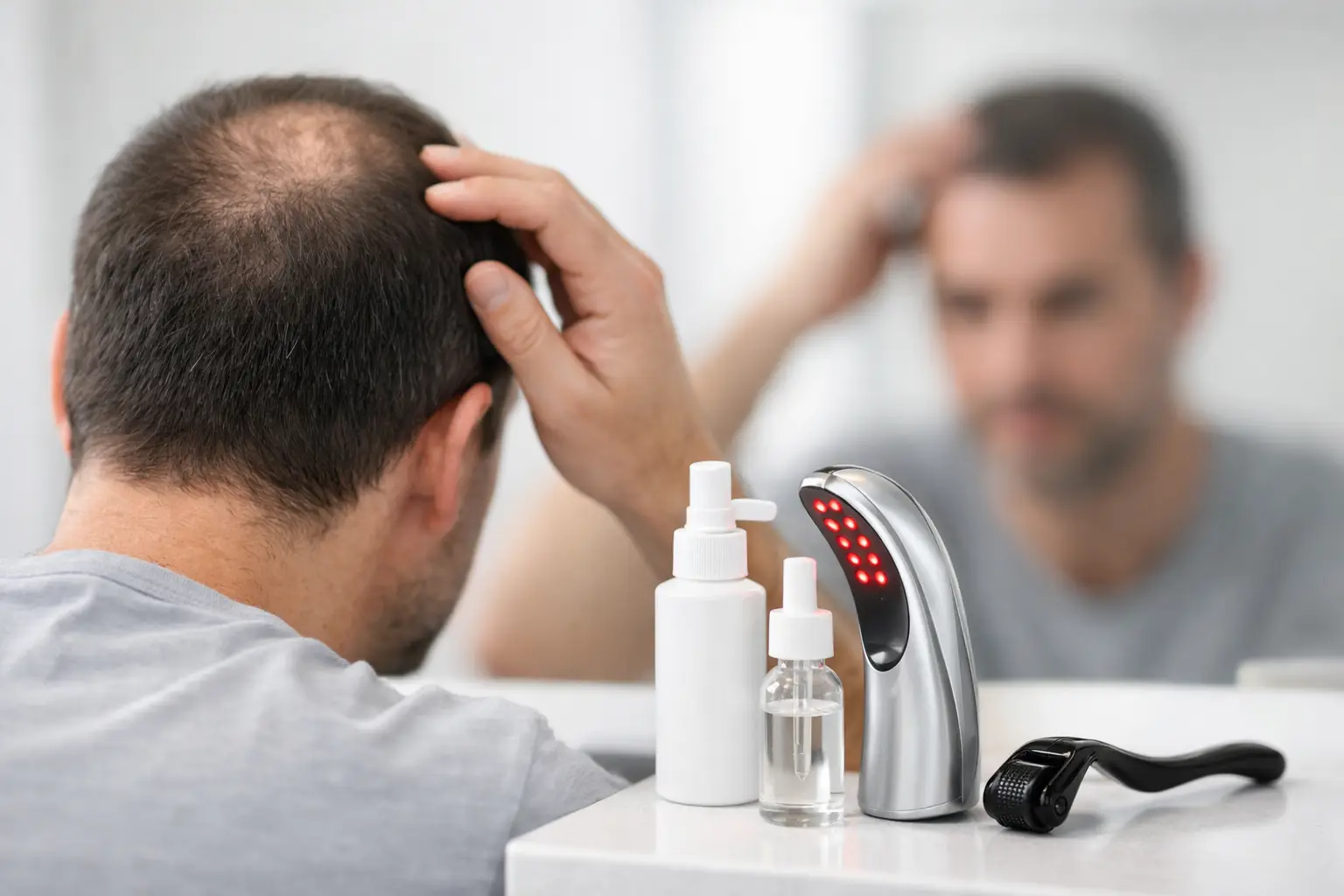
Hair on your pillow, more scalp showing under office lighting, a widening part you cannot unsee – for many people, hair loss becomes stressful long before it becomes severe. That is why non invasive hair loss treatments are often the first place to start. They give you room to act early, improve your appearance, and understand what is causing the change without jumping straight into surgery.
The right treatment depends on more than how much hair you have lost. It also depends on why it is happening, how quickly it is progressing, the look you want, and how much maintenance you are comfortable with. Some options support existing follicles. Some create the appearance of fuller density right away. Some do both. The key is matching the treatment to the problem instead of chasing a one-size-fits-all fix.
What counts as non invasive hair loss treatments?
When people hear the phrase, they often think of anything that does not involve surgery. That is broadly true, but there is a useful distinction. Some treatments are completely non-contact or surface-level, such as low level laser therapy or scalp micropigmentation. Others are minimally invasive, such as mesotherapy, where active ingredients are delivered into the scalp through tiny injections. In everyday hair restoration conversations, both are often grouped under non invasive hair loss treatments because they avoid surgical grafting, long downtime, and visible recovery.
That matters because many adults want visible improvement without shaving the head, taking time off work, or explaining a procedure to friends and colleagues. Non-surgical solutions fit that need well, especially for people who value privacy and a natural-looking result.
Why more people start with non-surgical options
The appeal is not just convenience. Non-surgical treatment gives you flexibility. If your hair loss is still in the early or moderate stage, supporting the scalp and existing follicles may help slow the progression and improve the look of thinning areas. If you already have more noticeable loss, cosmetic restoration methods can create density and coverage without waiting months for growth.
There is also an emotional advantage. Hair loss can make people feel as if they have lost control over their appearance. Non-surgical options restore some of that control. You can start conservatively, see how your hair responds, and adjust your plan as needed.
Low level laser therapy for thinning hair
Low level laser therapy, often called LLLT, uses light energy to stimulate the scalp. The goal is to encourage healthier follicle activity and support thicker-looking hair over time. It is painless, requires no cutting or downtime, and appeals to people who want a treatment that fits around work and daily life.
This option is usually best for thinning rather than completely bald areas. If follicles are still active but underperforming, laser therapy may help improve the condition of the scalp environment and the appearance of density. Results tend to be gradual, so it is better suited to people who are patient and consistent.
The trade-off is that LLLT is not an instant cosmetic transformation. It works best as part of a broader strategy, especially when hair loss has multiple causes such as genetics, stress, or scalp health issues.
Scalp micropigmentation for immediate definition
Among non invasive hair loss treatments, scalp micropigmentation stands out because it changes your appearance right away. This technique places tiny pigment impressions on the scalp to replicate the look of hair follicles or add visual density between existing strands.
For men with receding hairlines, thinning crowns, or shaved styles, it can create a sharper, fuller look without surgery. For women with diffuse thinning or wider parts, it can reduce scalp contrast so the hair appears denser. It is especially useful when the problem is visual coverage rather than follicle recovery.
What scalp micropigmentation does not do is regrow hair. It is a cosmetic solution, not a biological one. That does not make it less valuable. For the right candidate, the confidence boost is significant because the result is visible immediately and can look very natural when designed well.
Mesotherapy and scalp-focused stimulation
Mesotherapy involves delivering a customized blend of nutrients or active ingredients into the scalp. The aim is to support circulation, nourish the scalp, and create better conditions for healthier hair growth. It is often chosen by people who want something more targeted than topical care but are not ready for surgery.
This treatment sits in the gray area between non-invasive and minimally invasive, but many clients still see it as a gentle, accessible option because sessions are relatively quick and recovery is limited. It can be helpful for thinning hair, stress-related shedding, and scalp conditions that may affect hair quality.
As with many restorative treatments, the best results usually come from a course of sessions rather than a single appointment. It is not ideal if you want one visit and a permanent fix. It is more realistic to think of mesotherapy as part of an ongoing treatment plan.
Non-surgical hair replacement for fuller hair now
Sometimes the main goal is not to stimulate follicles. It is to look like yourself again as soon as possible. That is where non-surgical hair replacement becomes a strong option. Modern systems are far removed from the obvious, uncomfortable pieces many people still imagine. When designed and fitted properly, they can deliver natural density, realistic hairlines, and a high level of control over style.
This option is especially relevant for advanced hair loss, patchy loss, medically related loss, or anyone who wants a dependable cosmetic result without surgery. It can also work well for people who are not suitable candidates for hair transplantation or who prefer a reversible solution.
The main consideration is maintenance. Hair systems need professional fitting, regular care, and periodic replacement to stay looking their best. For many people, that is a worthwhile trade-off because the visual improvement is immediate and dramatic.
Wigs, toppers, and medical hair solutions
For women and men dealing with more extensive thinning, wigs, toppers, and medical hair solutions offer another route to natural-looking coverage. These can be tailored for daily wear, special occasions, or hair loss related to medical treatment.
The best versions are designed around lifestyle, comfort, and realism. That means choosing the right base, density, texture, and color match, not just selecting something off the shelf. A specialist-led fitting process makes a real difference here because comfort and discretion matter as much as appearance.
These solutions are not about giving up on treatment. They are often part of a broader plan that helps someone feel confident now while they also address scalp health or long-term restoration goals.
Which non invasive hair loss treatments are best for you?
This is where honest assessment matters. If you have early thinning and want to preserve what you have, low level laser therapy or mesotherapy may make sense. If your main concern is visible scalp show-through, scalp micropigmentation may create the fastest cosmetic improvement. If you want fuller hair immediately and have more advanced loss, non-surgical hair replacement may be the better fit.
There is also the question of maintenance versus permanence. Some people prefer a routine they can manage over time if it avoids surgery. Others want the least ongoing effort possible and may eventually consider transplant surgery after starting with non-surgical care. Neither approach is inherently better. It depends on your comfort level, budget, timeline, and expectations.
A good consultation should also consider the cause of your hair loss. Pattern hair loss, traction damage, stress shedding, postpartum thinning, and medically related loss do not behave the same way. Treating them as if they do is where disappointment often starts.
What realistic results look like
The most successful outcomes usually come from setting the right goal. That might mean stronger-looking hair, less visible scalp, a restored hairline effect, or immediate density through a custom system. It does not always mean regrowing every lost strand.
Modern treatment is less about chasing a miracle and more about combining the right tools. A person might use laser therapy to support existing hair, scalp micropigmentation to improve density appearance, and a custom replacement solution for specific stages or events. Personalized planning tends to outperform trend-driven decision-making.
For that reason, specialist providers with experience across multiple treatment types are often better placed to guide you than businesses centered on a single service. A broader treatment range makes it easier to recommend what fits you, not just what happens to be on the menu.
Hair loss rarely feels like a small issue when you are the one living with it. The encouraging part is that you do not have to choose between doing nothing and having surgery. Today’s non-surgical options are more advanced, more natural-looking, and more adaptable than many people realize. If you are noticing change, the smartest next step is not guessing. It is getting your scalp and hair assessed properly so the solution fits your life as well as your hair.