

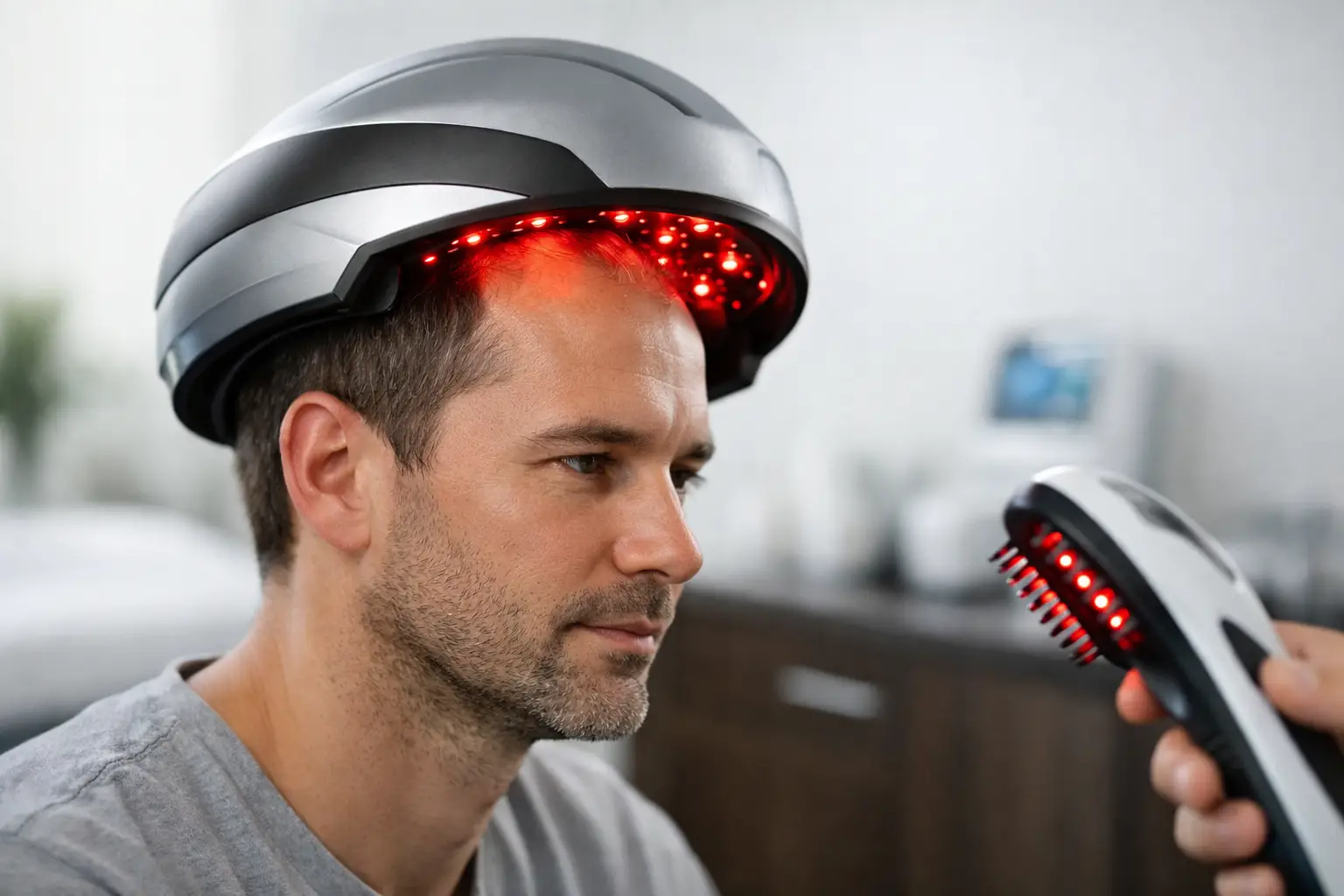
If you are seeing more scalp in the mirror, more hair in the shower, and more hesitation before social events, a low level laser therapy review is worth your time. This treatment is often presented as an easy fix, but the real value lies in knowing where it helps, where it falls short, and whether it fits your stage of hair loss.
Low level laser therapy, often called LLLT, is a non-invasive treatment that uses specific wavelengths of red light to stimulate hair follicles. It does not involve surgery, needles, or downtime, which is one reason it appeals to busy professionals and anyone who wants a private, low-commitment starting point. For many people, that matters just as much as the science.
What this low level laser therapy review really comes down to
Most people do not ask whether LLLT exists or whether it is popular. They ask a more practical question: will it make my hair look better? The honest answer is that it can help, especially in mild to moderate thinning, but it is rarely a standalone answer for advanced hair loss.
LLLT works best when follicles are still active but underperforming. In simple terms, it is more likely to support weakened hair than to revive areas where follicles are no longer producing hair at all. That distinction is important. If you are dealing with early pattern thinning, diffuse shedding, or reduced density around the crown or part line, the treatment may improve hair quality, thickness, and the appearance of fullness over time.
If you have a long-standing shiny bald area, expectations need to be more careful. At that point, treatments such as scalp micropigmentation, non-surgical hair replacement, or hair transplant planning may be more relevant than light therapy alone.
How low level laser therapy is supposed to work
The treatment uses low-intensity red light to expose the scalp and follicles to controlled energy. The goal is to encourage better follicle activity, improve circulation around the scalp, and help keep hair in the growth phase longer. Research suggests that certain wavelengths may support cellular function in the follicle, which can translate into thicker, stronger strands in the right candidate.
That sounds promising, but it helps to frame it correctly. LLLT does not create a brand-new hairline out of nowhere. It supports existing follicles. Think of it as a way to improve the performance of follicles that are struggling, not a guaranteed rescue for follicles that are already inactive.
This is why proper assessment matters. Hair loss can be caused by genetics, hormones, stress, medical issues, postpartum changes, styling damage, or scalp conditions. If the underlying cause is not addressed, laser treatment may deliver only partial improvement.
Who tends to see the best results
The strongest candidates are usually men and women in earlier stages of thinning who still have visible hair across the area being treated. People with androgenetic alopecia, also known as male or female pattern hair loss, often fall into this group. Those with diffuse thinning can also respond well, particularly when treatment begins before density drops too far.
LLLT may also appeal to people who want a gentle option while deciding on a broader treatment plan. Some use it because they are not ready for medication. Others use it as part of a maintenance strategy after hair restoration procedures or alongside therapies designed to improve scalp health.
On the other hand, not everyone is an ideal fit. If your hair loss is caused by scarring alopecia, untreated medical conditions, or severe follicle miniaturization that has progressed for years, the benefits may be limited. That does not mean you are out of options. It means your plan should be more personalized.
What results usually look like in real life
A good low level laser therapy review should talk about timelines, because patience is part of the treatment. Hair does not respond overnight. Most people need several months of consistent sessions before they can judge whether it is working.
Early signs are often subtle. You may notice less shedding first, followed by improved texture or slightly better coverage in areas that looked sparse under bright lighting. Over time, some people see thicker strands and a denser look. These changes can be meaningful, but they are usually gradual rather than dramatic.
This matters because disappointment often comes from unrealistic expectations, not from the treatment itself. If someone expects a full restoration from significant baldness, LLLT may feel underwhelming. If someone wants to strengthen thinning hair, improve density, and support long-term scalp care, it can be a smart part of the plan.
The main advantages of LLLT
The biggest strength of low level laser therapy is that it is non-invasive. There is no recovery period, and treatment is generally comfortable. For clients who want privacy, convenience, and a lower barrier to getting started, that is a major benefit.
Another advantage is that it can work well in combination with other hair loss solutions. Hair restoration is rarely one-size-fits-all. Someone with thinning at the crown might benefit from laser therapy plus topical or injectable support. Another person may use LLLT to maintain and strengthen existing hair while exploring scalp micropigmentation for visual density or a hair transplant for more structural restoration.
There is also an emotional advantage that should not be overlooked. Many people feel more hopeful when they begin with a treatment that feels approachable. Taking action early often leads to better outcomes than waiting until hair loss becomes harder to manage.
The limitations you should know before starting
This is where a balanced review matters. LLLT is not the best choice for every pattern of hair loss, and it is not a shortcut around diagnosis. If your thinning is linked to nutritional deficiency, thyroid issues, sudden stress-related shedding, or a scalp disorder, treating the root cause is essential.
Consistency is another challenge. The treatment only makes sense if you are willing to follow a schedule over months. Sporadic use usually leads to weak or unclear results. Some people stop too early because the changes are not immediate, which makes it hard to judge the therapy fairly.
Cost should also be considered in the context of value. A lower-cost treatment that gives minimal improvement may be less worthwhile than a more targeted approach that better suits your hair loss pattern. The right question is not simply whether LLLT is affordable. It is whether it is the right investment for your goals.
LLLT as a standalone treatment versus part of a plan
In milder cases, LLLT may be enough to improve density and slow visible progression. But in many cases, the best results come from combination care. Hair loss is often layered, with genetics, scalp condition, styling habits, age, and health factors all playing a role.
That is why specialist-led treatment tends to outperform self-directed trial and error. A personalized plan may include laser therapy, scalp treatments, mesotherapy, cosmetic density solutions, or restorative procedures depending on what your scalp assessment shows. HairSpec often sees the best outcomes when treatment is matched to both the cause of hair loss and the level of change the client wants to achieve.
For someone who wants a natural-looking improvement without surgery, LLLT can be an excellent building block. For someone seeking a major visual transformation, it may be one part of a broader strategy rather than the whole answer.
Is low level laser therapy worth it?
If you are looking for a gentle, modern, and clinically grounded option for early to moderate thinning, the answer can be yes. It offers a practical entry point into hair restoration, especially for people who want to avoid invasive treatment and prefer gradual improvement.
But value depends on fit. The right candidate can see meaningful benefits in hair strength, thickness, and overall appearance. The wrong candidate may spend months hoping for regrowth that the treatment was never designed to deliver.
That is why the best next step is not guessing from photos online or choosing based on marketing claims. It is getting your scalp and hair loss pattern assessed properly, understanding what is still treatable, and building a plan around realistic goals. When hair loss is personal, the treatment choice should be personal too.
The most reassuring part is this: even if low level laser therapy is not your complete answer, it can still help point you toward one that is.