

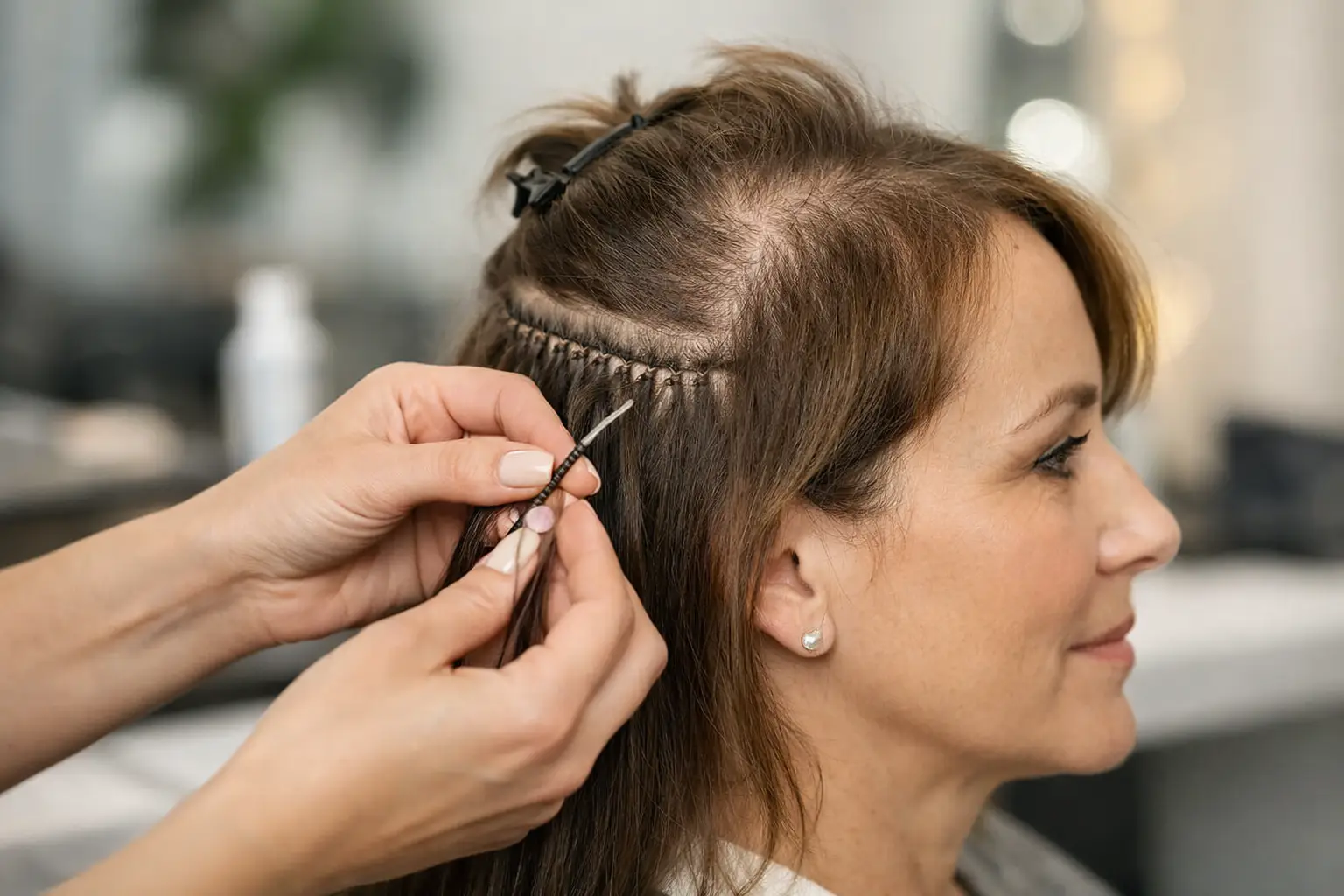
A widening part, more scalp showing under bright office lights, thinner hair at the crown – these are often the moments when people start looking for practical answers. Hair weaving for thinning hair is one of the most effective non-surgical options for creating immediate fullness without waiting months for regrowth. For many adults, that matters just as much as the result itself.
What makes hair weaving appealing is that it sits in a useful middle ground. It is more secure and customized than a simple clip-in fix, yet it does not involve surgery or long recovery time. If you want fuller-looking hair now while still keeping your options open for treatments like scalp therapy, SMP, or transplant planning later, hair weaving can be a smart place to start.
What hair weaving for thinning hair actually means
Hair weaving is a non-surgical hair replacement method designed to add density and coverage in areas where natural hair has become thin. A customized hairpiece or integration system is attached to existing hair in a way that blends with your natural texture, color, and style. The goal is not to create an obvious add-on. The goal is to make your hair look naturally fuller.
This is different from a standard wig. A wig usually covers the entire scalp, while hair weaving focuses on targeted areas of thinning. That makes it especially attractive for men and women who still have some natural hair and want to improve density where loss is most visible.
The technique used can vary depending on the pattern and severity of hair loss. Some people need light integration around the top or crown. Others need broader coverage with a more structured attachment method. This is why a proper assessment matters. The best result depends on how much hair you still have, the condition of your scalp, your lifestyle, and how you want the finished look to feel day to day.
Who is a good candidate for hair weaving for thinning hair?
Hair weaving can work well for people with diffuse thinning, early to moderate pattern hair loss, thinning at the crown, or cosmetic density concerns that make styling more difficult. It is often a strong option for working professionals who want a discreet change that looks polished right away.
It can also help people who are not ready for surgery, are not suitable candidates for transplant, or simply want a reversible solution first. That flexibility is important. Hair loss is personal, and not everyone wants the same level of commitment from the start.
That said, suitability depends on scalp health and the strength of the remaining hair. If the natural hair is too fragile, an attachment method must be chosen carefully to avoid unnecessary tension. If there is active scalp irritation, shedding linked to a medical issue, or extensive baldness in the target area, another option may be more appropriate. A specialist should guide that decision rather than forcing one solution onto every client.
Why people choose it over other solutions
The biggest advantage is immediacy. Hair weaving gives visible coverage as soon as the system is fitted and styled. You do not need to wait through a slow improvement cycle, which can be a major relief when thinning is affecting confidence, social comfort, or professional image.
It also offers a high level of customization. The density, base design, hair type, length, and finish can all be tailored to suit your features and styling preferences. Done well, the result should not look heavy or overly perfect. Natural hair has movement, softness, and variation, and a good hair weaving system is designed with that in mind.
Another reason people choose hair weaving is control. You can improve the look of your hair without committing to surgery. You can adjust your style, refine the level of density, and combine the cosmetic result with ongoing hair loss management if needed. For many clients, that balance of flexibility and visible change is exactly what they want.
What the process usually involves
The process starts with a consultation and scalp assessment. This step is more important than many people realize because thinning hair is not one single condition. The cause may be genetic, hormonal, stress-related, medical, or a combination of factors. Understanding that helps determine whether hair weaving should be a standalone solution or part of a broader plan.
Next comes customization. The specialist evaluates the thinning pattern, your natural hair characteristics, and how you wear your hair. The hair system is then selected or designed to blend as naturally as possible. A modern provider will focus on realism, comfort, and secure fitting rather than just adding maximum volume.
After attachment, the hair is cut and styled to integrate with your own hair. This finishing stage makes a major difference. Even a high-quality system can look less convincing if the cut is not adapted to your face shape, density needs, and personal style.
Maintenance appointments are part of the process. Hair weaving is not a one-time treatment you forget about. It needs professional upkeep to keep the attachment secure, the scalp comfortable, and the appearance fresh.
How natural does it look?
This is usually the first real question behind every other question. The answer is that it can look extremely natural when the system is properly chosen and professionally fitted. The quality of the hair, the design of the base, the way it is attached, and the final cut all affect the result.
Natural-looking hair weaving does not simply cover thin areas. It respects your age, hairline, density pattern, and everyday styling habits. If someone who has always had fine hair suddenly appears with very thick, dramatic volume, the result may draw attention for the wrong reasons. In most cases, a believable improvement works better than an exaggerated one.
Lighting and close-up visibility matter too. A good system should hold up not only in a mirror at home, but in daylight, at work, and in photos. That is why specialist fitting is worth it.
The trade-offs to understand before you commit
Hair weaving is effective, but it is not maintenance-free. You will need follow-up care, cleaning, and adjustments over time. If you want a solution that behaves exactly like growing hair from your own scalp, this may not fully match that expectation.
Comfort also varies from person to person. Many clients adapt quickly and enjoy the confidence boost right away, while others need a short adjustment period. Lifestyle matters here. If you exercise heavily, spend a lot of time outdoors, or style your hair aggressively, the system and maintenance plan need to be chosen accordingly.
Cost is another factor. Hair weaving often costs less upfront than surgery, but it involves ongoing maintenance and replacement over time. For some people, that still makes excellent sense because the result is immediate and non-surgical. For others, a treatment-based or surgical route may make more financial sense long term. It depends on your goals, timeline, and comfort level.
Hair weaving versus other thinning hair options
Compared with topical products or low level laser therapy, hair weaving gives faster visible change. Those treatments may support hair health and retention, but they usually take time and results can vary.
Compared with wigs, hair weaving is often more targeted and integrated. That can make it feel lighter, more personalized, and more natural for people with partial hair loss.
Compared with scalp micropigmentation, hair weaving adds actual hair volume rather than the appearance of density through pigment. SMP can be excellent for some cases, especially shorter hairstyles, but it creates a different visual effect.
Compared with a hair transplant, hair weaving is non-surgical and immediate. A transplant may offer a permanent solution for the right candidate, but it requires donor hair, healing time, and patience. Some clients use hair weaving as a practical option while they consider whether transplant is right for them.
Getting the best result
The best outcomes usually come from a provider that looks at the full picture, not just the cosmetic fix. Thinning hair can have more than one cause, and a personalized plan often delivers the most satisfying result. In a specialist setting such as HairSpec, that may mean combining hair weaving with scalp-focused treatments or longer-term restoration strategies, depending on your needs.
If you are considering hair weaving, ask the questions that matter in real life. How will it feel during a normal workweek? How often will maintenance be needed? What happens if your natural hair changes over time? A good specialist should answer these clearly and help you choose a solution that fits your routine, not just your appointment day.
Fuller-looking hair should not come at the cost of discomfort, guesswork, or a result that feels unlike you. The right approach is the one that restores coverage while still letting you feel at ease in your own reflection. If thinning hair has started changing how you style, socialize, or carry yourself, a personalized non-surgical solution may be the most practical next step.