

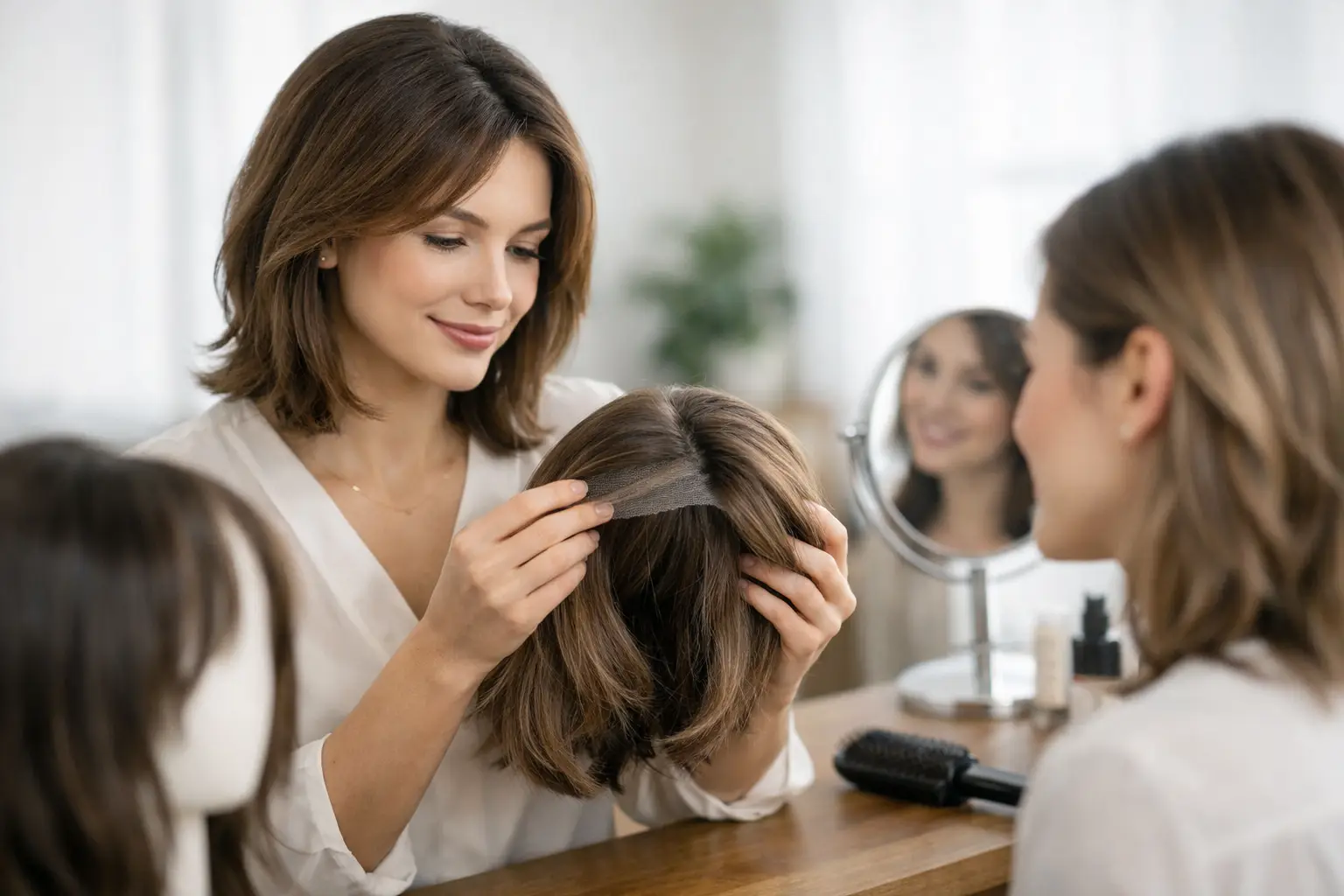
A wig can look convincing in a mirror and still feel wrong by 2 p.m. The difference usually comes down to the details that matter during a normal workday: how the hairline sits under daylight, whether the cap traps heat, how the style moves when you turn your head, and whether you can forget you are wearing it. Realistic wigs for daily wear are designed around those real-life moments, not just a polished first impression.
For people managing thinning hair, pattern hair loss, or medical hair loss, a daily wig is more than a beauty accessory. It can provide immediate coverage, restore a familiar sense of style, and offer privacy while you consider other hair restoration options. The right choice should feel personal, comfortable, and natural enough to support your routine with confidence.
What Makes a Wig Look Real in Everyday Life?
Natural appearance is rarely created by one feature alone. It is the combined effect of a believable hairline, appropriate density, a well-matched color, and a cap that sits securely against the scalp. A wig that is overly dense, excessively shiny, or poorly fitted can draw attention even if the cut itself is attractive.
The most realistic option is not always the fullest one. Natural hair typically has variation at the hairline and crown, with a little scalp visibility depending on the style. A skilled consultant can help you select density that suits your age, facial features, existing hair, and the degree of coverage you want. For someone with gradual thinning, a softer, less dramatic density often blends more naturally than a major change overnight.
Color deserves the same level of attention. A single flat shade can look artificial, particularly in direct sunlight. Shades with subtle lowlights, rooted color, or finely blended tones tend to create more dimension. If you have some of your own hair showing around the sides or nape, matching its undertone is just as useful as matching the overall color.
The Hairline Is the Detail People Notice First
Lace-front wigs are popular for a reason. A fine lace panel at the front allows individual hairs to appear as though they are growing from the scalp, creating a softer transition between the wig and skin. This is especially valuable if you prefer to wear hair away from your face, tuck it behind your ears, or change your part.
A monofilament top can further improve realism. It gives the appearance of hair emerging from the scalp and allows the part to be moved in multiple directions. These features can add cost, but for regular wear, the flexibility and natural finish may be worth it.
Not everyone needs a full lace front or monofilament cap. If you generally wear bangs, a side-swept fringe, or a style with a fixed part, a simpler construction may still look excellent. The best investment depends on how you plan to style and wear the wig, not on choosing every premium feature available.
Choosing Realistic Wigs for Daily Wear
Start by being honest about your routine. Do you commute in warm weather, work long hours, exercise after work, wear glasses, or need a style that can be put on quickly each morning? These factors affect the cap construction, fiber choice, length, and attachment method that will serve you best.
For many first-time wearers, a lightweight, ready-to-wear wig with adjustable tabs offers an easy introduction. It can be secured without adhesive, removed at night, and adjusted for a close fit. For those with more extensive hair loss or an active lifestyle, additional security may be preferred. Options can include silicone grip areas, integrated clips when there is enough natural hair to support them, tapes, or medical-grade adhesives.
Adhesive is not automatically necessary for a natural result. A properly measured cap with the right grip can feel secure for daily activities. Adhesive may be useful for a highly exposed hairline or for people who want to wear a style off the face, but it requires careful skin preparation and removal. If you have a sensitive scalp, ongoing scalp concerns, or hair loss related to medical treatment, professional guidance is particularly helpful before using tapes or adhesives.
Human Hair or Synthetic Fiber?
This choice is often the most practical decision you will make.
Human hair wigs offer natural movement and can usually be heat styled, curled, straightened, and customized much like biological hair. They are a strong choice for people who enjoy changing their look or want a highly tailored finish. They also require more maintenance, including regular washing, conditioning, styling, and protection from humidity. Their higher initial cost should be weighed against how frequently you will wear them and whether you are comfortable with the upkeep.
Modern heat-friendly synthetic wigs can look remarkably natural and are often easier to manage. They hold their style after washing, which can save time during busy mornings. However, synthetic fibers may have a shorter usable life with frequent wear, and heat-friendly styles can lose their shape if exposed to too much heat. Standard synthetic fibers are generally not suitable for heat styling.
There is no universal winner. Human hair is often best for maximum styling freedom, while high-quality synthetic fiber can be an excellent daily option for convenience and predictable styling. Some people keep both: a synthetic wig for everyday efficiency and a human hair wig for occasions when they want greater versatility.
Fit and Comfort Should Never Be an Afterthought
A realistic wig must be comfortable enough to wear for hours. Pressure points around the temples, a cap that shifts, or excess heat at the crown can make even a beautiful wig impractical. Accurate measurements are essential because wig sizes vary by brand and cap design.
Measure around the perimeter of your head, from the front hairline around the ears to the nape, as well as from front to nape and ear to ear. A professional fitting can identify whether you need petite, average, large, or a customized cap. It can also help determine how to prepare your natural hair beneath the wig so the silhouette remains smooth.
Breathable caps are especially helpful in humid climates, for people who run warm, or for anyone wearing a wig through a full workday. Open-wefted cap designs improve airflow, while hand-tied caps tend to offer softer movement and a lighter feel. The trade-off is that more refined cap construction usually comes with a higher price point.
If hair loss is temporary, changing, or linked to medical treatment, your fit needs may change over time. Avoid committing to a cap that is only comfortable at one stage of the process. Adjustable features and an experienced fitting team can give you more flexibility.
Cut, Length, and Density Create a Believable Result
The haircut should fit your lifestyle as much as your face shape. A shoulder-length layered style may offer easy movement and enough versatility for office wear, while a polished bob can be simple to maintain. Longer lengths can look beautiful, but they require more detangling and can show friction damage sooner at the shoulders and collar.
Ask for customization rather than wearing a new wig straight from the box. Trimming the fringe, refining face-framing layers, softening the density around the front, or adjusting the part can make a significant difference. A wig should look like it belongs to you, not like a style you borrowed for the day.
For men, subtle density and a natural front hairline are often the priority. A hair system, partial integration piece, or custom-made solution may provide a more suitable result than a conventional full wig, depending on the remaining hair and preferred style. A consultation-led approach is valuable because the right solution may not be the one you initially expected.
Caring for a Daily-Wear Wig
Regular care protects the realism you invested in. Wash the wig only as often as needed, typically after several wears rather than every day, unless perspiration, product buildup, or environmental exposure calls for it. Use products made for the specific fiber type, and avoid pulling or rubbing the hair aggressively.
Store the wig on a stand when it is dry to help maintain its shape. Brush from the ends upward with a suitable wig brush or wide-tooth comb, especially for longer styles. Keep human hair wigs conditioned without applying heavy products close to the cap, where buildup can affect movement and comfort.
It is also wise to have a maintenance plan. Daily wear creates normal friction and gradual wear at the nape, hairline, and part. Professional servicing can refresh the cut, restore the style, assess the cap, and help extend the life of the piece.
A natural-looking wig should not ask you to become someone else. It should let you step into your day looking like yourself on a good hair day – comfortable, polished, and fully in control of how much attention your hair receives.