

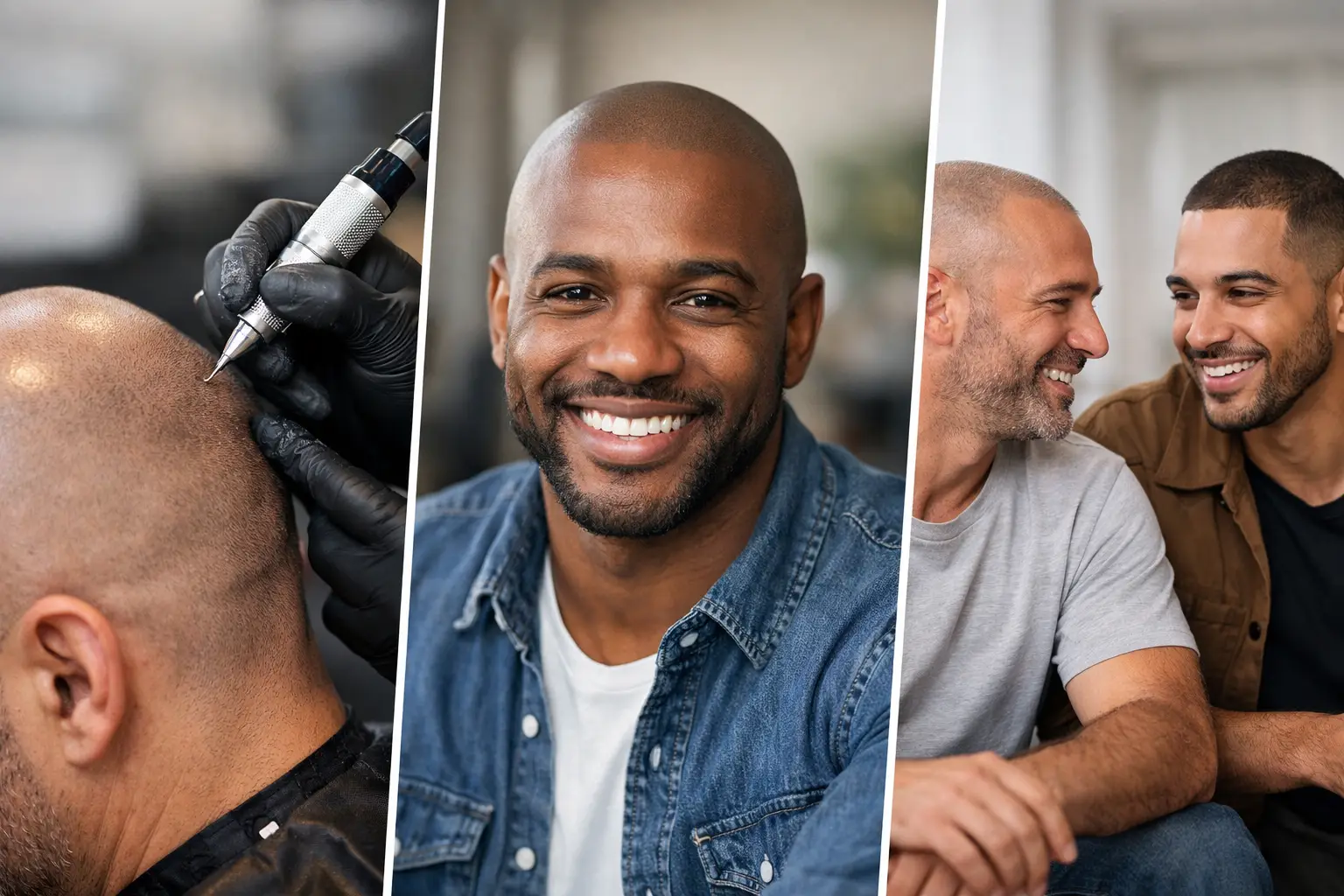
A freshly shaved head can look intentional. A thinning crown can look fuller. A widening part can appear less visible without adding a single strand of hair. That is why scalp micropigmentation success stories are rarely only about pigment. They are about the moment someone stops planning their life around harsh lighting, camera angles, hats, or the worry that others will notice their hair loss.
Scalp micropigmentation, often called SMP, uses carefully placed pigment impressions to recreate the appearance of hair follicles on the scalp. It is not a hair transplant, and it does not regrow hair. Its value lies in skilled visual design: creating the look of a close-cropped hairstyle, reducing contrast between scalp and hair, or making existing hair appear denser.
The most convincing results do not look dramatic in the way people expect. They look believable. They fit the person’s age, skin tone, hair color, facial features, and preferred style. Below are the types of transformations that help explain why people choose SMP and what separates a good result from an unrealistic promise.
Scalp Micropigmentation Success Stories: What Changes
The professional who wanted a sharper, calmer look
For many men with advanced pattern baldness, the decision is not always about trying to look like they have a full head of long hair again. It is about gaining control over their appearance. A well-designed SMP treatment can create the impression of a deliberately close-shaved hairstyle, with a soft, age-appropriate hairline and natural density across the scalp.
This type of success is often most noticeable in everyday situations: stepping into a bright office elevator without feeling exposed, attending a client meeting without reaching for a cap, or seeing a photo from the side and recognizing the person in it as yourself. The treatment does not change the face, but the addition of a balanced hairline can restore structure and proportion.
A responsible practitioner will not give every client a low, perfectly straight hairline. That may look impressive immediately after treatment but can become less natural over time. A slightly softened, mature design usually creates a result that feels more credible and easier to maintain as the client ages.
The woman who wanted her part line to disappear into her hair
SMP is not limited to shaved styles or male pattern baldness. Women with diffuse thinning often use scalp micropigmentation to reduce the visible contrast between their hair and scalp. When hair is fine or sparse around the part line, crown, or temples, the scalp can show through even when there is still considerable hair coverage.
In these cases, pigment is placed between existing hairs to create a fuller visual effect. The goal is not to draw individual hairs over a bald area. It is to make the scalp less noticeable, so the hair that is present appears denser.
Success can mean less time spent applying root sprays or hair fibers before work. It can mean feeling more comfortable wearing hair down, changing a part, or standing under direct overhead light. For people with longer hair, SMP can be particularly useful as a complementary treatment alongside medical hair loss management, low-level laser therapy, or a non-surgical hair replacement solution, depending on the cause and pattern of thinning.
The transplant patient who needed the finishing detail
Hair transplants can produce real hair growth, but density is not always uniform. Some clients still notice scalp show-through behind the hairline, at the crown, or around donor scars. SMP can support a transplant by creating the appearance of greater density where transplanted grafts alone cannot achieve the desired visual fullness.
This is one of the most practical scalp micropigmentation success stories because it is not based on replacing a treatment. It is about combining the right treatments for a more complete result. A transplant may provide hair; SMP can reduce the contrast around it.
It is equally valuable for certain linear or dot-like scars from previous procedures. The approach must be tailored carefully, especially when scar tissue is involved. Skin texture, scar color, circulation, and the surrounding hair all affect how pigment settles and how natural the finished area appears.
Why the Best Results Are Planned, Not Rushed
SMP is sometimes described as a scalp tattoo, but that description misses the level of detail involved. The pigment, placement depth, dot size, tone, spacing, and hairline shape all matter. If the pigment is too dark, too large, or too uniform, the result can look artificial rather than like natural follicle shadow.
The consultation is where a successful outcome begins. A specialist should assess the pattern of hair loss, the stability of remaining hair, scalp condition, skin tone, lifestyle, and long-term goals. Someone whose hair loss is actively progressing may need a design that accounts for future change. Someone with a very light complexion or gray hair may need a softer pigment approach than someone with dark, closely cropped hair.
Most treatments are completed over multiple sessions. This allows the practitioner to build density gradually and evaluate how the pigment heals before adding more. It also gives the client an opportunity to see the look develop rather than committing to excessive darkness in one appointment.
At HairSpec, the aim of a scalp assessment is not to steer every client toward one solution. Hair loss has different causes, and the right answer may be SMP, hair replacement, restorative treatment, a transplant consultation, or a combination of options. A personalized recommendation protects both the result and the client’s confidence in the decision.
What Makes a Result Look Natural Years Later
A successful SMP result should still make sense as your appearance evolves. This is where conservative planning matters. Hairlines should have subtle irregularity rather than a rigid outline. Density should fade naturally from the hairline into the scalp. The pigment should complement the underlying skin instead of sitting on top of it as a flat block of color.
Maintenance is another part of the story. SMP is considered long-lasting, but it can fade gradually due to sun exposure, skin changes, and individual lifestyle factors. Periodic touch-ups may be needed to keep the color fresh and the density balanced. This is not a failure of the treatment. It is similar to maintaining any appearance-focused service over time.
Clients also need to protect their investment. Following aftercare instructions, avoiding early sun exposure, and allowing the scalp to heal between sessions all influence the final result. A specialist should explain these steps clearly before treatment begins, not after.
Is Scalp Micropigmentation the Right Kind of Success for You?
SMP can be an excellent option for people who want a non-surgical, low-maintenance visual solution to hair loss. It is particularly suited to those comfortable with a short hairstyle, those with a receding hairline or bald patches, and those who want to create density around existing thinning hair.
It may be less suitable if you expect it to produce physical hair growth or if you want the freedom to wear a long hairstyle without other coverage options. Those with active scalp conditions, certain medical concerns, or significant uncertainty about their preferred look should seek a thorough assessment first. The best treatment is not the most popular one. It is the one that fits your goals, hair loss pattern, and lifestyle.
The strongest success stories share one thing: the person feels more like themselves afterward. Not because the treatment made them look like somebody else, but because it removed a daily source of self-consciousness. A careful consultation can help you decide whether scalp micropigmentation is the right next step, and what a natural result would look like for you.