

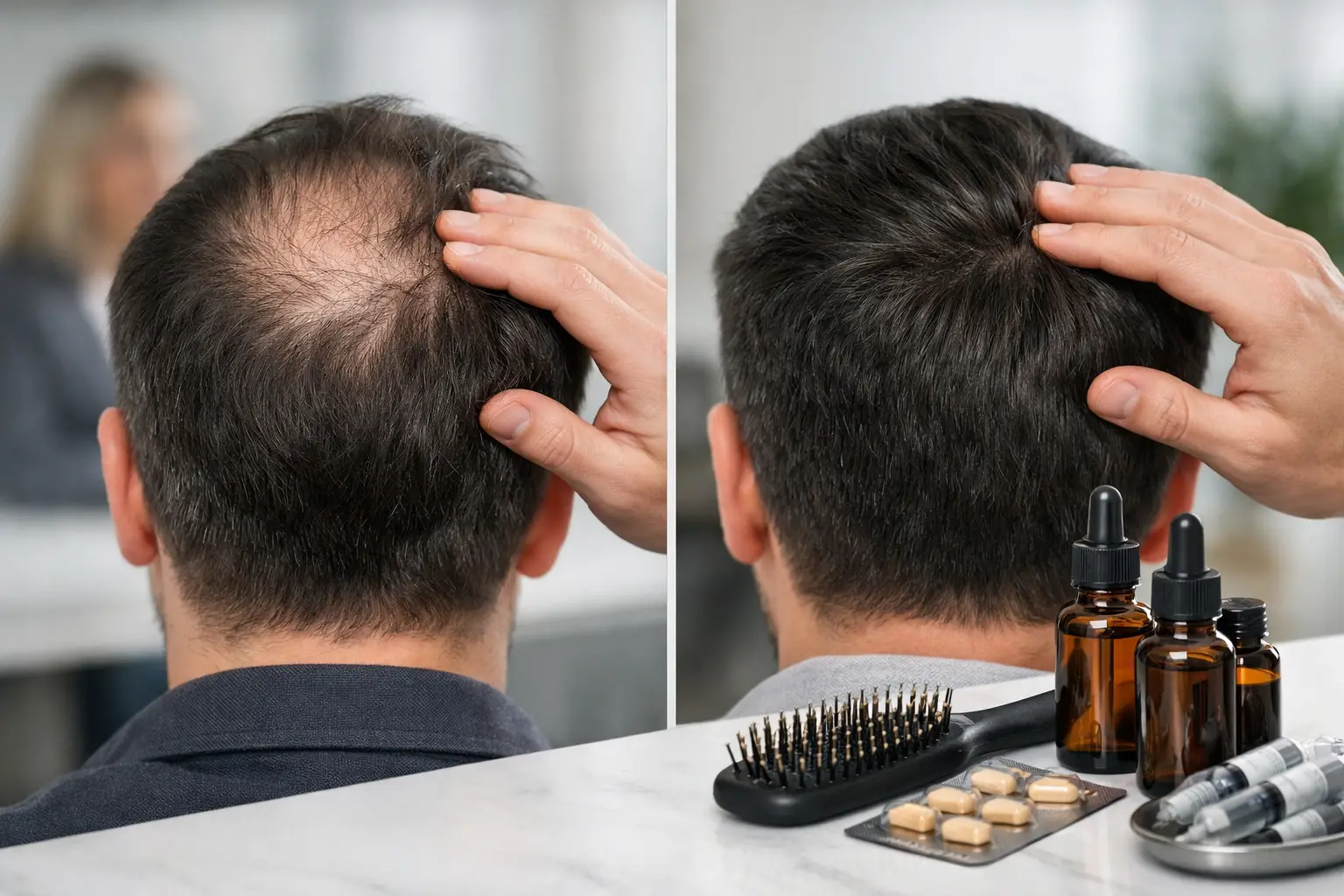
A widening part, more scalp visible under office lighting, or a ponytail that suddenly feels smaller can be unsettling. So, can hair thinning be reversed? In many cases, thinning can be slowed, improved, or cosmetically restored. The right answer depends on why it is happening, how long it has been present, and whether the hair follicles are still active.
Hair loss is not one condition with one solution. Some people need to address a temporary trigger such as stress, illness, hormonal change, or nutritional deficiency. Others are experiencing genetic pattern hair loss, which usually requires ongoing management. A professional scalp assessment helps separate these possibilities and creates a realistic path toward fuller-looking hair.
Can Hair Thinning Be Reversed Completely?
“Reversed” can mean different things. For some people, it means reducing daily shedding and regaining density after a temporary period of hair loss. For others, it means making sparse areas look naturally full again, even when the original follicles cannot produce enough hair on their own.
When thinning is caused by a reversible issue, regrowth may be possible once the underlying factor is identified and corrected. Hair shedding after a fever, surgery, childbirth, major weight loss, or intense stress can improve over several months as the growth cycle normalizes. Low iron stores, thyroid conditions, certain medications, and restrictive diets can also affect density and should be evaluated by an appropriate medical professional.
Genetic thinning is more complex. In androgenetic alopecia, follicles gradually become smaller and produce finer, shorter hairs. Early treatment may help preserve and strengthen existing hair, but waiting until an area is completely bare can limit the amount of biological regrowth possible. This does not mean that a natural-looking result is out of reach. Modern hair restoration and hair replacement options can create meaningful, visible coverage at many stages of hair loss.
Why the Cause of Thinning Matters
A good treatment plan starts with pattern recognition. Diffuse thinning across the entire scalp often points to a different cause than gradual recession at the temples or a widening center part. Sudden patchy hair loss, scalp pain, scaling, or inflammation deserves prompt medical attention, as these signs may require clinical diagnosis and treatment.
Your hair history also matters. A specialist will typically consider when the shedding began, whether it followed a physical or emotional event, family history, styling habits, scalp condition, and the areas where density has changed. Hair that is breaking from bleach, heat, tight extensions, or traction may look like it is thinning even when the follicles remain healthy. In that situation, reducing damage and supporting the scalp can make a visible difference.
The goal is not to sell a standard procedure. It is to identify what your hair needs now and choose a solution that fits your lifestyle, expectations, and comfort level.
Options That Can Improve Hair Density
Scalp and lifestyle support
For early thinning or hair weakened by environmental and styling stress, scalp-focused care can help create better conditions for healthy growth. This may include treating excess oil, buildup, dryness, or irritation, alongside gentler hair-care habits. Regular protein, iron, zinc, and vitamin intake matters, but supplements are not a universal answer. Taking high doses without a confirmed need can be ineffective or, in some cases, counterproductive.
Stress management and adequate sleep will not erase genetic hair loss, but they can support recovery when shedding is linked to a physical or emotional trigger. Think of these changes as foundations, not replacements for a targeted plan when thinning continues.
Low-level laser therapy and restorative treatments
Low-level laser therapy uses specific wavelengths of light to support follicle activity. It is noninvasive, requires no downtime, and can be a practical option for people with early-stage thinning who are prepared to follow a regular treatment schedule. Results vary, and changes are gradual rather than immediate. Consistency is central to seeing whether the treatment is helping.
Restorative options such as mesotherapy may also be considered depending on the scalp, degree of thinning, and treatment goals. These approaches are often best viewed as part of a broader plan rather than a one-time fix. A consultation can clarify what outcome is realistic for your pattern of loss.
Hair transplant services
A hair transplant redistributes healthy follicles from a donor area to places with permanent thinning. It can be an effective long-term option for suitable candidates with stable hair loss and adequate donor density. Because transplanted hair needs time to grow, results develop over months, and careful planning is needed to achieve a natural hairline and age-appropriate density.
A transplant is not the right choice for everyone. Diffuse thinning, an unstable pattern of loss, limited donor hair, or a desire for immediate coverage may point toward other solutions. It may also be paired with treatments that help protect the existing native hair.
Non-surgical hair replacement
Non-surgical hair replacement offers one of the fastest ways to restore the appearance of a full head of hair. Custom systems can be designed around your preferred density, hairline, texture, color, and style. When expertly fitted and maintained, they provide a natural-looking result without surgery or a lengthy recovery period.
This option is especially valuable when hair loss is extensive, when medical factors make surgery unsuitable, or when you want full control over your look now. It does require maintenance appointments, but many clients find that trade-off worthwhile for the immediate transformation and styling flexibility.
Scalp micropigmentation, wigs, and extensions
Scalp micropigmentation creates the appearance of closely cropped hair or added density by placing tiny pigment impressions on the scalp. It can soften the contrast between hair and scalp, define a hairline, or enhance the look of a buzz-cut style. It does not grow hair, but it can deliver a clean, confident appearance that is highly effective for the right person.
Medical wigs, custom wigs, toupees, and hair extensions can also offer beautiful coverage. The best choice depends on whether you need help with crown thinning, overall volume, temporary medical hair loss, or a fully customized transformation. Quality, secure fitting, and a realistic density make the difference between a solution that merely covers hair loss and one that feels like your own hair.
When Should You Seek Help for Thinning Hair?
Earlier is generally better. If you notice persistent shedding, a changing hairline, a wider part, or decreasing volume over several months, a scalp assessment can provide clarity before thinning becomes more advanced. You do not have to wait until hair loss feels severe to seek professional guidance.
There are also times when medical evaluation should come first. Sudden hair loss, round bald patches, scalp redness, itchiness, pain, or loss of eyebrow and body hair may signal a condition that needs diagnosis. A hair restoration specialist can work alongside your healthcare provider when both medical care and appearance-focused support are needed.
Setting Expectations for a Fuller Look
The most successful plan is one you can maintain. A person looking for gradual support of early thinning may prefer noninvasive therapy and scalp care. Someone with advanced pattern loss may feel more confident with a custom hair replacement system or scalp micropigmentation. Another person may be a strong transplant candidate but still want temporary cosmetic density while waiting for growth.
At HairSpec, a private scalp assessment can help you understand the condition of your scalp, the options suited to your pattern of loss, and the maintenance each option requires. The focus should be on a result that looks natural in your daily life, not a promise that ignores the realities of your hair loss.
Hair thinning can feel personal, but you do not have to guess your way through it. The most useful next step is a clear assessment, an honest discussion of what can improve, and a solution that helps you feel like yourself when you look in the mirror.