

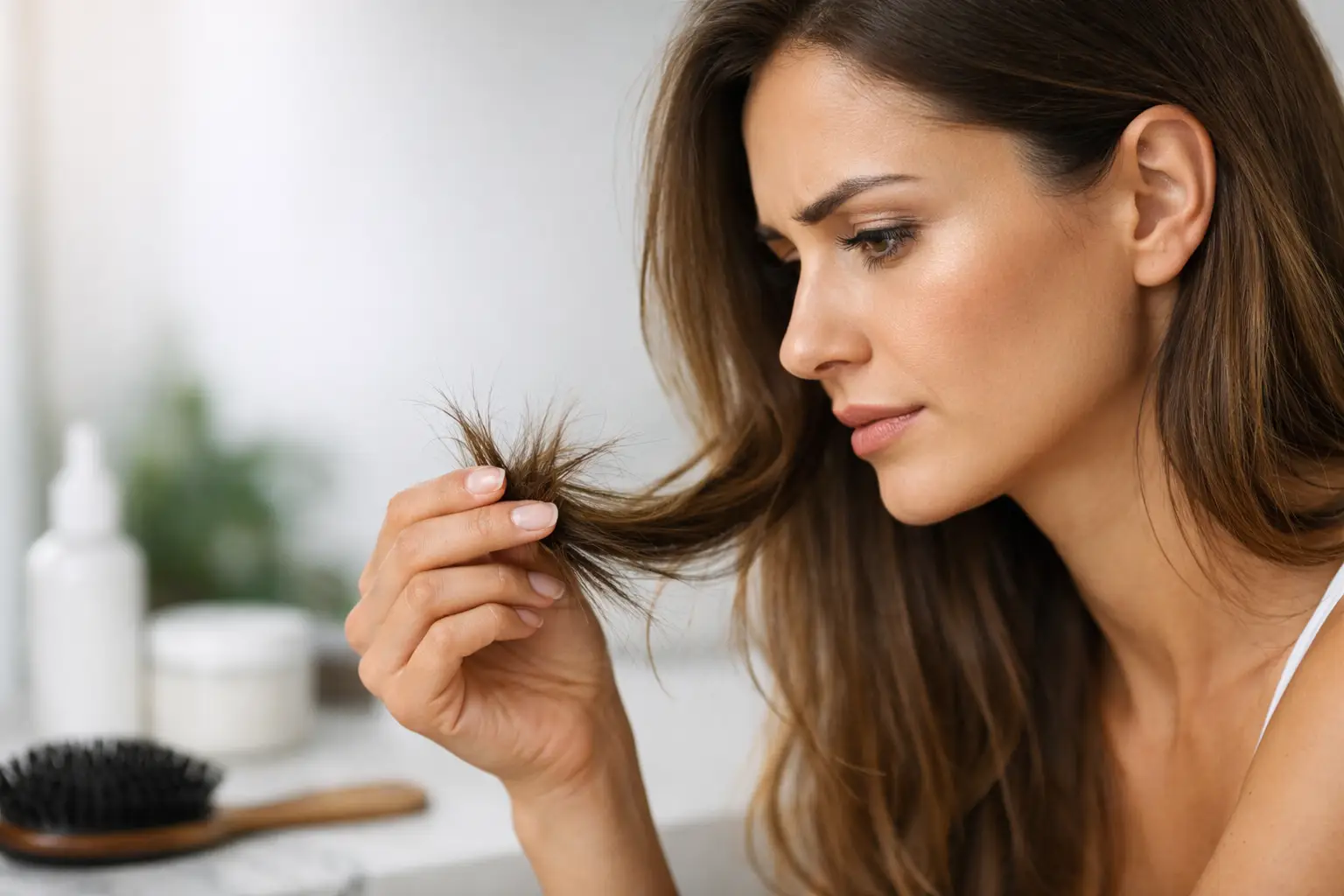
Your hair can look thinner long before you notice more strands in the shower. When the ends keep snapping, ponytails feel less full, or short broken pieces stick up around the crown, the issue may be breakage rather than hair shedding. Learning how to stop hair breakage starts with identifying what is weakening the hair shaft, then changing the habits that repeatedly stress it.
Breakage is frustrating because it can resemble hair loss, but the solution is not always the same. A strand that sheds from the root is part of the natural growth cycle. A strand that breaks is usually damaged somewhere along its length. The good news is that many causes of breakage can be improved with consistent, targeted care.
First, tell breakage apart from hair loss
Hair breakage often leaves strands of different, shorter lengths on your brush, clothing, or bathroom counter. You may also notice split ends, rough texture, tangles that seem worse than usual, and hair that will not retain length. The hairline, crown, and areas exposed to heat or tight styling are common places to see it.
Hair shedding, on the other hand, usually means full-length hairs are coming out from the root. If you see a small white bulb at one end of a shed strand, that is often a sign that the hair completed its natural cycle. Increased shedding can be linked to stress, illness, hormonal changes, medications, nutritional deficiencies, or genetic hair thinning.
Both can happen at once. For example, someone with early pattern hair loss may also have fragile, heat-damaged lengths. That is why a close scalp and hair assessment is more useful than treating every concern as simple dryness.
How to stop hair breakage at the source
Make wash day less aggressive
Clean hair is not the problem. Rough handling is. Scrubbing the lengths, washing with very hot water, or piling wet hair on top of the head can create friction when the hair is at its most vulnerable.
Apply shampoo mainly to the scalp, where oil and buildup collect. Let the lather run through the lengths as you rinse rather than rubbing them vigorously. Follow with conditioner from mid-length to ends, leaving it on long enough to provide slip before detangling. If your scalp becomes oily quickly, more frequent gentle cleansing may be better than stretching washes and relying heavily on dry shampoo.
Choose products according to your scalp and hair condition, not simply a label that promises repair. Very dry, chemically processed, or textured hair often benefits from richer conditioning. Fine hair may need lightweight formulas so it does not feel flat. If you have dandruff, itching, or scalp buildup, treating the scalp matters because persistent inflammation can affect comfort and the quality of new growth.
Treat wet hair like delicate fabric
Wet hair stretches more easily and is more likely to snap when pulled. Instead of rubbing it with a standard towel, gently press out water with a soft microfiber towel or cotton T-shirt. Start detangling at the ends and work upward in small sections, using a wide-tooth comb or a brush designed for wet hair.
A leave-in conditioner or detangling spray can reduce friction, particularly for long, curly, bleached, or extension-wearing hair. This is not an unnecessary extra step if knots are causing you to pull, yank, or repeatedly brush the same section.
Avoid sleeping with soaking-wet hair. The combination of wet strands, movement, and pillow friction can leave hair matted and more prone to breakage by morning.
Rethink heat, color, and chemical services
Heat styling does not have to disappear from your routine, but temperature and frequency matter. Flat irons, curling irons, and hot blow-drying can degrade the hair’s protective outer layer over time, especially when used on hair that is already lightened or dry.
Use a heat protectant every time you style. Keep tools at the lowest effective setting, and make sure hair is fully dry before using a flat iron. Repeated passes over the same area are often more damaging than one careful pass at a moderate temperature. When possible, alternate heat-styled days with lower-tension, air-dried styles.
Bleaching, frequent permanent color, relaxers, and perms can also compromise the internal structure of the hair. That does not mean you must give up color entirely. It means your stylist should consider your existing chemical history, strand strength, and desired result before another processing appointment. Spacing out chemical services and pairing them with a suitable conditioning plan can make a meaningful difference.
Stop wearing the same high-tension style
A sleek bun may look polished for work, but daily tension at the same points can lead to breakage around the hairline, temples, and crown. Tight braids, extensions installed too heavily, firm ponytails, and frequent use of elastic bands can all create stress.
Rotate your part and your styling placement. Choose fabric-covered ties or spiral bands instead of tight rubber elastics, and loosen styles before exercise or sleep. If a style hurts during installation or leaves your scalp tender afterward, it is too tight. Pain is not a normal sign that a protective style is working.
Hair extensions and hair weaving can provide a fuller look, but they should be selected and fitted with your existing density and scalp comfort in mind. An experienced specialist can help determine whether a particular method is appropriate while your natural hair is fragile.
Balance moisture and strengthening care
Damaged hair often needs conditioning, but more product is not always the answer. Moisture-focused masks can improve softness and manageability, while protein-containing treatments may help temporarily reinforce compromised strands. The right balance depends on your hair.
If your hair feels overly soft, stretchy, and weak when wet, it may benefit from occasional strengthening care. If it feels stiff, coarse, or brittle after protein treatments, prioritize moisture and reduce how often you use strengthening products. Start slowly, usually once every week or two, and watch how your hair responds rather than following a rigid schedule.
Split ends cannot permanently fuse back together. Products can make them look smoother for a while, but trimming damaged ends prevents splits from traveling farther up the strand. A small, regular trim is often more helpful for length retention than waiting until the damage becomes extensive.
Support stronger growth from the inside
Hair is not a living tissue once it grows beyond the scalp, so supplements cannot repair a broken strand. However, your body needs adequate protein, iron, zinc, vitamin D, and other nutrients to produce healthy new hair. Restrictive dieting, rapid weight loss, low protein intake, and untreated deficiencies may contribute to poor hair quality or increased shedding.
Aim for consistent meals with protein-rich foods, fruits and vegetables, healthy fats, and iron-containing options. Before starting high-dose hair supplements, speak with a healthcare professional. Some nutrients can be harmful in excess, and biotin may interfere with certain laboratory tests. If fatigue, heavy periods, unexplained shedding, or other health symptoms accompany your hair changes, medical testing may be appropriate.
When breakage needs specialist attention
Home care can reduce everyday damage, but it cannot address every underlying cause. Seek professional guidance if breakage is sudden, severe, or concentrated in patches; if you have scalp burning, persistent itching, flaking, or tenderness; or if your part is widening and overall density is decreasing. These signs can point to scalp conditions, traction-related damage, hormonal changes, or hair loss that needs a different approach.
A specialist assessment can separate damaged lengths from reduced follicle density and help you avoid spending months on products that do not match the problem. Depending on the findings, options may include scalp-focused care, low level laser therapy, restorative treatments, hair replacement, scalp micropigmentation, or other personalized solutions. At HairSpec, a free scalp assessment can provide a discreet starting point for understanding what your hair and scalp need.
Be patient with the process. You can reduce snapping quickly by changing damaging habits, but visible length and density take time because hair grows gradually. Give a consistent routine several weeks, track changes with photos in the same lighting, and choose solutions that protect both your hair and your confidence.