

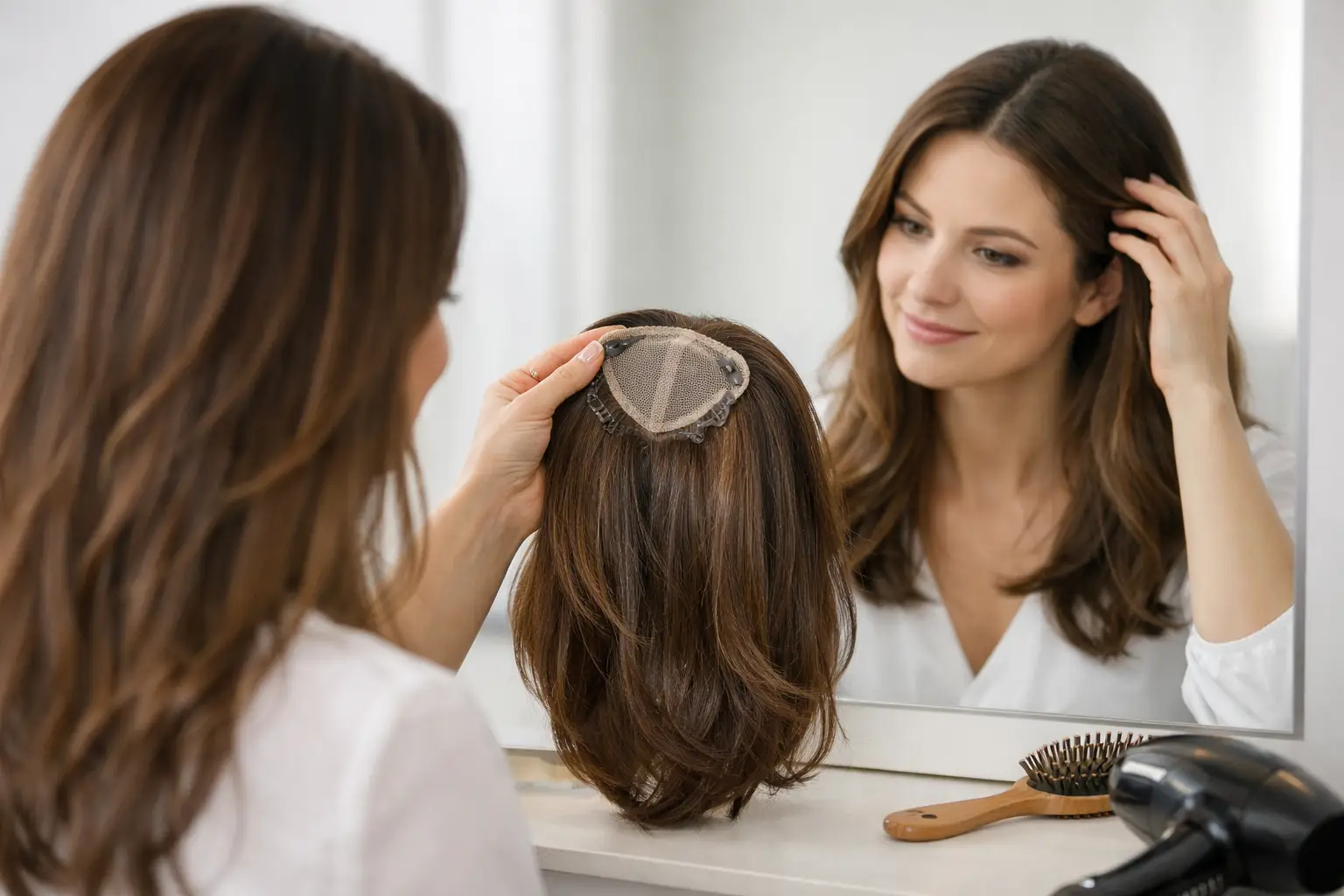
A hair topper should disappear into your own hair, not become the first thing you notice in the mirror. The right piece can restore coverage at the crown, soften a widening part, and make styling feel enjoyable again. Learning how to choose a hair topper starts with more than picking a shade you like. It means matching the topper to your hair loss pattern, lifestyle, scalp comfort, and the result you want to see every day.
A well-chosen topper can be a discreet, non-surgical way to create fuller-looking hair. A poorly matched one may feel bulky, sit too far forward, or fail to blend with your natural texture. Taking a little more time at the selection stage makes a significant difference in comfort and confidence.
How to Choose a Hair Topper for Your Coverage Needs
The first question is simple: where do you need coverage? Hair toppers are designed primarily for thinning at the top of the head, including the part line, crown, and upper sides. They are not usually the best standalone solution for extensive hair loss around the hairline, temples, or entire scalp.
Look closely at your hair in natural light. If your main concern is a wider part or mild thinning at the crown, a smaller topper may provide the most natural result. If thinning extends across the top of the scalp, a larger base will give you better coverage and a more secure foundation.
A topper base should extend beyond the thinning area and sit on hair that is still strong enough to support clips or other attachment methods. Choosing a base that is too small can leave sparse areas visible. Choosing one that is much too large may add unnecessary weight and make blending more difficult.
Measure the thinning area before you shop
Use a flexible measuring tape to measure the length and width of the area you want to cover. Start slightly in front of the thinning zone and finish slightly behind it. Then add a margin of healthy hair around the area so the topper can attach securely.
Measurements are useful, but they are not the whole story. Hair density, scalp sensitivity, and the direction your hair naturally grows all affect the final fit. This is why a professional scalp and hair assessment can be especially valuable when hair loss is progressing or uneven.
Choose the Right Base Material
The base is the foundation of the topper. It affects how realistic the scalp appearance is, how much airflow reaches your scalp, and how comfortable the piece feels after several hours of wear.
Monofilament bases are popular because individual hairs are hand-tied into a fine mesh, creating the appearance that hair is growing from the scalp. They also allow flexible parting, which is helpful if you like to change your hairstyle. A monofilament topper is often a strong choice for people who prioritize a natural-looking part line.
Silk-top bases provide an especially realistic scalp effect because the knots are hidden under a layer of silk-like material. They can look beautiful at close range, though they are often slightly thicker than other options. If you have very fine hair and want the flattest possible fit, base thickness is worth considering.
Lace bases are lightweight and breathable. They can be comfortable in warm, humid conditions and work well for those who value airflow. Because lace is delicate, it may require gentler handling and more careful maintenance.
Polyurethane, often called PU, is a smooth material that can make cleaning easier and may be used with adhesive methods. It can feel less breathable than lace or monofilament, so it is not automatically the best choice for every scalp. The right material depends on whether your priority is realism, durability, breathability, or attachment security.
Select Hair Fiber, Length, and Density Carefully
Human hair toppers offer the greatest styling flexibility. They can typically be heat-styled, curled, straightened, and customized by a trained professional. They also tend to move more like natural hair. The trade-off is that human hair requires regular washing, conditioning, and careful styling, much like your own hair.
Synthetic hair toppers are often easier to wear straight out of the box because they hold their style well. They can be a practical option for occasional wear or for someone who wants a lower-maintenance routine. However, standard synthetic fibers may have limitations with heat styling and can show wear sooner than high-quality human hair.
Length should be close to your own hair length, particularly if you plan to wear your hair down. A topper that is several inches longer or shorter than your natural hair will require more blending and layering. If you are growing out your hair or wear a layered cut, a stylist can shape the topper to create a more cohesive finish.
Density matters just as much. Many people assume more hair will look better, but an overly dense topper can look unnatural against fine or thinning hair. A lighter density often blends more convincingly and feels more comfortable. The goal is believable fullness, not a dramatic contrast between the topper and the rest of your hair.
Match the Color and Texture, Not Just the Shade
A color match is more complex than choosing blonde, brown, black, or red. Natural hair usually contains highlights, lowlights, warmth, and variation from root to ends. If your hair is colored, gray, or changing due to age or treatment, a single flat shade may not blend as naturally as a customized color.
Whenever possible, compare color samples in daylight rather than under bright indoor lighting. Pay attention to your root color, because this is where the topper will meet your natural hair. Rooted colors can be especially helpful when your own hair has darker regrowth or when you want less noticeable maintenance over time.
Texture also deserves close attention. Straight hair, loose waves, tight curls, and coily textures each blend differently. A topper with a texture that fights your natural pattern can require frequent heat styling, which adds time and may shorten the life of the piece. Selecting a texture close to your own makes daily styling easier and helps the hair move naturally.
Consider How the Topper Will Stay in Place
Most hair toppers use pressure-sensitive clips that attach to existing hair. Clips are convenient, secure for many wearers, and easy to remove at the end of the day. They work best when there is sufficient healthy hair around the perimeter of the topper.
For very fine hair, fragile hair, or areas with limited hair for clips, another attachment method may be more appropriate. Depending on the topper and your needs, this may include adhesive, integrated options, or a different type of hair replacement solution. A method that feels secure should not cause pulling, pain, or repeated tension on already vulnerable hair.
Think realistically about your daily routine. If you exercise frequently, commute in humidity, wear helmets, or need to remove the piece each night, comfort and security become central considerations. A topper that looks excellent but feels distracting during a workday is unlikely to become a solution you enjoy wearing.
Try It On With Your Usual Hairstyle in Mind
When trying a hair topper, do not judge it only while standing still in front of a mirror. Tilt your head, look at the part from different angles, run your fingers through the surrounding hair, and check how it looks in natural light. The base should lie flat without obvious lifting or pressure points.
Style the topper with your own hair before making a decision. A center part, side part, ponytail, or half-up style can reveal whether the coverage and placement truly work for you. Some toppers are versatile enough for several looks, while others are best for a specific parting direction. Neither is wrong, but it should fit the way you actually like to wear your hair.
If hair loss is caused by a medical condition, recent treatment, or a sudden change in shedding, seek appropriate medical advice as well. A hair topper can provide immediate cosmetic support, but understanding the cause of hair loss may guide your longer-term options.
The best hair topper is not simply the fullest or most expensive piece. It is the one that feels comfortable, blends with your natural hair, and gives you the freedom to move through your day without thinking about whether anyone can tell. A personalized assessment with a hair loss specialist, such as HairSpec, can help you compare topper options alongside other non-surgical and restorative solutions with clarity and privacy.