

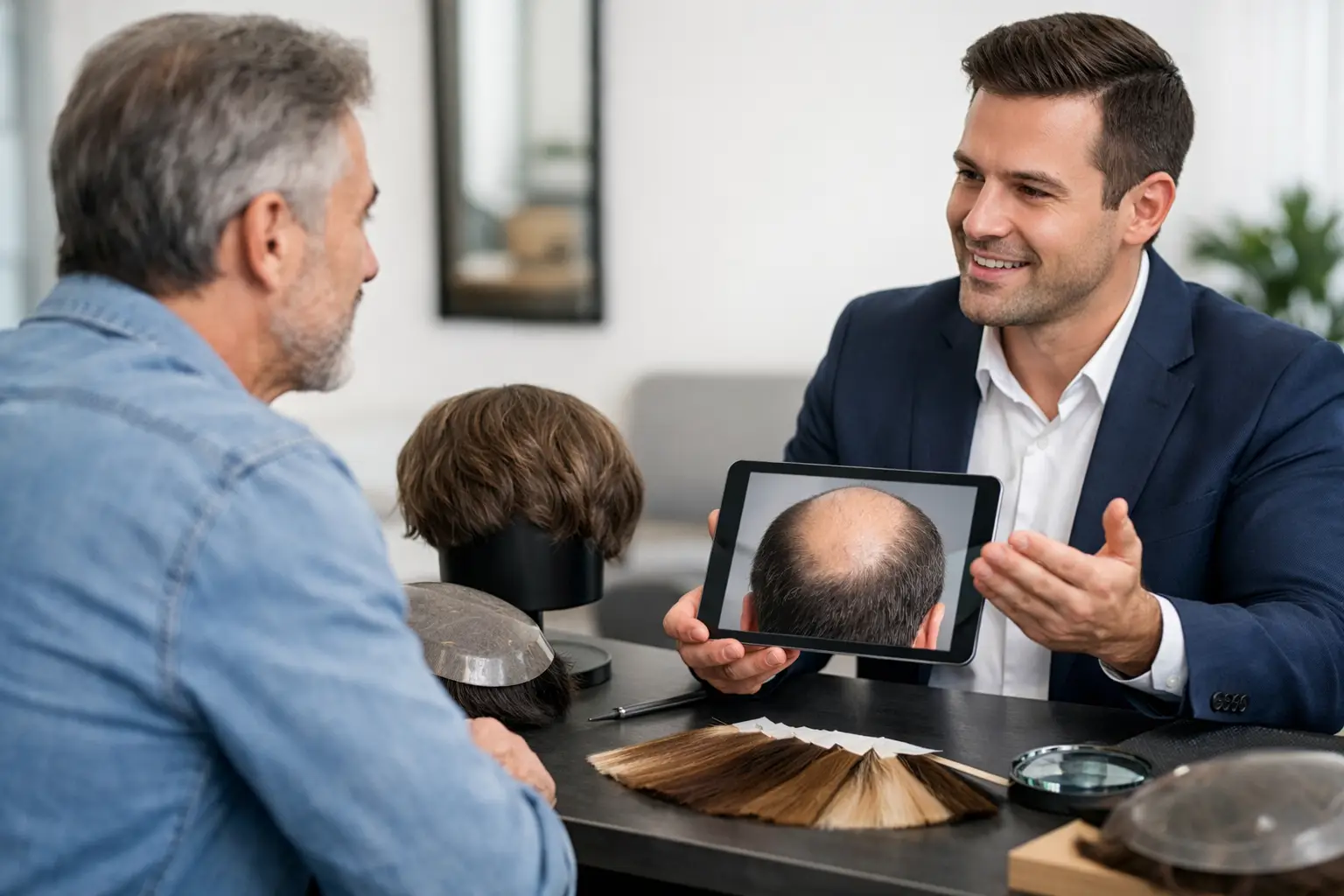
A fuller-looking head of hair can change how you feel walking into a meeting, seeing photos of yourself, or getting ready in the morning. But the best hair replacement providers do more than offer a product or procedure. They assess why your hair is changing, explain realistic options, and create a plan that fits your appearance, lifestyle, comfort level, and budget.
Hair loss is personal, and the right solution is rarely identical for two people. One person may want immediate density without surgery. Another may be managing hair loss after medical treatment and need a comfortable, natural-looking medical wig. Someone else may be deciding whether a transplant, scalp micropigmentation, or ongoing restorative care makes the most sense. Choosing a provider with genuine range and specialist guidance gives you more control over that decision.
What separates the best hair replacement providers?
A strong provider starts with consultation, not a sales pitch. They should look at your scalp, existing hair density, hairline, shedding pattern, and goals before recommending a service. This matters because thinning from genetic pattern hair loss may call for a different approach than sudden shedding, traction-related loss, or hair changes associated with a medical condition.
The best providers also set expectations clearly. Natural-looking improvement is possible, but no ethical specialist should promise the same density, longevity, or outcome for every client. Your hair texture, skin condition, level of hair loss, maintenance routine, and chosen solution all affect the result.
Experience matters, particularly when a service depends on visual detail. A hair system that is technically well made can still look unnatural if its hairline, density, color blend, or cut is poorly customized. Likewise, scalp micropigmentation requires careful pigment selection and artistic placement, while transplant planning requires conservative, long-term thinking about the donor area and future hair loss.
Look for a provider that can explain both the benefits and the trade-offs. That level of transparency is often a better sign of expertise than dramatic before-and-after promises.
Start with the type of result you need
Before comparing clinics or studios, clarify what you want to improve. Are you looking for instant coverage, a gradual treatment plan, a more defined hairline, or a way to make thinning less noticeable? Your answer will narrow the field quickly.
Non-surgical hair replacement for immediate transformation
Non-surgical hair replacement is designed for people who want visible fullness without surgery or a long recovery period. Modern hair systems can be tailored to match your natural hair color, wave pattern, density, and preferred style. When fitted and maintained properly, they can offer a highly convincing result for men and women with mild thinning through to more advanced hair loss.
The trade-off is maintenance. Hair systems need regular professional servicing, cleansing, reattachment or adjustment, and eventual replacement. Ask how often appointments are recommended, what daily care involves, and what ongoing costs to expect. A provider should discuss these practical details before you commit.
Wigs and medical wigs for flexibility and comfort
Wigs can provide flexibility, especially for diffuse thinning, complete hair loss, or temporary hair changes. Medical wigs are particularly valuable for people experiencing hair loss related to chemotherapy, alopecia, or other health conditions. Comfort, breathability, cap construction, and a secure fit are just as important as style.
A specialist should help you select a piece that works with your face shape, skin tone, daily routine, and sensitivity level. The goal is not simply to cover hair loss. It is to help you feel like yourself while wearing it.
Scalp micropigmentation for the look of density
Scalp micropigmentation uses carefully placed pigment to create the appearance of closely cropped hair follicles or greater density between existing hairs. It can suit people who prefer a short hairstyle, want to soften the contrast of a thinning scalp, or wish to camouflage certain scars.
It is not actual hair growth, and it does not create length or movement. Its success depends heavily on design, pigment choice, and the practitioner’s ability to build a subtle, age-appropriate hairline. Ask to see healed results, not only freshly completed work, because pigment settles over time.
Restorative and medical pathways
Low-level laser therapy, mesotherapy, scalp care, and other restorative options may be considered when the goal is to support existing hair or improve scalp conditions. These approaches can be useful as part of a broader plan, but they require consistency and realistic expectations. Results, if they occur, are typically gradual rather than immediate.
Hair transplant services may be suitable for selected candidates with stable donor hair, appropriate expectations, and a long-term plan. A transplant is a medical procedure, not a quick cosmetic purchase. It may offer lasting redistribution of your own hair, but candidacy, recovery, cost, and future progression of hair loss must all be considered carefully.
Questions to ask before choosing a provider
A consultation should leave you better informed, not pressured. Ask what is causing or contributing to your hair loss, whether you should seek medical evaluation for sudden or unusual shedding, and which options are appropriate for your current level of hair density.
You should also ask who will perform each service. For example, find out whether the person designing your hair system is also responsible for fitting and cutting it, who performs scalp micropigmentation, and how medical procedures are overseen. Clear answers build confidence.
Request a full explanation of maintenance. A natural result is sustained through good aftercare, whether that means regular hair system servicing, wig care, follow-up scalp treatments, or transplant reviews. The provider should explain the appointment schedule, home-care expectations, replacement cycle, and likely costs in plain language.
Finally, ask to see examples relevant to you. A gallery of only thick, dark hair may not tell you much if you have fine, light-colored, curly, or gray hair. Relevant case examples show whether a provider understands the details that make results believable.
Why a multi-solution specialist can be the better choice
A single-service business may recommend its one specialty for nearly every concern. That does not automatically make the recommendation wrong, but it can limit the conversation. A comprehensive hair loss specialist can compare non-surgical replacement, wigs, scalp micropigmentation, restorative therapies, and surgical routes based on your priorities.
This is especially useful when your needs change. You may begin with a non-invasive solution while deciding whether to pursue longer-term treatment. You may use scalp micropigmentation to enhance the appearance of density alongside existing hair. Or you may find that a custom hair system offers the confidence you want without the recovery time associated with surgery.
At HairSpec, this consultation-led approach is central to helping clients consider both aesthetic and restorative choices in a private, supportive setting. The right recommendation should feel tailored to you, not predetermined by the provider’s inventory.
Do not overlook privacy, comfort, and follow-up care
For many people, hair loss is emotionally sensitive. The setting matters. A professional provider should offer discreet consultations, respectful communication, and enough time for you to ask questions without feeling rushed. You should be able to discuss concerns about medical hair loss, work commitments, styling preferences, and maintenance privately.
Comfort also affects whether you will stay with a solution. A hair system that feels irritating, a wig that shifts during the day, or an aftercare plan that does not suit your schedule can undermine an otherwise good result. Be honest about how active you are, how often you travel, whether you exercise or swim frequently, and how much maintenance you are prepared to manage.
The most reassuring choice is a provider that treats hair replacement as an ongoing relationship rather than a one-time transaction. Give yourself permission to ask detailed questions, compare options, and choose the path that helps you feel comfortable in your appearance again.