

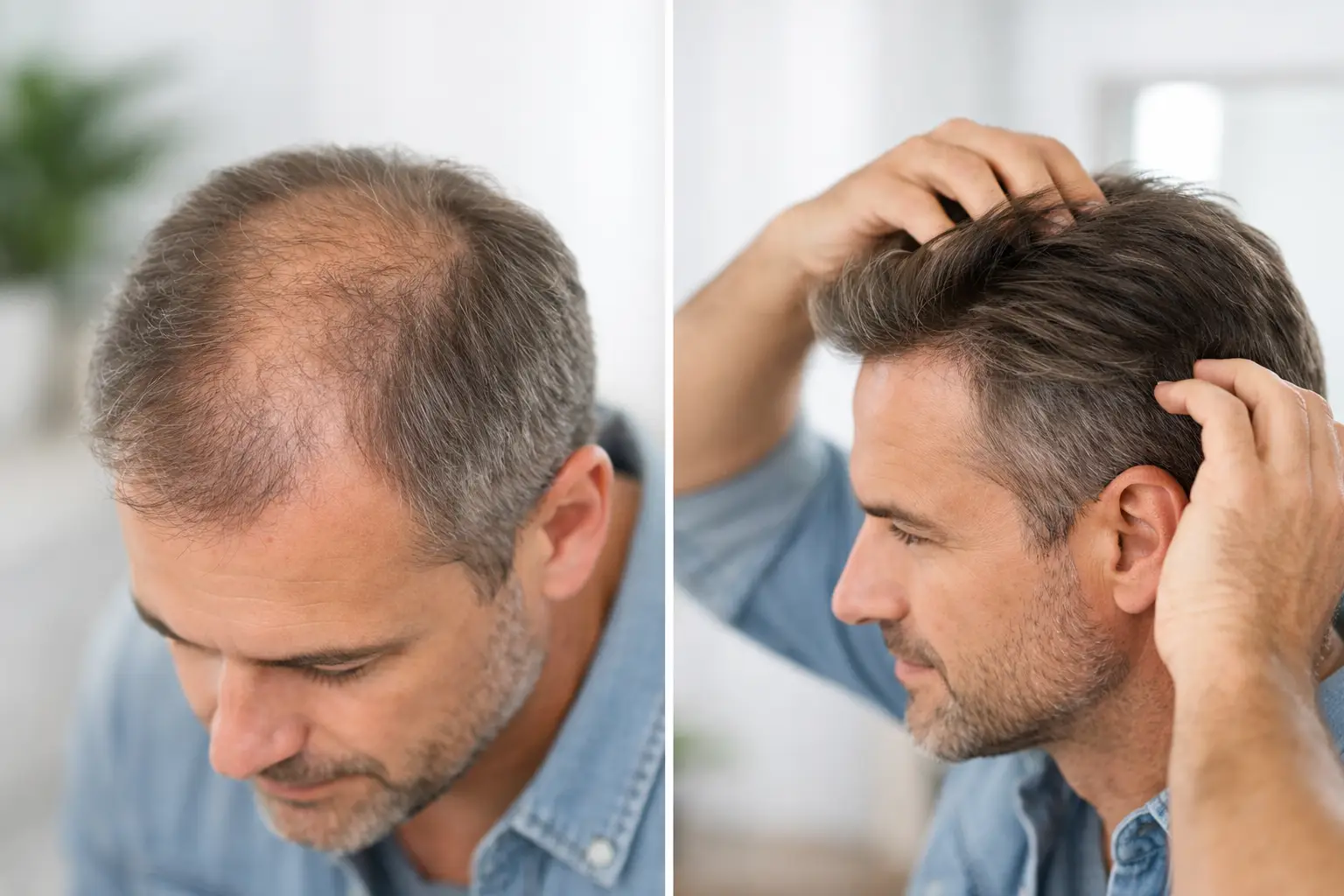
A thinning crown can be especially frustrating because it is hard to see yourself, yet often noticeable in overhead lighting, photos, and video calls. If you are wondering how to conceal thinning crown hair without making it look obvious, the most effective approach is usually a combination of the right haircut, strategic styling, and a solution that suits the cause and pace of your hair loss.
The goal is not to create a dramatic, artificial change. It is to reduce the contrast between the scalp and surrounding hair so your overall look appears fuller, balanced, and natural from every angle.
Start by Understanding Your Crown Pattern
The crown is different from the front hairline. Hair naturally grows in a circular pattern at the vertex, often called a whorl or cowlick. When density starts to decrease in this area, the hair can separate more easily and expose the scalp, even when there is still a reasonable amount of hair present.
A crown may look thinner after a haircut, when hair is wet, or under direct light. This does not always mean significant hair loss. However, if the visible area is getting wider over several months, or you notice more shedding and reduced density elsewhere, it is worth having your scalp and hair condition assessed.
Pattern hair loss is a common reason for crown thinning in men and women, but stress, hormonal changes, nutritional issues, illness, medications, and scalp inflammation can also contribute. The right way to conceal it depends on whether you need a quick cosmetic improvement, longer-term density support, or both.
Choose a Haircut That Reduces Scalp Contrast
For many people, a better cut is the simplest starting point. The wrong length can make a thinning crown more visible by allowing strands to split around the whorl. The right cut gives hair structure and makes the area appear denser.
For men with short hair, a textured crop, short layered style, or a well-blended fade can reduce the contrast between thinner and fuller areas. Keeping the sides extremely tight while leaving the crown long can sometimes draw attention upward, so balance matters. If the crown is noticeably sparse, a shorter, evenly textured style may look more intentional than trying to sweep longer hair over it.
For women and people with medium to long hair, soft layers can create movement and lift without exposing too much scalp. A blunt, heavy length may pull hair flat at the crown, while carefully placed shorter layers can provide volume. Changing the part slightly can also help, particularly if your usual part has widened over time.
Avoid relying on a precise comb-over. It may work briefly indoors, but wind, humidity, and movement can separate the strands and reveal the area underneath. A skilled stylist can shape hair around your natural growth pattern rather than forcing it to sit where it does not want to go.
Style for Lift, Not Just Coverage
Crown thinning tends to look more noticeable when hair lies flat. Styling products and drying techniques that create lift at the roots can make an immediate difference.
Start with clean, fully dried hair. Damp hair clumps together, making the scalp more visible. Apply a lightweight volumizing mousse, root-lifting spray, or texturizing product to the crown, then blow-dry while directing the hair upward and slightly against its natural growth direction. Once dry, allow it to settle into a softer shape rather than flattening it with a comb.
Matte clays, texturizing powders, and dry shampoos can add grip to short or medium-length hair. They are often more useful than shiny gels, which can separate strands and reflect light off the scalp. Use a small amount first. Too much product can make fine hair stiff, dusty, or difficult to restyle.
If you use heat tools, keep temperatures moderate and avoid repeated high-heat styling directly on fragile hair. Heat can improve appearance in the moment, but damaged hair is more prone to breakage and may make density concerns worse over time.
Use Instant Concealers With a Light Hand
Hair fibers, root touch-up sprays, scalp powders, and tinted dry shampoos can provide fast, convincing camouflage for a thinning crown. These products work by reducing the color difference between the scalp and hair, giving the appearance of more density.
Hair-building fibers are usually best when you still have enough existing hair for the fibers to cling to. Sprinkle or spray them lightly onto dry hair, focusing on the visible scalp rather than covering the entire crown. Gently pat the area into place, then use a holding spray if needed. Choosing a shade that matches your roots, rather than your highlighted ends, usually produces the most natural result.
Scalp powders and sprays may be more suitable when hair is very short or when you want a softer effect. They can also help reduce shine on the scalp. The trade-off is that many instant concealers need to be reapplied after washing and may transfer if applied too heavily or exposed to rain, sweat, or rubbing.
Check your crown with a hand mirror or phone camera before leaving home. Overapplication is most visible from above, where a product can look darker than your natural hair or collect around the whorl. Build coverage gradually, and keep the front and sides consistent with the crown.
Consider a Hair System for More Noticeable Thinning
When the crown has become too sparse for fibers and styling to provide satisfying coverage, a non-surgical hair replacement system can offer a more complete result. Modern hair systems are customized for hair color, density, curl pattern, and the direction of your crown growth. When professionally fitted, they can blend with existing hair and allow a natural-looking style without daily camouflage.
This option can be particularly helpful for people who want immediate visual density but are not ready for surgery, are not suitable candidates for a transplant, or prefer control over the appearance of their hair. It does require regular maintenance, cleaning, and refitting. The best system is not necessarily the densest one. A realistic density that matches your age, facial features, and surrounding hair is usually more convincing.
Wigs and toppers can also be effective, especially for women with diffuse thinning at the crown. A well-selected topper adds coverage where it is needed while allowing your own hair to remain visible around the perimeter. Comfort, attachment method, and lifestyle should guide the decision.
Explore Longer-Lasting Solutions for Crown Coverage
Cosmetic concealment can restore confidence quickly, but it does not have to be your only option. If the thinning is progressing or affecting how you feel day to day, a specialist can help you compare treatments based on your scalp condition, available donor hair, medical history, and desired result.
Scalp micropigmentation is one option for people who prefer a closely cropped hairstyle or want to reduce the appearance of scalp show-through. By placing tiny pigment impressions in the scalp, it creates the look of closely shaven follicles and can add visual density between existing hairs. It does not grow hair, but it can provide a strong, low-maintenance camouflage effect when performed with the right tone and placement.
Low-level laser therapy, selected scalp treatments, and medical-based hair loss management may support existing hair in appropriate cases. Results vary, and these approaches generally require consistency and patience. For more advanced, stable pattern hair loss, a hair transplant may be considered if you have suitable donor density. Transplanted crown work requires careful planning because the natural whorl direction is complex and the area may continue to thin around transplanted hairs.
At HairSpec, a private scalp assessment can help distinguish between a crown that needs better styling support and one that would benefit from a personalized hair restoration or replacement plan. A clear assessment helps avoid spending months on products that do not match your situation.
Avoid the Habits That Make a Thin Crown Stand Out
Small daily choices can unintentionally emphasize thinning. Wet-look products, excessive oil, harsh brushing, and hairstyles that pull tightly at the crown can all make scalp visibility worse. So can waiting too long between washes if oil buildup causes fine hair to separate into strands.
Be cautious with supplements and miracle products that promise rapid regrowth. Hair loss has many possible causes, and a product that works for one person may not address yours. Sudden shedding, itching, scaling, tenderness, or patchy hair loss deserves prompt medical attention rather than cosmetic cover-up alone.
A concealed crown should still look like your hair, just fuller and more evenly balanced. Whether that comes from a textured cut, a few minutes with hair fibers, scalp micropigmentation, or a customized hair system, the most successful result is the one that feels comfortable enough to wear with confidence every day.