

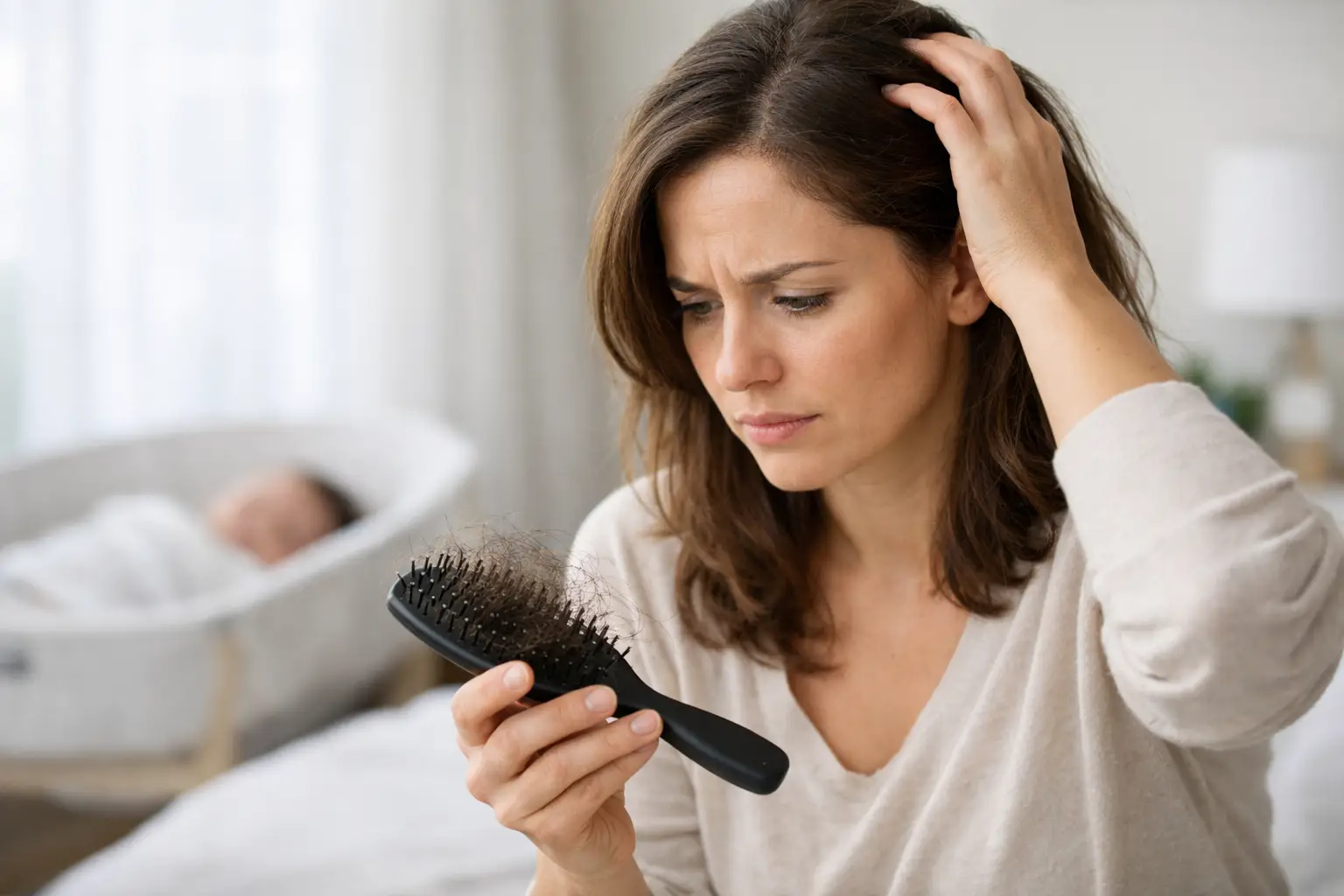
A full shower drain, a widening part, and more hair on your pillow than you remember seeing before can make the months after childbirth feel unexpectedly unsettling. Postpartum hair loss is common, temporary for many women, and still emotionally difficult to experience. When you have just adjusted to the demands of a new baby, a visible change in your hair can affect how you feel when you look in the mirror or return to work.
The reassuring news is that shedding after pregnancy usually reflects a normal shift in the hair growth cycle, not permanent damage to the follicles. The more useful question is not simply whether it is normal, but whether your shedding pattern, timing, and scalp health point to natural recovery or a separate concern that deserves professional attention.
Why Postpartum Hair Loss Happens
During pregnancy, higher estrogen levels keep more hairs in the growing phase for longer. Many women notice that their hair seems thicker, shinier, or less prone to shedding during this period. After delivery, hormone levels fall quickly. The hairs that were temporarily held in the growth phase then move together into the resting and shedding phase.
This process is called telogen effluvium. It often becomes noticeable two to four months after childbirth, although the timing differs from person to person. The shedding can seem dramatic because many strands are released at once. You may see diffuse thinning across the scalp, a less dense ponytail, or extra visibility at the hairline and part rather than a single bald patch.
For most women, new growth gradually begins as the cycle resets. Hair commonly looks fuller again between six and 12 months after delivery, though some people need longer. Recovery may feel especially slow when you are looking at your hair every day, but early regrowth often appears first as fine, short hairs around the front hairline or part.
Normal Shedding Versus a Sign to Get Help
Not every change in hair density after pregnancy has the same cause. Postpartum shedding can overlap with hereditary female pattern hair loss, nutrient deficiencies, thyroid changes, scalp inflammation, or breakage from styling. Pregnancy may not cause these issues, but it can make an underlying tendency toward thinning more noticeable.
Consider a professional evaluation if shedding continues beyond 12 months, becomes progressively worse, or leaves clearly defined patches. It is also sensible to seek advice sooner if you have scalp itching, flaking, pain, redness, sudden bald spots, or symptoms such as unusual fatigue, feeling cold, palpitations, or major weight changes. These symptoms do not confirm a diagnosis on their own, but they are worth discussing with a physician.
A scalp assessment can help distinguish shedding from true hair miniaturization. In simple terms, shedding means more hairs than usual are falling out, while miniaturization means individual hairs are becoming progressively finer over time. The difference matters because the treatment approach may be very different.
What Can Support Healthier Regrowth
There is no instant switch that stops hormonally triggered shedding. Hair grows slowly, and any realistic plan needs patience. However, supportive care can protect the hair you have, reduce avoidable breakage, and create better conditions for healthy regrowth.
Start with the basics, especially if meals have become irregular since your baby arrived. Hair is not essential to the body’s immediate survival, so inadequate protein and key nutrients can show up in the hair. Aim for regular meals with protein, iron-rich foods, healthy fats, and a range of fruits and vegetables. If you suspect low iron, vitamin D, or another deficiency, ask your medical provider about testing rather than choosing high-dose supplements at random.
Be gentle with fragile strands. Avoid tight ponytails, braids, extensions that pull at the roots, frequent bleaching, and very hot styling tools while shedding is active. Use a wide-tooth comb on wet hair, pat rather than rub it dry, and choose a hairstyle that does not create tension at the hairline. These measures cannot change the hormonal cycle, but they can prevent breakage from making density look worse.
Stress and sleep deprivation can also make recovery feel harder. New parents rarely have perfect control over either, so this is not about adding another task to your list. Small, practical adjustments count: accepting help when available, eating consistently, and avoiding overly aggressive hair routines can be enough to make your hair care feel more manageable.
Be Careful With Popular Remedies
Postpartum hair loss attracts plenty of quick-fix claims, from oils to supplements to shampoos that promise rapid growth. A gentle shampoo can improve how the hair and scalp feel, and some cosmetic products can make fine hair look fuller. But shampoo alone cannot reverse hormone-related shedding at the root.
Likewise, supplements are not automatically helpful simply because they are marketed for hair. Taking unnecessary high doses may be ineffective or unsuitable, particularly if you are breastfeeding, managing a medical condition, or taking medication. Check with your physician, obstetrician, or pharmacist before beginning new oral products.
Medical treatments for hair loss may be appropriate in certain cases, especially when an underlying pattern of thinning is identified. The right timing and option depend on your health history, whether you are breastfeeding, your scalp findings, and your goals. A specialist should never assume that every postpartum concern needs the same treatment.
Looking Fuller While You Wait for Recovery
Waiting for regrowth does not mean you have to feel self-conscious every day. Cosmetic density solutions can provide immediate, natural-looking coverage while you monitor recovery or pursue treatment for an underlying issue.
A strategic haircut can reduce the contrast between thinner areas and fuller lengths. Root powders, volumizing fibers, and lightweight styling products may also camouflage a visible part for occasional use. These options suit some women well, although they require daily application and may not feel practical during workouts, humid weather, or rushed mornings.
For more consistent coverage, a professionally fitted topper, hairpiece, or medical wig can restore the appearance of density without waiting months for new hair to grow. The key is a customized fit, natural hairline, and color match that feels like you, rather than a one-size-fits-all solution. Non-surgical hair replacement can be particularly helpful when shedding is severe, when an event or return to work is approaching, or when existing pattern thinning is adding to postpartum loss.
Scalp micropigmentation may also reduce the contrast between scalp and hair in selected cases by creating the appearance of greater density. It is not a replacement for hair growth, and it is not the best choice for every shedding pattern, but it can be considered after a detailed consultation. The best option depends on whether your priority is immediate coverage, longer-term regrowth support, or both.
A Personal Plan Is Better Than Guesswork
It can be tempting to wait indefinitely because friends assure you that postpartum shedding is normal. Often, it is. Yet reassurance should not mean dismissing what you are seeing or how it is affecting your confidence. A clear assessment can establish whether your follicles are recovering as expected, identify signs that need medical follow-up, and help you choose a comfortable way to manage visible thinning in the meantime.
At HairSpec, a private scalp assessment can help you understand your density concerns and explore non-surgical, natural-looking options without pressure to commit to a single pathway. If your shedding is recent and consistent with postpartum recovery, you may simply need guidance, gentle care, and time. If it has uncovered another form of hair thinning, acting early gives you more choices.
Your hair does not need to determine how confidently you move through this new stage of life. Give recovery the time it deserves, but give your concerns the attention they deserve too.