

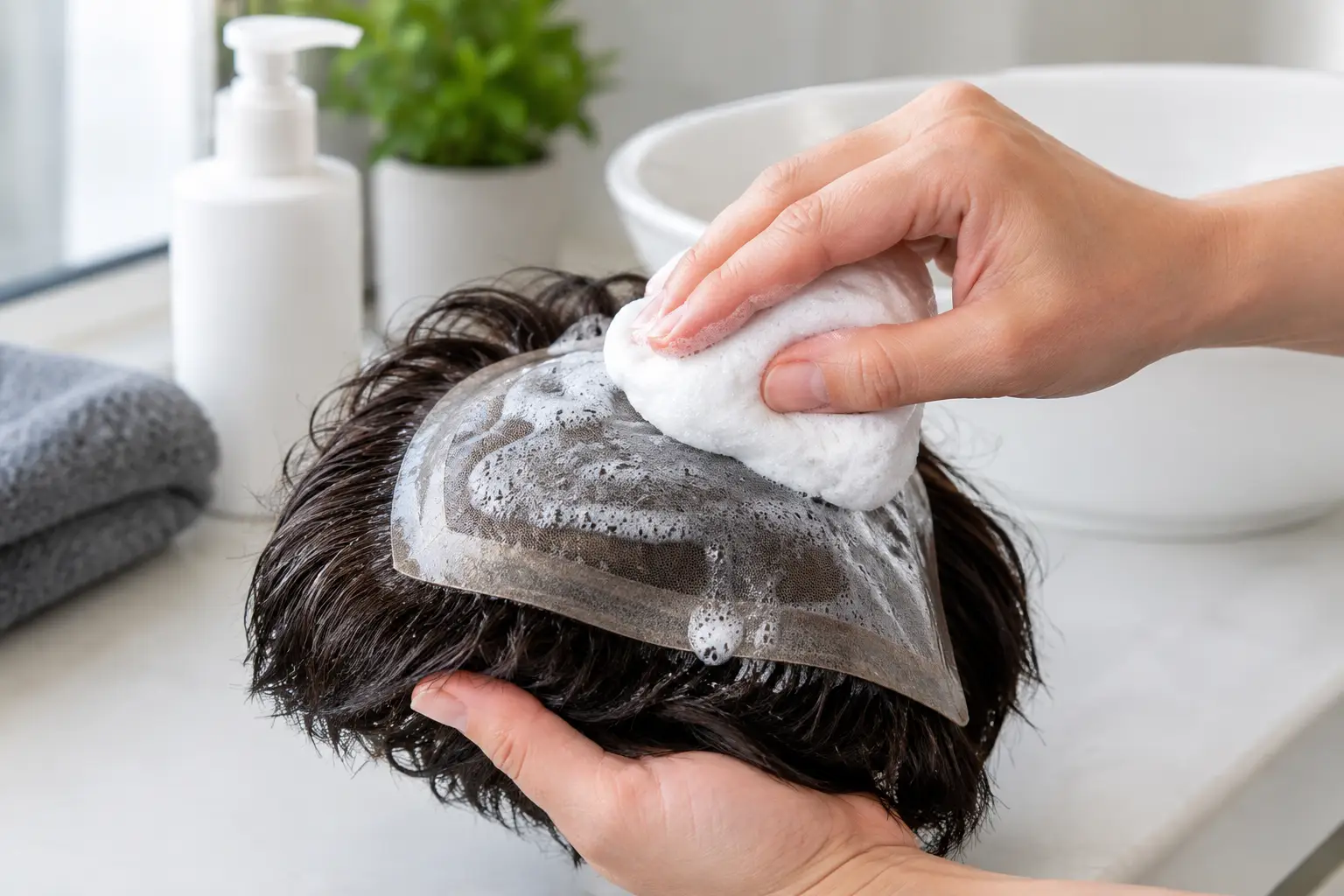
A bonded hair system should feel secure, natural, and comfortable – not like a daily maintenance challenge. Knowing how to clean a bonded hair system correctly helps protect the delicate base, preserve the quality of the hair, and keep your scalp feeling fresh between appointments. The key is patience. Rushing the removal or using the wrong product can weaken the bond, leave residue behind, or shorten the life of an otherwise excellent system.
For many people, professional maintenance offers the most reliable result, particularly if the system is newly fitted, worn with a strong adhesive, or has a fine lace or skin base. Still, understanding the process helps you care for your investment confidently and recognize when it is time to seek specialist support.
Start by Knowing What Needs Cleaning
Cleaning a bonded system involves two separate areas: the hair system itself and the scalp beneath it. The hair needs gentle cleansing and conditioning to stay soft and natural-looking. The base needs adhesive residue removed carefully, while the scalp needs to be clean, dry, and free from oils before reattachment.
Do not treat a hair system like your natural hair. Human hair systems do not receive natural scalp oils once they have been cut from the donor source. Overwashing, hot water, harsh shampoos, and aggressive brushing can leave the hair dry, dull, or prone to tangling.
Your maintenance schedule depends on the bonding method, your skin type, exercise routine, climate, and the type of base you wear. Someone who sweats heavily or has an oily scalp may need more frequent cleaning than someone with a lighter daily routine. In Singapore’s warm, humid conditions, sweat and scalp oils can also affect adhesive performance sooner than expected.
Prepare Your Space and Products
Before removing the system, set up a clean, well-lit area and allow enough time to work without rushing. You will typically need an adhesive remover suited to your bond type, a gentle sulfate-free shampoo, conditioner designed for hair systems or color-treated hair, a wide-tooth comb, soft towels, cotton pads, and a scalp cleanser.
Avoid household solvents, alcohol-heavy products not intended for hair systems, and strong degreasing shampoos. These may break down the adhesive unpredictably, irritate the scalp, or damage a delicate lace, poly, or hybrid base. If you are unsure which remover matches your adhesive, it is better to check with your hair replacement specialist than to experiment.
A small reminder matters here: more product is not always better. Apply remover in controlled amounts and give it time to work. Flooding the base can make cleanup messier and may cause adhesive residue to spread into the hair.
How to Clean a Bonded Hair System Step by Step
Release the bond gently
Begin at an edge that has already lifted slightly, often near the nape or temple. Apply adhesive remover along the perimeter and wait as directed by the product instructions. Never pull the system free while the adhesive is still holding firmly. Pulling can stretch lace, tear a thin skin base, or pull on fragile hairs near the front hairline.
Use the pads of your fingers rather than your nails to slowly ease the system away from the scalp. If you feel resistance, apply more remover and wait a little longer. A secure bond is desirable when wearing the system, but it should not require force during removal.
Remove residue from the base
Once the system is off, place it hair-side down on a clean, flat surface. Work on a small section at a time, using adhesive remover and cotton pads to lift away residue. With lace bases, press and blot rather than scrub. Rubbing too hard can push adhesive through the lace and into the hair, creating a difficult cleanup job.
For poly or skin bases, residue may roll away more easily after the remover has had time to soften it. Be gentle around the front contour, where the base is often thinnest and most visible. If buildup is stubborn, repeat the softening process instead of scraping at it.
A base that feels clean but still slightly tacky is not ready for rebonding. Continue until no adhesive film remains, then wash the base carefully with a mild cleanser and rinse thoroughly.
Wash the hair without creating tangles
Turn the system hair-side up and wet the hair with cool to lukewarm water. Apply a small amount of gentle shampoo, then smooth it through from the mid-lengths to the ends. Avoid twisting, bunching, or vigorously rubbing the hair, especially when it is wet.
Rinse in the direction the hair naturally falls. Follow with a lightweight conditioner, concentrating on the mid-lengths and ends rather than the base. Leave it on briefly, then rinse completely. Heavy conditioners near the base can interfere with the next bond if any product transfers onto the attachment area.
Pat the hair dry with a towel. Do not rub. Use a wide-tooth comb or a brush recommended for hair systems, starting at the ends and working upward to prevent unnecessary shedding or breakage.
Clean and protect your scalp
Your scalp needs just as much attention as the system. Use an appropriate scalp cleanser to remove remaining adhesive, oil, sweat, and dead skin. Take extra care around the hairline, behind the ears, and at the nape, where residue can be easy to miss.
Rinse well and dry the scalp completely before applying a new bond. Adhesives generally perform best on skin that is clean, dry, and free from moisturizer, conditioner, and oil. If your scalp is irritated, itchy, inflamed, or has broken skin, pause before reattachment and seek professional guidance. Covering irritation with a fresh bond can make discomfort worse.
Drying and Reattachment Require Equal Care
Allow the base to dry fully before applying tape or liquid adhesive. A damp base can compromise the bond and encourage adhesive to break down early. Air drying is often the gentlest option. If you use a blow dryer, choose a cool or low-heat setting and keep it moving.
Reattachment is where alignment matters most. A natural-looking result depends on placing the system at the correct hairline position, matching the direction of your existing hair, and avoiding tension. If you are new to wearing a bonded system, trying a new hairline design, or working with a fine lace front, professional reattachment can prevent costly mistakes.
It also helps to avoid washing, intense sweating, steam rooms, and heavy exercise for the curing period recommended for your adhesive. Giving the bond time to set can make a noticeable difference in its hold and comfort.
Common Mistakes That Shorten System Life
The most common mistake is waiting too long between maintenance appointments. As a bond breaks down, sweat, oil, and residue can accumulate underneath. This may lead to odor, itching, lifting edges, and a less secure fit. Regular maintenance is usually easier on both the scalp and the system than trying to correct weeks of buildup.
Another issue is using products formulated for natural scalp hair without checking whether they are suitable for a hair system. Clarifying shampoos, strong styling sprays, oily serums, and high-alcohol products may affect the hair quality or bond. Choose products with your specific base, hair type, and attachment method in mind.
Finally, do not ignore changes in comfort. Persistent itching, burning, unusual shedding, redness, or recurring lifting can point to an adhesive sensitivity, a fit issue, or a maintenance routine that needs adjustment. There is no advantage in tolerating discomfort when the solution may be as simple as changing products or refining the attachment method.
When Professional Hair System Maintenance Is the Better Choice
At-home care can be manageable for experienced wearers, but professional maintenance provides reassurance when precision is needed. A specialist can thoroughly clean the base, assess the condition of the hair and scalp, trim and blend the system, refine the hairline, and select an attachment approach that suits your lifestyle.
This is particularly valuable for first-time wearers, people managing medical hair loss or sensitive skin, and anyone who wants a discreet, polished result without the stress of handling adhesive removal alone. At HairSpec, a personalized assessment can help identify the right maintenance plan for your scalp condition, activity level, and preferred appearance.
A bonded hair system should support your confidence, not add uncertainty to your routine. With gentle cleaning, careful removal, and timely expert care when needed, you can protect both the system and the comfort that makes wearing it feel like your own hair.