

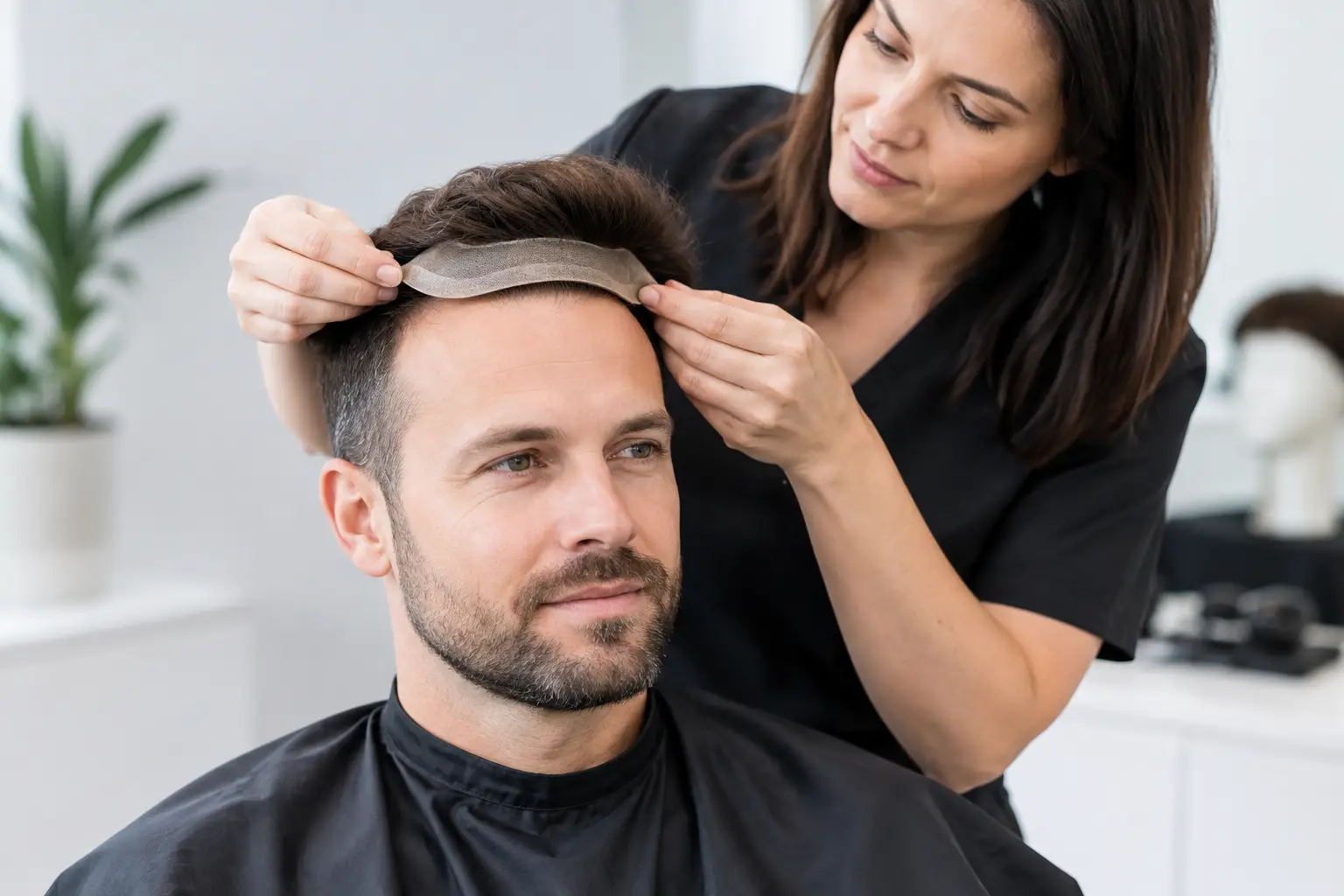
A toupee can look remarkably natural, but the result is decided long before you see it in the mirror. The custom toupee fitting process is where a specialist turns a general idea of fuller hair into a hair system that suits your scalp, hairline, lifestyle, and personal style. It is not simply about selecting a piece of hair. It is about creating a result that feels comfortable enough to wear with confidence.
For people managing thinning hair, pattern baldness, or a more visible area of hair loss, a properly fitted toupee can offer immediate coverage without surgery. The right approach also leaves room for choice. You can decide how full, subtle, youthful, or conservative you want your hair to look.
Why a Custom Fit Makes the Difference
Ready-made hairpieces may seem convenient, but they are designed around average measurements and generalized hair patterns. A custom toupee is designed around you. That matters because the shape of the head, extent of hair loss, texture of existing hair, skin sensitivity, and preferred hairstyle all affect the final result.
A close fit helps the base sit flatter against the scalp and improves security during everyday movement. Just as importantly, it allows the specialist to place the front hairline in a way that looks believable for your age, facial proportions, and natural growth pattern. An overly low or perfectly straight hairline may look unnatural even when the hair itself is high quality.
Custom fitting also gives you more control over density. Someone with early thinning may want light-to-medium density that blends quietly into their existing hair. Someone with advanced hair loss may prefer fuller coverage, while still avoiding a look that appears too thick for their age. Natural-looking results are usually about balance, not maximum volume.
The Custom Toupee Fitting Process Step by Step
A quality fitting should feel private, unrushed, and personalized. While the details vary depending on the hair system and attachment method, the process generally follows several key stages.
1. Private Consultation and Scalp Assessment
The appointment begins with a conversation about your concerns, hair history, and goals. A specialist will ask what you dislike about your current hair, what styles you have worn before, and how much maintenance you are comfortable with. This is also the time to discuss practical realities, such as exercise, frequent swimming, a demanding work schedule, or sensitivity to adhesives.
A scalp assessment helps identify the pattern and condition of hair loss. The specialist examines the recipient area, surrounding hair, scalp condition, and direction of natural growth. If you have sudden shedding, scalp inflammation, or medically related hair loss, a broader care plan may be more appropriate alongside a hair replacement solution.
At HairSpec, this consultation-led approach helps ensure that a toupee is recommended because it suits your needs, rather than as a one-size-fits-all answer.
2. Measuring the Coverage Area
Next, the specialist maps the area that needs coverage. This is typically done by marking the intended front hairline and measuring the length and width of the thinning or bald area. For a more individualized system, a template may be created to capture the exact curves and contours of your scalp.
This stage is more precise than it sounds. A base that is too large can overlap healthy hair and make blending difficult. One that is too small may fail to give the coverage you expected. Accurate measurements help the toupee sit naturally while keeping the transition into your existing hair discreet.
The hairline placement deserves special attention. It should account for facial shape, forehead size, age, and the amount of hair you retain at the temples. A skilled specialist may recommend a slightly irregular hairline rather than an overly crisp edge, because natural hairlines are rarely perfectly uniform.
3. Choosing the Base Material
The base is the foundation of the hair system, and each option has its own advantages. Lace bases are often chosen for a soft, natural-looking hairline and good breathability. Skin or polyurethane bases can offer a smooth appearance and can be easier to clean, depending on the attachment method. Monofilament and hybrid designs may combine durability, comfort, and a realistic finish in different areas of the system.
There is no universally best base. If you want to wear your hair swept back, a fine lace front may be worth the additional care it requires. If durability and simpler maintenance are your priorities, another material may be a better match. Your scalp sensitivity, climate, and activity level should also shape the decision.
4. Matching Hair Color, Texture, and Density
This is the stage that makes a toupee look like your hair rather than a hairpiece. The specialist compares samples against your natural hair under appropriate lighting, looking beyond basic color. Many people have a mix of shades, subtle warmth, or gray hairs that need to be reflected in the system for a convincing blend.
Texture matters just as much. Straight, wavy, curly, fine, and coarse hair each behave differently. The selected hair should move naturally with your existing hair and respond well to the styling routine you are willing to maintain.
Density is chosen with restraint. A thicker hair system can provide dramatic coverage, but it may look disconnected from thinner hair at the sides or back. A specialist may recommend graduated density, with a softer front and a fuller crown, to create a more realistic transition.
5. Customizing the Cut and Style
Once the system is ready, it is trimmed and styled while you are wearing it. This is essential. Cutting a toupee separately from the wearer can produce a result that looks fine on a stand but does not blend naturally once attached.
Your stylist will integrate the new hair with the hair you still have, refining the length, layering, parting, and direction of movement. Bring reference photos if you have a particular look in mind, but stay open to professional guidance. A style that worked when your hair was denser may need slight adjustments to complement your face and the placement of the system.
Attachment, Comfort, and Security
A toupee can be attached with specialized tapes, liquid adhesives, clips, or a combination of methods. The best choice depends on your scalp, the base material, desired hold time, and how often you prefer to remove the system.
Tape can provide reliable hold and is often suitable for people who want a straightforward maintenance routine. Liquid adhesives can create a very discreet bond, especially around the hairline, but require careful application and removal. Clip-in options allow more frequent removal, although they are not ideal for every hair-loss pattern or lifestyle.
During fitting, comfort should be checked before you leave. The system should feel secure without pulling, pinching, or creating persistent pressure. Mild awareness is common when you first begin wearing a hair system, but ongoing itching, burning, or tightness should be addressed promptly. A well-fitted toupee should support your routine, not make you nervous about moving through it.
What to Expect After Your First Fitting
Most people need a short adjustment period. You may need time to get used to seeing yourself with more hair, learning how to style it, and understanding how the attachment feels during sleep, exercise, or a humid day. This is normal, and follow-up appointments are part of good hair replacement care.
Your specialist should explain when to wash the system, which products to use, how to protect the hair from heat damage, and when to return for cleaning, reattachment, or trimming. Maintenance frequency depends on the base, attachment method, scalp oil production, and your daily activities. Trying to stretch wear beyond the recommended schedule can affect comfort, hygiene, and the condition of both the system and your scalp.
Avoid treating a toupee exactly like growing hair. Use gentle, sulfate-free products when recommended, avoid aggressive brushing at the base, and be cautious with high heat. If your routine includes gym sessions, swimming, or travel, ask for practical care advice before your appointment rather than learning through trial and error.
Questions Worth Asking at Your Consultation
A good consultation welcomes questions. Ask how the selected base will perform with your lifestyle, how visible the hairline will be with your preferred style, and what maintenance appointments are likely to involve. You should also ask about expected longevity, replacement timing, and the total care commitment, not only the initial fitting.
Be honest about your budget and the amount of upkeep you can realistically manage. A more delicate, highly natural-looking system may require more attentive maintenance than a durable everyday option. The right choice is the one that gives you confidence without adding stress to your routine.
The goal of a custom toupee is not to make you look like someone else. It is to give you a natural-looking option that feels like a comfortable, credible version of yourself – one you can wear to work, social events, and ordinary days without giving your hair a second thought.