

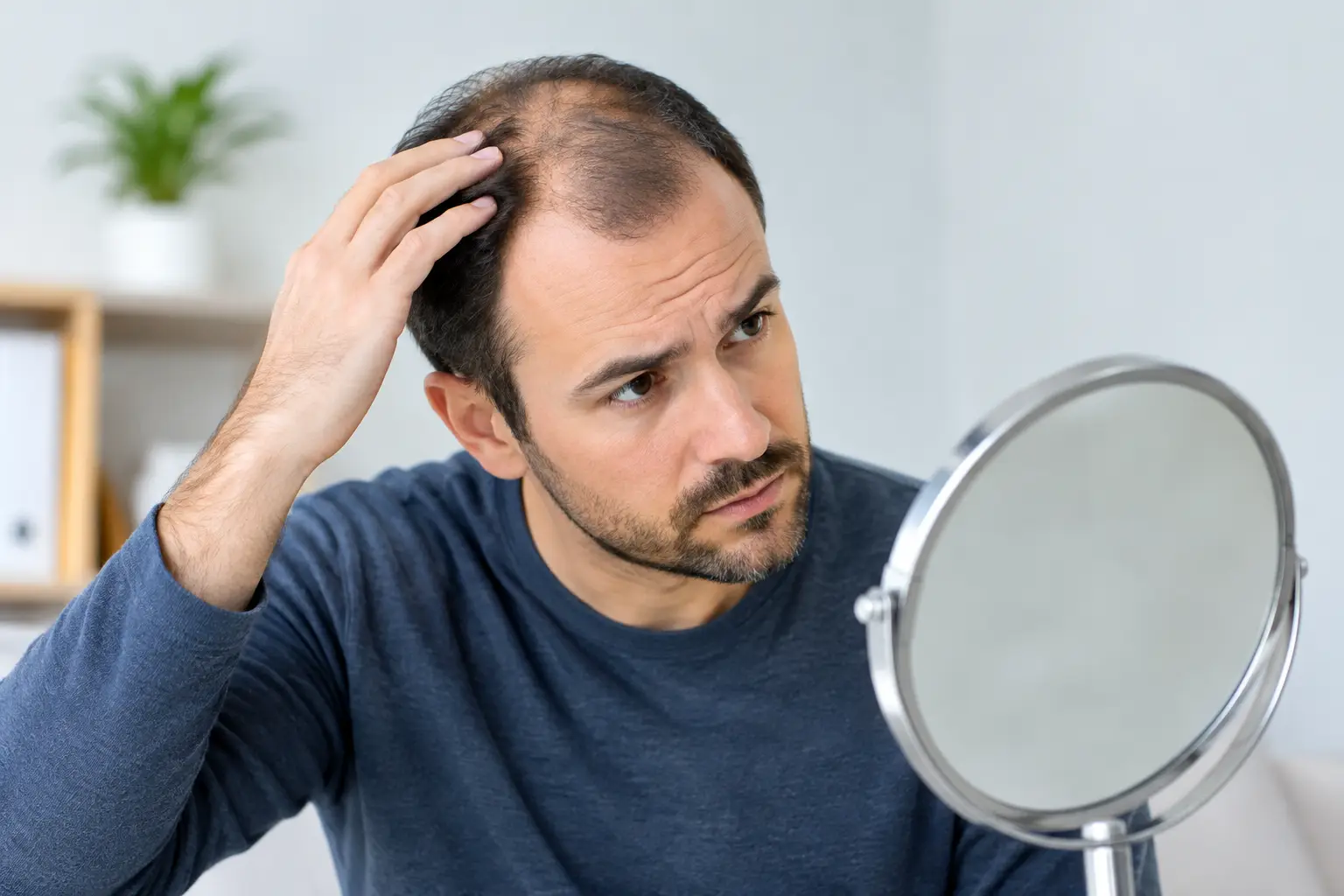
A receding hairline can seem subtle at first: a little more scalp visible under bright office lighting, more hair in the shower, or a hairstyle that no longer sits the way it used to. This guide to male pattern baldness explains what is happening beneath the surface, how to tell it apart from other forms of shedding, and which treatment paths may help you regain a fuller-looking appearance and greater confidence.
What Male Pattern Baldness Is
Male pattern baldness, also called androgenetic alopecia, is the most common cause of hair loss in men. It is driven by a combination of inherited sensitivity in the hair follicles and hormones, particularly dihydrotestosterone, or DHT. In susceptible follicles, DHT gradually shortens the growth phase of the hair cycle.
The result is miniaturization. Hairs that once grew thick and long become finer, shorter, and less pigmented over time. Eventually, some follicles may stop producing visible hair. This is why male pattern baldness tends to progress gradually rather than appearing overnight.
Genetics strongly influence whether you will experience it, as well as the age at which it begins and the pattern it follows. It does not come from poor scalp hygiene, wearing hats, or shampooing too often. Stress can increase shedding in some people, but it is not usually the root cause of classic male pattern baldness.
The Typical Pattern and Early Signs
For many men, the first sign is recession at the temples, creating a more pronounced M-shaped hairline. Others notice thinning at the crown, where the scalp becomes more visible from above. These areas may eventually meet, leaving more significant thinning across the top while hair at the sides and back remains denser.
Early action matters because treatments generally work best while follicles are still active. If your hairline looks less defined in photos, you need more styling product to create coverage, or your part appears wider than before, it may be time for a professional scalp assessment.
Not every type of hair loss follows this pattern. Sudden shedding, patchy bald spots, scalp pain, redness, scaling, or hair loss affecting the eyebrows or beard may point to another condition. These signs deserve medical evaluation rather than a self-diagnosis.
A Guide to Male Pattern Baldness Assessment
A proper assessment looks beyond the amount of hair in the sink. A specialist examines the distribution of thinning, scalp condition, hair shaft caliber, family history, lifestyle factors, and your personal goals. The goal is not simply to label the problem. It is to identify whether your hair loss is likely to progress and determine which option fits your stage of thinning, comfort level, budget, and desired result.
A medical professional may also review medications, recent illness, nutrition, and hormonal factors when the hair loss pattern is unclear. This step is valuable because male pattern baldness can occur alongside other causes of shedding. Treating only one factor may leave you disappointed with the result.
Photos are especially useful. Consistent images taken from the front, top, sides, and crown can reveal gradual changes that are easy to miss day to day. They also create a realistic baseline for tracking progress after treatment begins.
Treatment Options: What May Help
There is no single best treatment for every man. The most appropriate plan depends on how much hair remains, how quickly the thinning is changing, your medical history, and whether you want to preserve existing hair, create immediate cosmetic density, or both.
Medical treatments for hair retention
Topical minoxidil is commonly used to support hair growth and prolong the growth phase of follicles. It requires regular, long-term use, and results vary. Some people notice temporary increased shedding early on as the hair cycle shifts. This can be concerning, but it does not always mean the treatment is failing.
Prescription medications that reduce DHT may help certain men slow further loss and maintain existing hair. They can be effective, but they are not right for everyone and may have side effects. A qualified physician should discuss the benefits, risks, and suitability for your situation before you start treatment.
These approaches are often most helpful when used early. They may preserve or strengthen miniaturizing hair, but they cannot reliably restore a completely bare area to its former density.
Low-level laser therapy and scalp care
Low-level laser therapy uses controlled light energy to support follicle activity. It is noninvasive, comfortable, and can be considered by people who prefer a treatment with no downtime. It typically requires a course of consistent sessions or at-home use, so patience is essential.
Scalp-focused care may also be recommended when buildup, inflammation, excess oil, or poor scalp condition is affecting the appearance and quality of the hair. Healthy scalp care is supportive, not a standalone cure for genetic hair loss, but it can create a better environment for the hair you still have.
Hair transplant surgery
A hair transplant redistributes follicles from denser donor areas, usually the back or sides of the scalp, into thinning regions. It can provide a permanent, natural-looking result when performed well on a suitable candidate. However, it is a surgical procedure, requires adequate donor hair, and takes time for transplanted follicles to settle and grow.
A transplant does not stop future loss in non-transplanted hair. Many patients still consider medical treatment to protect surrounding native hair and maintain a balanced result over time.
Non-surgical hair replacement
For men who want immediate, highly visible density, non-surgical hair replacement can be a compelling option. Modern systems are customized for hairline shape, density, texture, color, and lifestyle, allowing a natural appearance without surgery or a lengthy waiting period.
The trade-off is maintenance. A quality system needs professional fitting, regular servicing, and thoughtful daily care. For many people, that routine is worthwhile because it offers control over the final look, even when hair loss is advanced.
Scalp micropigmentation
Scalp micropigmentation places tiny, layered pigment impressions on the scalp to create the look of closely cropped follicles or add the appearance of density beneath thinning hair. It does not grow hair, but it can reduce contrast between the scalp and remaining hair.
This option can work well for a shaved style, crown thinning, scars, or as a complement to a transplant or hair replacement system. Results depend heavily on practitioner skill, pigment selection, and a hairline design that will continue to look natural as you age.
Choosing a Plan That Fits Your Life
The right choice is often a combination rather than a single procedure. Someone with early temple recession may prioritize medical treatment and low-level laser therapy. A person with significant crown thinning may choose scalp micropigmentation for the appearance of fuller coverage. Another person may want the instant transformation of a customized hair system while exploring longer-term restorative options.
Be wary of promises of dramatic regrowth in a few weeks or products that claim to reverse every type of hair loss. Meaningful results take consistency, realistic expectations, and a plan matched to the actual cause of thinning. The best providers will discuss limits as clearly as benefits.
At HairSpec, a personalized scalp assessment can help clarify these choices in a private, supportive setting. With more than 20 years of experience across restorative, surgical, and non-surgical solutions, the focus is on a result that looks natural and feels manageable in everyday life.
When to Seek Professional Help
Arrange an assessment if thinning is affecting your confidence, changing quickly, or becoming difficult to disguise. Do not wait for complete baldness before asking questions. Earlier intervention can offer more options for preserving existing hair.
Seek medical care promptly for sudden or patchy hair loss, itching or pain, scalp lesions, or shedding that begins after a new medication or significant illness. These symptoms may not be male pattern baldness and could need different treatment.
Hair loss can feel intensely personal, but it does not need to be something you manage alone. A clear diagnosis and an honest conversation about your goals can turn uncertainty into a practical next step.