

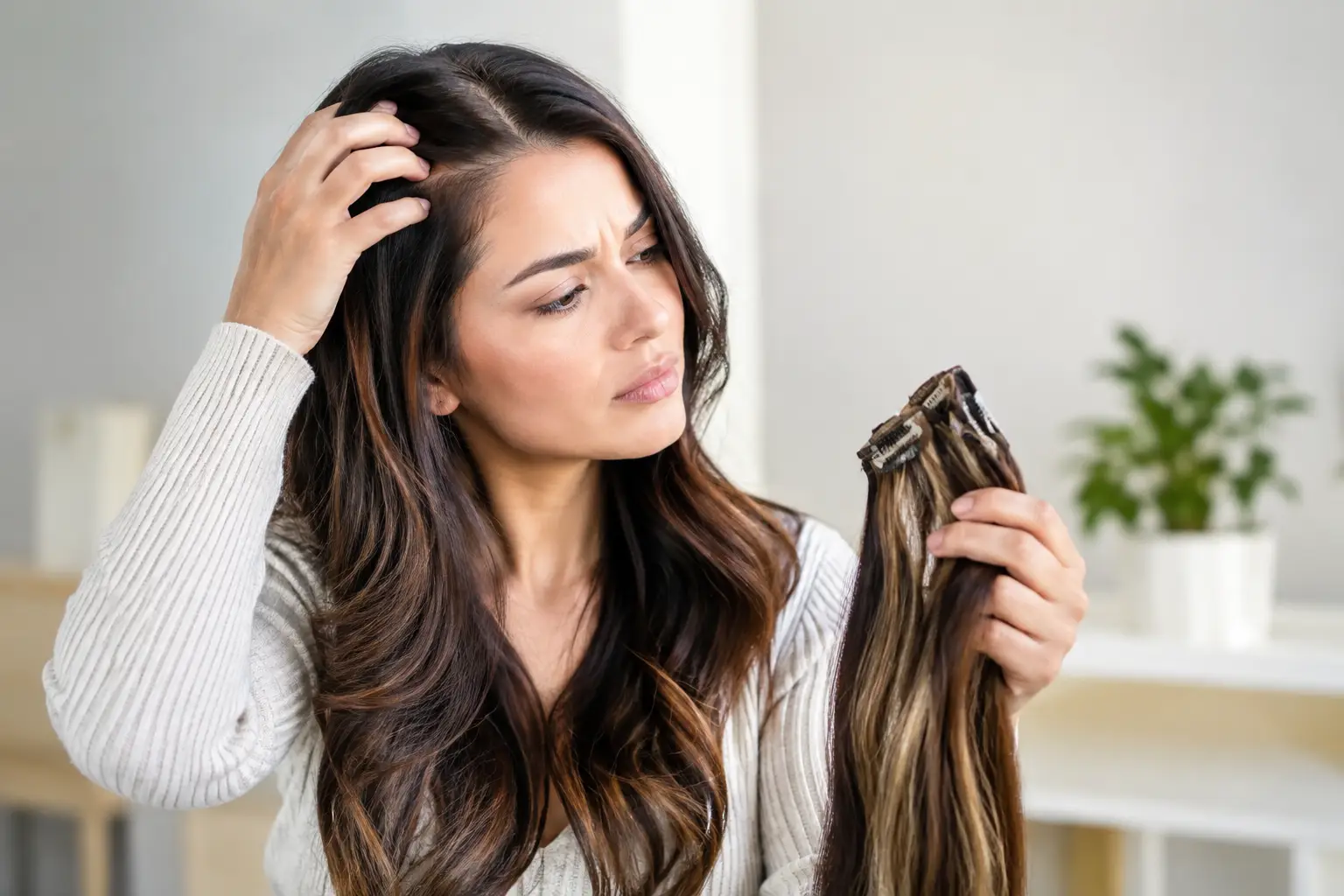
A sore, tight scalp after a fresh install should never be treated as the price of looking polished. Can extensions cause alopecia? They can, particularly when the hair is repeatedly pulled under tension. The condition most closely linked to extensions is traction alopecia, a form of hair loss caused by ongoing stress on the follicles.
The reassuring news is that traction-related hair loss can often improve when caught early and the tension is removed. The more difficult reality is that long-term pulling can permanently damage follicles, making regrowth less likely. Knowing what to look for allows you to protect both your style and your natural hair.
Can Extensions Cause Alopecia Through Tension?
Extensions do not automatically cause hair loss. Many people wear them successfully when the installation, weight, maintenance, and removal process suit their natural hair and scalp condition. The issue is not simply whether you wear extensions, but how much force they place on your follicles and how long that force continues.
Traction alopecia develops when hair is pulled repeatedly or continuously. This can happen with tightly braided extensions, sewn-in weaves, heavy clip-ins, bonded extensions, and styles that pull the hair into a high ponytail or bun. The hairline, temples, and area around the ears are especially vulnerable because the strands there are often finer and more delicate.
A tight installation may initially cause tenderness, headaches, small bumps, or a pulling sensation. These are warning signs, not signs that the extensions are secure. Healthy extensions should feel comfortable. If your scalp hurts when you touch it, sleep, or make facial expressions, the style needs attention promptly.
The Early Signs of Traction Alopecia
Hair loss from tension does not always begin with obvious bald patches. In its earlier stages, it can look like breakage, thinning around the edges, or a hairline that seems less full than before. Some people notice short, broken hairs around the temples while the rest of the hair remains dense.
Other signs may include scalp redness, itching, folliculitis-like bumps, flaking, tenderness, or a burning sensation after installation. A receding hairline is also a common pattern. In some cases, the hairline may show a few retained hairs in front of the thinning area, sometimes called the “fringe sign.” This can be a clue that tension is involved.
It is worth taking these changes seriously, even if they seem minor. Continued tension can cause inflammation around the follicle. Over time, the follicle may scar and stop producing hair. At that stage, changing your hair routine alone may not bring the hair back.
Not Every Type of Hair Loss Is Caused by Extensions
Extensions may be part of the picture, but they are not always the whole answer. Pattern hair loss, alopecia areata, thyroid conditions, iron deficiency, hormonal changes, medication effects, and stress-related shedding can all affect density. Some people also have naturally fragile hair shafts that break more easily under the added weight of extensions.
That is why a professional scalp assessment is valuable when thinning persists. A specialist can examine the pattern of hair loss, scalp health, styling history, and the condition of your existing hair before recommending the next step. Treating all shedding as traction alopecia can delay appropriate care.
Which Extension Methods Carry More Risk?
Any method can become risky if it is too tight, too heavy, or worn without adequate breaks. However, the risk generally rises when extensions are attached close to the scalp and remain under constant tension for weeks at a time.
Braided styles and sew-in weaves can place strain on the roots when the braids are small, tight, or used as an anchor for heavy added hair. Fusion, keratin-bond, and tape-in extensions can also create stress if sections are too large for the natural hair supporting them, or if the bonds are not removed professionally. Clip-ins may seem gentle because they are temporary, but repeated clipping in the same spot can cause breakage and traction, particularly on fine hair.
Weight matters as much as method. Long, dense extensions can overwhelm finer or already-thinning hair. The safest option is not necessarily the most discreet or longest-lasting one. It is the option that respects your current hair density, scalp sensitivity, and lifestyle.
How to Wear Extensions More Safely
Start with an honest assessment of your natural hair. If your edges are thinning, your scalp is tender, or you are experiencing increased shedding, extensions that attach tightly to the hair may not be the right choice for now. A lightweight style or a non-attached hair replacement option may offer the appearance of fullness without placing additional stress on fragile strands.
Choose an experienced extension professional who evaluates your scalp rather than rushing into an installation. They should section the hair appropriately, match the extension weight to your natural hair, and be willing to adjust the style if you feel discomfort. Pain is never a sign that the installation is working well.
Maintenance matters after the appointment. Avoid pulling extensions into tight updos, and do not add further tension with firm elastics or tight headwear. Cleanse the scalp regularly using a method suitable for your extension type, and make sure it dries thoroughly. Product buildup and trapped moisture can irritate the scalp and make an already uncomfortable installation harder to tolerate.
Give your hair periodic rest between installations, especially if you wear extensions regularly. The exact break needed depends on your hair condition and extension method, but persistent tightness, breakage, or thinning should be treated as a reason to pause rather than push through. Professional removal is also essential. Rushing the process or pulling out bonds can take your own hair with the extensions.
What to Do If You Notice Thinning
The first step is to remove the source of tension as soon as possible. If extensions are painful, feel unusually tight, or are causing bumps and scalp inflammation, contact the installer for adjustment or removal. Do not wait for the style to “settle.” A healthy scalp should not have to adapt to pain.
Next, avoid tight styles while the scalp recovers. Keep your routine gentle, minimize heat and chemical processing, and resist the urge to camouflage thinning with another heavy installation. If the hair loss is recent, reducing traction early gives the follicles the best chance to recover.
If thinning continues after removing extensions, if the skin looks shiny or scarred, or if bald patches are expanding, seek an assessment from a qualified hair loss or medical professional. The right approach may include scalp-focused treatments, low-level laser therapy, medical evaluation, or cosmetic options that restore coverage without straining the remaining hair.
For people with visible thinning, appearance concerns are not superficial. Hair can affect how comfortable you feel at work, in photos, and in everyday interactions. Modern non-surgical hair replacement, medical wigs, scalp micropigmentation, and carefully selected lightweight systems can provide natural-looking coverage while you address the health of your scalp.
A Fuller Look Should Not Cost You Healthy Hair
Extensions can be a beautiful way to add length, volume, or styling flexibility, but they should never leave your scalp sore or your hairline weaker. The best choice depends on your current density, the condition of your follicles, and whether your goal is temporary volume or support for ongoing hair loss.
At HairSpec, a private scalp assessment can help separate extension-related traction from other causes of thinning and identify options that fit your hair, comfort, and confidence. Acting early is one of the kindest things you can do for your natural hair: choose a solution that gives you the look you want without asking your follicles to carry more than they can handle.