

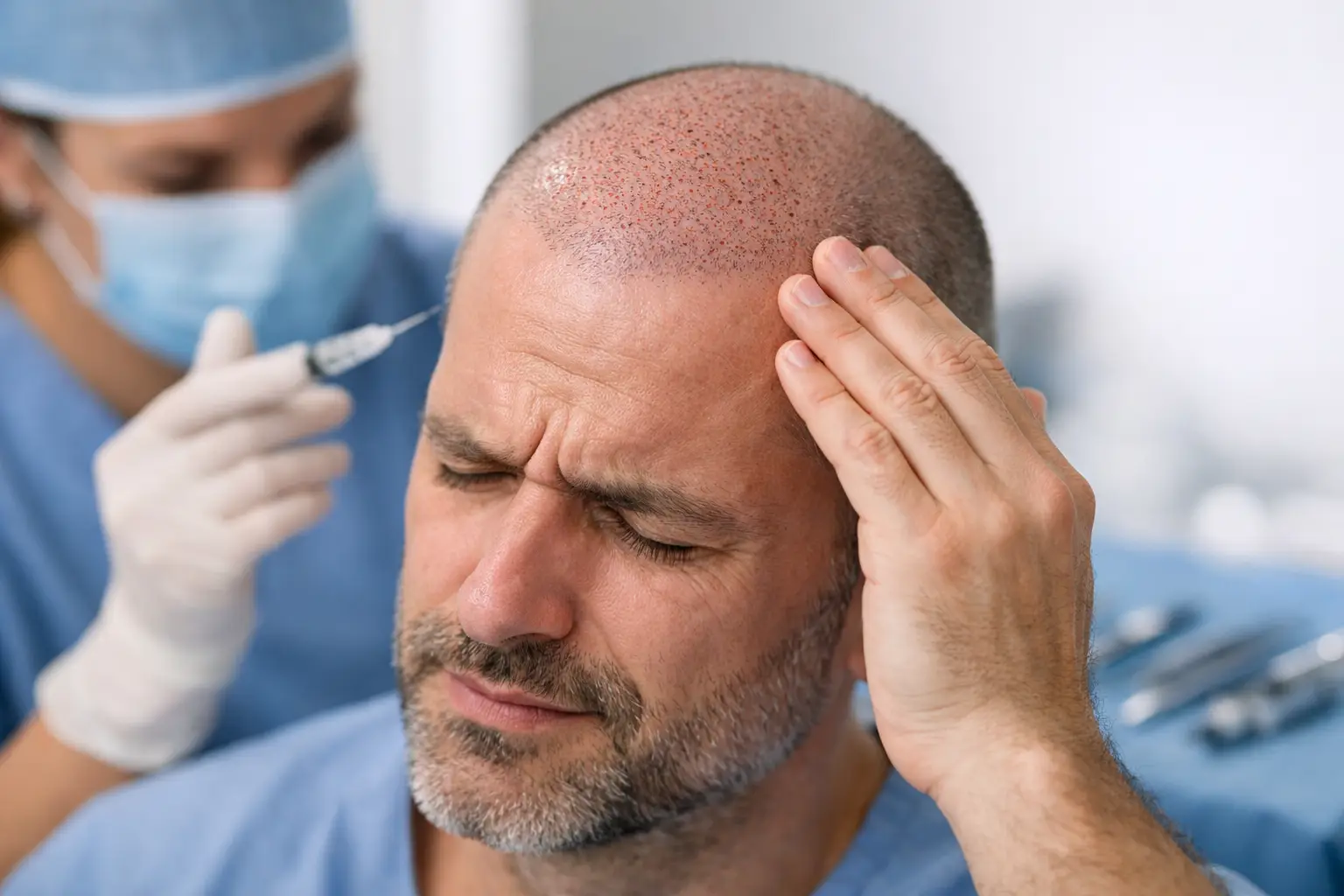
Most people considering a transplant are less worried about the hair itself than one practical question: how much hair transplant pain is involved? The reassuring answer is that the procedure is usually far more manageable than people expect. You should not feel sharp pain while the transplant is being performed, although numbing injections, pressure, and some post-procedure tenderness are normal.
A hair transplant is still a medical procedure, so it should never be described as completely sensation-free. Your experience depends on the technique used, the size of the treatment area, your natural pain sensitivity, and how carefully your recovery is managed. Knowing what is normal can replace uncertainty with a clearer, more confident decision.
Is Hair Transplant Pain Common During the Procedure?
During a hair transplant, the surgeon first uses local anesthesia to numb both the donor area, usually at the back or sides of the scalp, and the recipient area where follicles will be placed. Once the anesthetic has taken effect, you may feel movement, light pressure, or pulling, but you should not feel cutting or follicle placement as pain.
For many patients, the numbing injections are the most uncomfortable part of the appointment. They can cause brief stinging or pinching, similar to dental anesthetic injections. This sensation usually lasts only seconds at each injection point. Some clinics may also use techniques to improve comfort, such as vibration, cooling, or medication to help you feel calm during a longer session.
A good treatment team checks in throughout the procedure. If you begin to feel pain after the numbing medication has been administered, speak up immediately. Local anesthesia can be topped up when needed. There is no benefit to silently tolerating discomfort.
FUE and FUT: Does the Method Change the Pain Level?
The two most common surgical methods are follicular unit extraction, known as FUE, and follicular unit transplantation, known as FUT or strip surgery. Both are performed under local anesthesia, so pain during the procedure is typically limited. The main difference is often felt during healing.
With FUE, individual follicular units are removed one by one from the donor area. This leaves tiny circular wounds that generally heal quickly. Patients often describe soreness, tightness, or sensitivity for a few days, rather than significant pain.
With FUT, a narrow strip of scalp is removed from the donor area and the area is closed with stitches or staples. Because this involves a linear incision, there may be more tightness and tenderness in the back of the scalp during the first stage of recovery. Some patients also experience discomfort when sleeping or turning their head. FUT can be appropriate for certain hair restoration goals, but the recovery trade-off should be discussed openly during consultation.
Neither approach is automatically right for everyone. The best choice depends on your hair loss pattern, donor hair availability, future hair loss risk, desired coverage, hairstyle preferences, and medical history.
What Does Pain Feel Like After a Hair Transplant?
Post-transplant discomfort is usually mild to moderate and most noticeable once the local anesthetic wears off. The donor area may feel tender, while the recipient area can feel tight, warm, or sensitive. Some swelling around the forehead or upper face can occur in the first few days, particularly after larger sessions. This is often more inconvenient than painful.
Your specialist may recommend or prescribe pain relief for the first few days. Take medication exactly as advised, including any instructions about avoiding medicines that may increase bleeding. Do not add supplements, anti-inflammatory medication, or topical products without checking first, as they may interfere with healing.
For many people, tenderness improves significantly after two to five days. The scalp may remain sensitive for a week or two, especially if you accidentally touch, bump, or scratch the treated areas. The recipient grafts are delicate early on, so protecting them is not only about comfort. It also supports the best possible growth outcome.
Itching Can Be More Noticeable Than Pain
Itching is one of the most common recovery complaints. As the tiny wounds heal and scabs form, the scalp can become itchy. This can be frustrating, but scratching or picking at scabs may dislodge grafts and increase the risk of infection or uneven healing.
Your clinic should provide specific washing instructions, including when you can begin gentle shampooing and how to loosen scabs safely. Following this routine helps keep the scalp clean without disturbing the grafts. If the itch is intense, persistent, or accompanied by a rash, contact your provider rather than trying an over-the-counter scalp product on your own.
Sleeping and Daily Activities During Recovery
The first few nights can be uncomfortable because you need to avoid rubbing the recipient area against a pillow. Many patients are advised to sleep with their head elevated for several days, which may reduce swelling and prevent accidental contact with grafts. A travel pillow can help some people stay in position.
You will also need to pause strenuous exercise, swimming, saunas, and activities that cause heavy sweating for the period recommended by your surgeon. This is not because exercise should be painful, but because heat, sweat, pressure, and accidental knocks can irritate the healing scalp. Most people can return to light daily routines relatively quickly, while more demanding activity requires patience.
When Hair Transplant Pain Is Not Normal
Mild soreness, sensitivity, and itching are expected. Severe, worsening, or throbbing pain is not something to ignore. It may indicate infection, excessive inflammation, or another issue that needs professional attention.
Contact your treatment provider promptly if you notice increasing pain after it had been improving, spreading redness, pus or foul-smelling drainage, fever, significant bleeding, or rapidly worsening swelling. You should also ask for advice if pain medication is not controlling your discomfort as expected.
A reputable provider will give you clear aftercare instructions and a direct way to ask questions during recovery. This support matters. A hair transplant is not simply a one-day appointment. Results and comfort depend on careful planning, skilled technique, and appropriate follow-up.
How to Make Hair Transplant Recovery More Comfortable
Preparation makes a meaningful difference. Arrange a few quiet days after your procedure so you are not rushing into work events, travel, or social commitments. Wear loose, button-front clothing on the day of treatment and during the first stage of recovery, so you do not need to pull a shirt over your scalp.
Follow every aftercare instruction, even if you feel well. This usually includes sleeping carefully, avoiding alcohol and smoking if advised, protecting the scalp from direct sun, and attending follow-up appointments. Do not judge your progress too early. Initial shedding of transplanted hairs can happen before new growth begins, and it is a normal part of the process for many patients.
It also helps to be realistic about your comfort threshold. If you are anxious about medical procedures, injections, or long appointments, mention this during consultation. Your provider can explain the treatment schedule, discuss available comfort measures, and help you decide whether a surgical option fits your needs and expectations.
Is a Hair Transplant the Only Way to Restore the Look of Density?
No. A transplant can create lasting, natural-looking growth when you have suitable donor hair and your hair loss pattern is stable enough for surgery. However, it is not the only route to a fuller-looking result. Some people prefer to begin with non-surgical hair replacement, scalp micropigmentation, low-level laser therapy, or other personalized options based on the cause and stage of their hair loss.
This is especially relevant for people with active or diffuse thinning, limited donor supply, medical hair loss, or a preference for immediate cosmetic change without surgery. At HairSpec, a private scalp assessment can help identify the most appropriate path rather than pushing every concern toward one procedure.
The right decision is not about proving you can tolerate discomfort. It is about choosing a solution that respects your goals, lifestyle, budget, and long-term hair plan. With experienced care and realistic aftercare, hair transplant discomfort is usually temporary, while the confidence gained from a well-planned result can last much longer.