

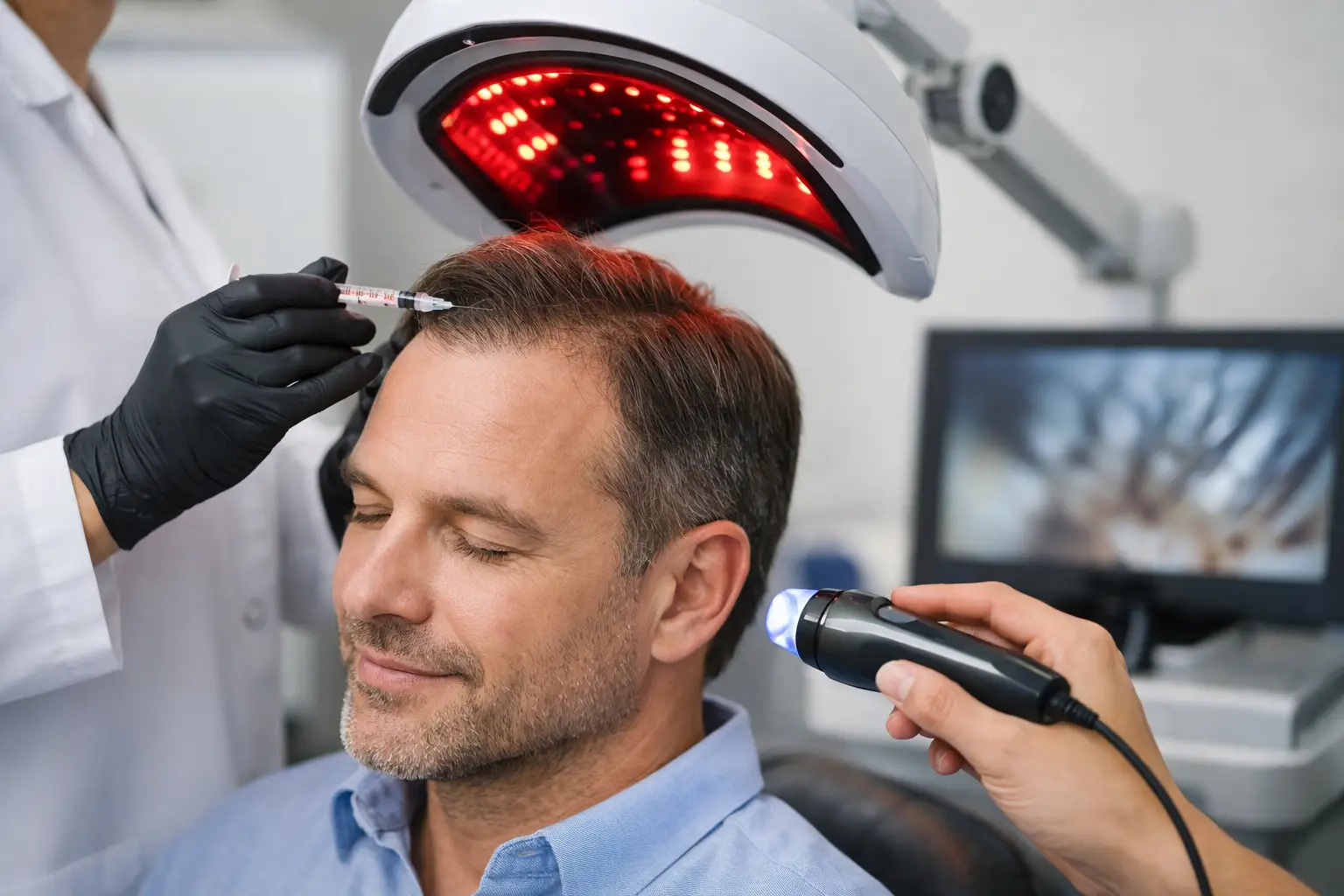
A wider part line, a thinning crown, or more hair left on the pillow can make getting ready feel unexpectedly stressful. Hair restoration technology gives people more options than simply waiting for hair loss to progress or committing immediately to surgery. The right approach can improve the appearance of density, support existing follicles, or create a realistic hairline that feels like your own.
The key is matching the technology to the cause of hair loss, the condition of your scalp, and the result you want to see in the mirror. A treatment that works well for early thinning may not be the best fit for advanced baldness, medical hair loss, or a desire for an immediate cosmetic change.
What Hair Restoration Technology Can Do
Hair restoration technology is not one device or procedure. It is a group of clinical, aesthetic, and non-surgical solutions designed to address hair loss from different angles. Some treatments aim to support hair growth. Others create the visual effect of fuller hair right away. More advanced options can redistribute healthy hair follicles into thinning areas.
That distinction matters. If your priority is a fuller look for an upcoming event, non-surgical hair replacement or scalp micropigmentation may provide faster visible coverage than a growth-focused treatment. If you have early-stage thinning and active follicles, low-level laser therapy or mesotherapy may be considered as part of a longer-term plan. A specialist should explain what each option can realistically achieve rather than presenting one service as the answer for everyone.
Technology also makes the experience more personalized. A close scalp assessment can help identify pattern hair loss, diffuse thinning, breakage, scalp concerns, or hair loss linked to a medical condition. From there, factors such as your hair texture, skin tone, lifestyle, budget, and preferred maintenance level shape the recommendation.
Technologies That Support Existing Hair
For people who still have active hair follicles, restorative treatments may help create a healthier environment for existing hair. Results vary considerably, especially when hair loss has progressed over many years, but these options can be valuable for early or moderate thinning.
Low-Level Laser Therapy
Low-level laser therapy, often called LLLT, uses controlled light energy on the scalp. The goal is to support cellular activity around hair follicles and encourage a healthier growth cycle. It is noninvasive, comfortable, and requires no downtime, making it appealing to busy professionals who prefer a gradual approach.
LLLT is not an instant fix. It usually requires consistent sessions over time, and changes may be subtle at first. It tends to be most useful when follicles are still present, not when an area has been completely bare for a long period. Some clients choose it as a standalone treatment, while others use it alongside other professional recommendations.
Mesotherapy
Mesotherapy involves delivering carefully selected nutrients or active ingredients into the scalp area. Depending on the protocol and individual needs, the goal may be to nourish the scalp, improve its condition, and support weakened hair. Treatment plans should be tailored rather than copied from a standard package.
As with other growth-support options, patience is necessary. Your response can depend on the underlying cause of hair loss, hormonal factors, stress, nutrition, genetics, and consistency with aftercare. A responsible consultation should include a discussion of these limits.
Technologies That Create Immediate Density
Not everyone wants to wait months to see a difference. Cosmetic hair restoration can offer a dramatic, natural-looking change without surgery, particularly for people with more advanced thinning or those who prefer a reversible option.
Non-Surgical Hair Replacement
Modern non-surgical hair replacement is far removed from the obvious hairpieces many people remember. Custom systems can be designed around your preferred hairline, density, color, texture, and style. When fitted and maintained by a specialist, they can blend closely with your natural hair and allow you to return to work and social life with greater confidence.
Nanospec hair replacement takes personalization further by focusing on fine, detailed integration for a lightweight and natural finish. This can be especially valuable for clients concerned about comfort, discretion, and a hairline that does not look artificial at close range.
The trade-off is maintenance. Hair replacement systems need regular servicing, cleaning, adjustment, and eventual replacement. For many people, that routine is worthwhile because they have meaningful control over how full their hair looks from day one. For others, a lower-maintenance option may be a better match.
Scalp Micropigmentation
Scalp micropigmentation, or SMP, uses specialized pigments to replicate the appearance of tiny hair follicles. For a closely shaved style, it can create the look of a defined hairline and fuller scalp coverage. For people with thinning hair, it can reduce the contrast between the scalp and hair, helping the hair appear denser.
SMP does not grow hair, and it does not add physical volume. Its strength is visual impact. It can be an excellent choice for men and women who want a neat, low-maintenance camouflage solution, including those with transplant scars or areas of permanent hair loss. Because pigment placement and hairline design are highly visible, experience and artistic judgment are essential.
Wigs, Toupees, and Medical Wigs
Wigs and toupees remain important hair restoration options, especially for temporary hair loss, alopecia, chemotherapy-related hair loss, or anyone who wants flexibility without a commitment to a bonded system. High-quality modern wigs can be comfortable, breathable, and customized to suit everyday life.
Medical wigs deserve particular sensitivity. Hair loss connected to health treatment can be emotional and deeply personal. A private consultation, a gentle fitting process, and an option that feels familiar to wear can make a real difference during a difficult period.
When Hair Transplant Technology May Be Appropriate
Hair transplant procedures move healthy follicles, usually from the back or sides of the scalp, into areas affected by thinning or baldness. They can offer a long-lasting result for suitable candidates, but they are not automatically the best first choice.
Candidacy depends on donor hair supply, the stability of hair loss, scalp condition, and expectations. A transplant does not stop future thinning in untreated areas, so planning a natural-looking hairline that will age well is crucial. It also requires a recovery period and patience while transplanted hair settles into its new growth cycle.
For some clients, combining a transplant plan with supportive treatments, SMP, or non-surgical density solutions creates a more balanced result. The best plan is often not the most aggressive one. It is the one that protects your options and fits your life.
Choosing the Right Path for Your Hair Loss
A useful hair restoration consultation should feel clear, private, and pressure-free. You should leave knowing what is causing concern, which solutions are realistic, how much upkeep is involved, and when you can expect visible change. Be cautious of promises of guaranteed regrowth or a single treatment offered before anyone has properly assessed your scalp.
At HairSpec, a free scalp assessment can help turn uncertainty into a practical plan, whether you are exploring a beginner-friendly treatment or want a complete non-surgical transformation. More than 20 years of specialist experience means the focus can stay on what looks natural, feels comfortable, and supports your confidence.
The most helpful next step is simply to have your hair and scalp assessed before deciding. A thoughtful recommendation gives you room to choose a solution that suits not only your hair loss, but also the person you want to feel like every day.