

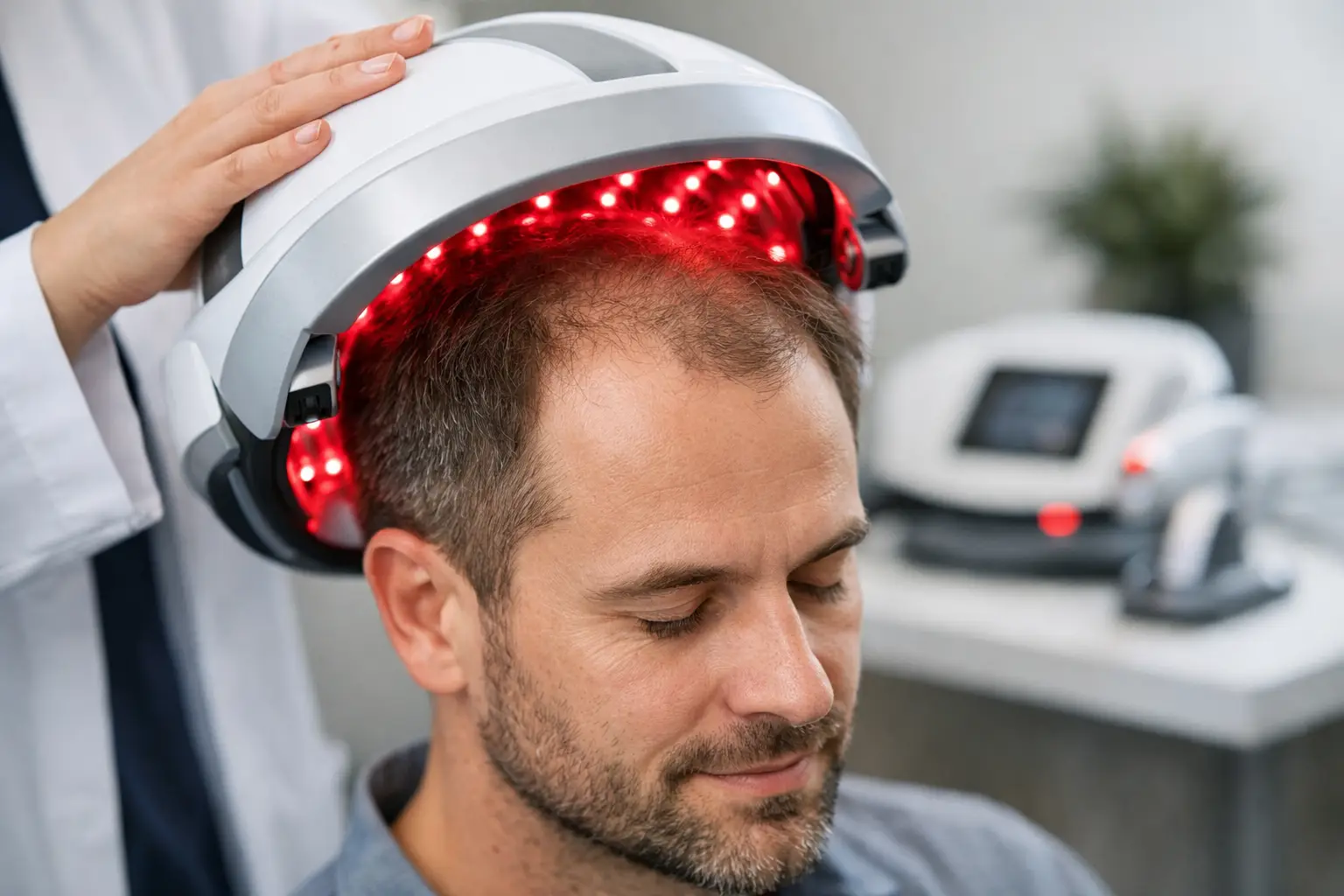
A red-light cap can look deceptively simple: put it on for a few minutes, several times a week, and wait for fuller hair. But does laser therapy work for hair loss? For the right person, low-level laser therapy can support thicker-looking, healthier-growing hair. It is not a cure for every cause of shedding, and it cannot reliably restore follicles that have been inactive for years.
The most useful way to view laser therapy is as a non-invasive treatment that may help protect and improve existing hair. Results are usually gradual, and the best outcomes depend on an accurate diagnosis, steady use, and realistic expectations.
What low-level laser therapy is designed to do
Low-level laser therapy, often called LLLT or red-light therapy, uses specific wavelengths of low-level red light to stimulate the scalp. Unlike surgical lasers, these devices are not designed to cut, burn, or remove tissue. The treatment is generally painless, requires no downtime, and can be delivered through laser caps, helmets, combs, or in-clinic devices.
The proposed benefit is biological rather than cosmetic. Light energy may encourage cellular activity within the hair follicle, support circulation around the scalp, and help follicles remain longer in the active growth phase. When follicles are weakened but still viable, this may reduce shedding and improve the appearance of density over time.
That distinction matters. Laser therapy works on living follicles. It does not create new follicles in a completely smooth bald area, and it cannot address every underlying trigger of hair loss.
Does laser therapy work for pattern hair loss?
For men and women with early to moderate androgenetic alopecia, also known as pattern hair loss, the evidence is encouraging. Studies of FDA-cleared low-level light devices have found improvements in hair count and hair thickness for some users. In practical terms, people may notice less hair in the shower, less scalp visibility under bright lighting, and hair that appears fuller when styled.
Response varies widely. A person with recent thinning around the part line, temples, or crown is more likely to see a meaningful change than someone with longstanding areas of complete baldness. Hair loss tends to progress over time, so preserving existing hair can be a valuable result even when dramatic regrowth does not occur.
Laser therapy is also not an overnight solution. Most people need consistent treatment for several months before they can fairly judge their response. Early changes can be subtle, such as improved texture or reduced shedding. More visible density, when it occurs, often takes six months or longer.
Who may be a good candidate?
LLLT is often appealing to adults who want a gentle, drug-free option or who want to complement another hair restoration plan. It can suit people who are beginning to notice diffuse thinning, widening of the part, a receding hairline, or reduced density at the crown.
It may also be considered after a professional assessment has ruled out conditions that need medical attention first. Sudden shedding, patchy bald spots, scalp pain, scaling, or inflammation should not be treated as a simple cosmetic concern. These symptoms can point to autoimmune hair loss, infection, traction-related damage, nutritional deficiencies, thyroid concerns, medication effects, or other issues requiring appropriate medical evaluation.
For people experiencing hair loss after illness, stress, childbirth, or a major lifestyle change, the cause and timing matter. Temporary shedding can improve as the trigger resolves, while laser therapy may or may not add meaningful benefit. A scalp assessment helps separate a potentially reversible shedding episode from progressive pattern thinning.
What results should you realistically expect?
The strongest laser therapy results are often improvements in the hair you already have. Think of it as helping miniaturized hairs perform better, rather than producing a brand-new head of hair. Some clients see a noticeable boost in coverage; others experience stabilization with modest thickening. Both can be worthwhile, particularly when treatment begins early.
Results also depend on the device, treatment schedule, and consistency. A high-quality, properly used device is different from a vague wellness gadget with unclear light specifications. Following the recommended session length and frequency matters because follicles respond to repeated stimulation over time.
Photographs are especially useful. Hair can look different from day to day based on lighting, length, styling product, and humidity. Standardized before-and-after photos taken at regular intervals offer a more honest view of whether density is changing.
Where laser therapy has limits
Laser therapy cannot replace hair that is no longer present in areas where follicles have been permanently lost. If the goal is immediate, high-impact coverage for an advanced bald area, other options may be more appropriate. A natural-looking non-surgical hair replacement system can provide instant density, while scalp micropigmentation can create the appearance of a closely cropped, fuller hairline and scalp.
For suitable candidates with enough donor hair, a hair transplant may offer a more permanent method of moving healthy follicles into thinning areas. Laser therapy may still have a role in a broader plan, but it should not be presented as an alternative that delivers the same type of result.
There are also practical trade-offs. LLLT requires commitment. If treatment stops, any benefits may gradually fade as the underlying pattern hair loss continues. The ongoing routine can be easy for some people and frustrating for others, especially when expectations were set around a quick transformation.
Laser therapy works best as part of a personalized plan
Hair loss rarely follows one neat formula. Two people can have thinning at the crown for completely different reasons, different scalp conditions, and different goals. One may want to slow progression with a non-invasive approach. Another may need immediate cosmetic coverage for an upcoming career milestone or social event. A third may be ready to explore restorative treatments after years of gradual loss.
This is why consultation-led care is valuable. A specialist can assess the scalp, review the pattern and history of hair loss, and discuss whether laser therapy is likely to offer enough benefit on its own. When appropriate, it can be combined with other treatments and hair-support strategies to address both follicle health and visible coverage.
At HairSpec, a free scalp assessment can help clarify whether low-level laser therapy fits your goals or whether another solution would better match the level of loss, lifestyle, and desired outcome. The right recommendation should feel personal, discreet, and grounded in what is realistically achievable.
Safety and questions to ask before starting
Low-level laser therapy is generally well tolerated when an appropriate device is used as directed. Some people report mild scalp warmth, temporary tenderness, or irritation, but serious side effects are uncommon. Still, it is wise to discuss use with a qualified professional if you have a scalp condition, take photosensitizing medication, have a history of skin cancer, or are uncertain about the cause of your hair loss.
Before committing, ask what type of device is being used, how often it must be used, when progress will be reviewed, and what outcome is reasonable for your current level of thinning. It is also fair to ask what the next step would be if results are limited. A good hair restoration plan should give you options, not pressure you into one treatment.
Laser therapy can be a worthwhile choice when your follicles are still active, your expectations are realistic, and you are prepared to be consistent. The most reassuring first step is not buying a device in hope. It is understanding your hair loss clearly, then choosing the solution that gives you the confidence and control you want.