
For someone noticing thinning at the crown, widening part lines, or hair that no longer holds its usual style, more volume can feel like an immediate priority. But hair weaving versus extensions is not simply a choice between two ways to add hair. The right option depends on how much natural hair you have, where the thinning occurs, the condition of your scalp, and how much daily maintenance feels realistic.
Both can create a fuller, more polished appearance without surgery. Yet they work in very different ways. Extensions are generally designed to add length, density, or color to existing hair. Hair weaving can be used to integrate additional hair or a hair replacement system with the client’s remaining hair, making it a more relevant option for certain patterns of visible thinning or hair loss.
Hair Weaving Versus Extensions: The Key Difference
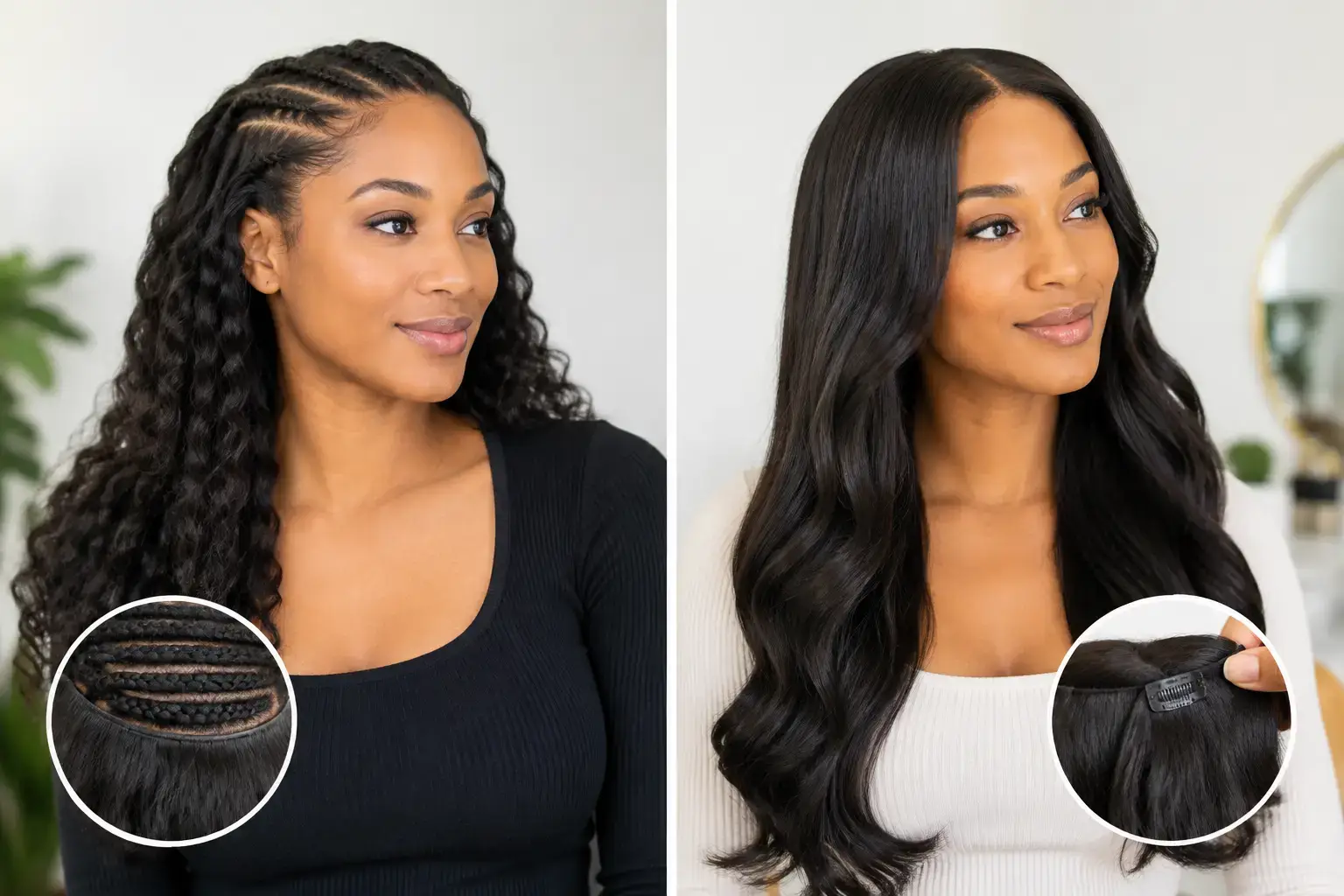
Hair extensions are sections of natural or synthetic hair attached to your existing strands. Depending on the method, they may be clipped in, taped, bonded, beaded, or sewn into a foundation created from your own hair. They are most often selected by people who have enough healthy hair to support the attachment and want added fullness, length, or styling flexibility.
Hair weaving usually refers to securing hair additions through a braided or woven foundation. In a hair-loss setting, the term may also describe a non-surgical integration method, where a hairpiece or hair system is blended with the remaining natural hair. Rather than simply making existing hair longer, the goal can be to cover an area of reduced density while maintaining a natural transition around it.
This distinction matters because extensions depend on the strength and distribution of your own hair. If the hair is fragile, sparse, or actively shedding, attaching extra weight to it may not be the most comfortable or appropriate route. A woven hair replacement solution may offer better coverage in some cases, but it also requires a secure enough perimeter of healthy hair for attachment.
What Extensions Do Best
Extensions are a cosmetic enhancement first. They can give fine hair a denser look, help create a more balanced silhouette, and make certain styles easier to achieve. For people with mild, even thinning who still have good coverage across the scalp, carefully selected extensions can blend beautifully.
The quality of the hair, the attachment technique, and the skill of the application all affect the final result. Well-matched extensions should move naturally, sit comfortably, and blend with your texture and color. They should not feel heavy, pull at the roots, or require you to hide bulky attachment points.
Extensions are not always the best answer for hair loss. They do not conceal a large bare area effectively, especially at the crown or along a significantly widened part. They can also expose the underlying issue if the natural hair continues to thin around the added pieces. When that happens, adding more extensions is rarely the answer. The plan needs to change.
When Hair Weaving May Be More Suitable
Hair weaving can be especially helpful when the goal is targeted coverage rather than extra length. A customized integration approach can address thinning at the top of the head, crown, or part line while preserving a natural-looking hairline and allowing the wearer to style the surrounding hair.
For many clients, the emotional benefit is as meaningful as the visual one. A properly fitted hair solution can reduce the constant effort of disguising thin areas with powders, strategic combing, hats, or limited hairstyles. The hair is selected and positioned to work with the individual’s density, direction of growth, texture, and lifestyle.
However, weaving is not suitable for every form of hair loss. Someone with extensive hair loss, a very weak attachment area, scalp sensitivity, or certain medical scalp conditions may need a different option. A bonded non-surgical hair replacement system, a medical wig, scalp micropigmentation, or a clinical treatment plan may be more appropriate depending on the cause and progression of hair loss.
Comfort, Scalp Health, and Tension
The most attractive result is not a good result if it causes discomfort. Both weaving and extensions can create traction if they are too tight, too heavy, or left in place beyond their recommended maintenance schedule. Persistent tenderness, headaches, bumps, breakage around the attachment area, or pain when brushing are warning signs, not something to tolerate for the sake of appearance.
A professional assessment should consider more than the size of the area you want to cover. It should also look at scalp condition, hair shaft strength, active shedding, lifestyle habits, and whether your hair loss is stable or changing. For example, a person experiencing sudden diffuse shedding after illness, stress, childbirth, or medication changes may benefit from identifying the cause before committing to a semi-permanent attachment method.
For people with androgenetic hair loss, also known as pattern hair loss, a cosmetic solution can be paired with treatments intended to support the remaining hair. This may include low-level laser therapy, mesotherapy, or other clinician-recommended options. The best plan protects the hair you still have while improving how you feel about your appearance now.
Maintenance Is Part of the Decision
Neither option is maintenance-free. Extensions need gentle detangling, suitable cleansing products, careful drying, and regular repositioning or replacement as your natural hair grows. Sleep habits, exercise, swimming, and frequent heat styling can all affect how long they stay looking their best.
Hair weaving or integrated hair replacement requires equally consistent care. The attachment area needs routine checks, the scalp needs to be cleansed properly, and the hair system may need periodic refitting as natural hair grows or density changes. Follow-up appointments are not an inconvenience to overlook. They are how comfort, hygiene, and a natural-looking finish are maintained.
Your daily routine should influence the choice. If you want the freedom to remove your hair addition at night or change your look occasionally, clip-in options may suit you. If you prefer waking up with dependable coverage and do not mind scheduled maintenance, a professionally fitted woven or integrated solution may make more sense.
A Natural Result Depends on Personalization
A common concern is whether people will notice. In most cases, what makes hair additions obvious is not the concept of extensions or weaving itself. It is poor color matching, a texture mismatch, an unnatural density, visible attachment points, or a hairline that does not fit the face.
Natural-looking results come from restraint as much as volume. A specialist should account for your existing hair density, not overwhelm it. They should also consider whether the hair is straight, wavy, curly, fine, coarse, chemically treated, or gray. The most convincing result is usually one that looks like you on a particularly good hair day, not a dramatic change that feels disconnected from your features.
Men and women may also need different design considerations. A man with crown thinning may need coverage that respects his natural growth pattern and age-appropriate density. A woman with diffuse thinning may need a solution that preserves movement around the face and avoids placing excessive stress on already delicate strands.
How to Choose With Confidence
Start with the problem you are trying to solve. If you have healthy hair and want more length or all-over fullness, extensions may be enough. If your concern is visible scalp, a thinning crown, or a widening part that ordinary extensions cannot conceal, hair weaving or another non-surgical hair replacement approach may be more effective.
Then consider the condition of your scalp and natural hair. A solution should never be chosen solely because it looks impressive immediately after installation. It needs to remain comfortable, work with your routine, and avoid placing unnecessary strain on vulnerable hair.
At HairSpec, a scalp assessment can help clarify whether weaving, extensions, a hair system, or a restorative treatment plan is most appropriate for your needs. That personalized step is particularly valuable when hair loss is progressing or when you are unsure whether the issue is cosmetic thinning or a condition that needs further attention.
The right choice is the one that gives you fuller-looking hair without asking you to ignore your scalp health, comfort, or sense of self. A thoughtful consultation can turn an uncertain decision into a solution that feels natural every time you look in the mirror.