

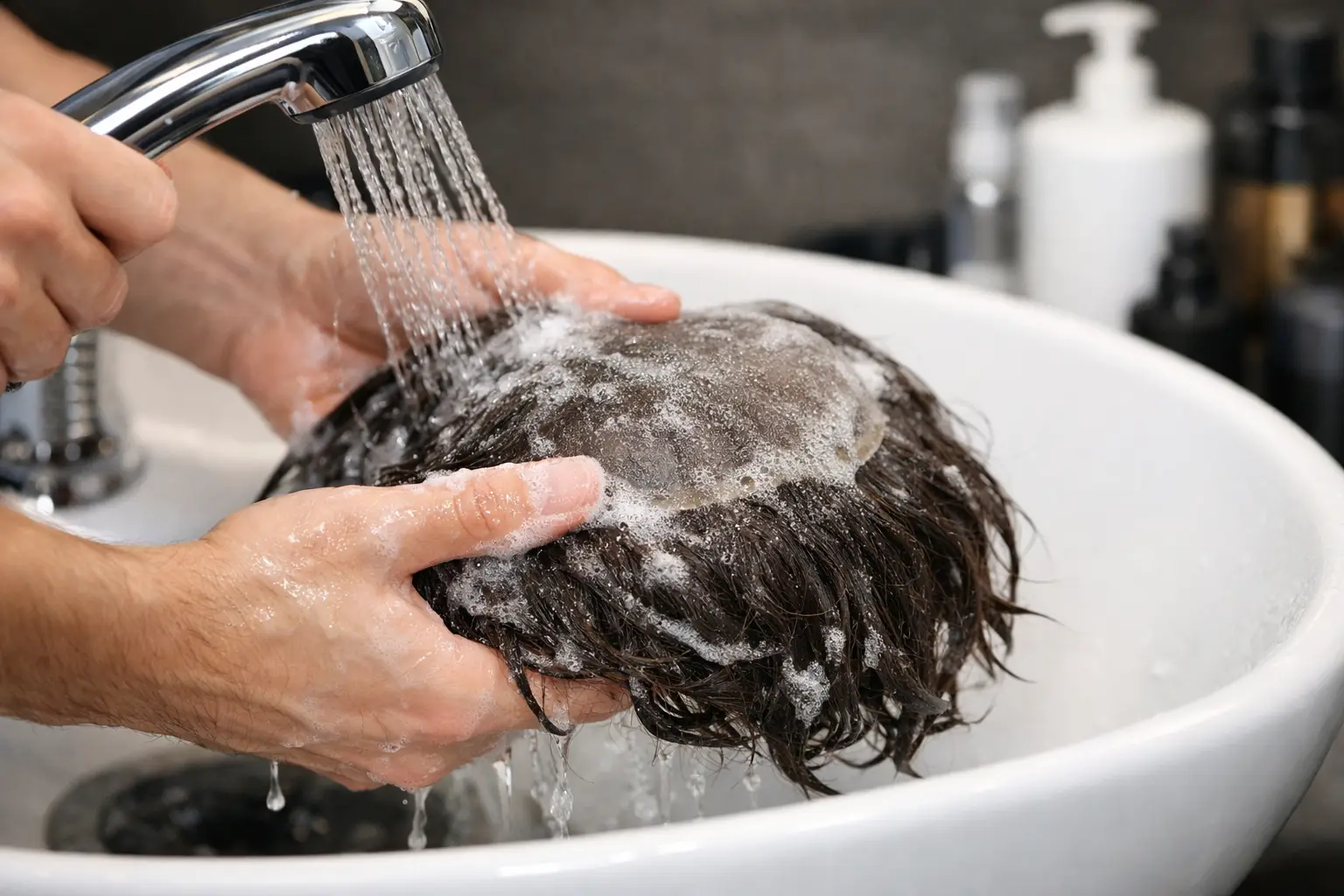
A hair system can look incredibly natural, but it does not behave exactly like growing hair. That difference matters most on wash day. If you have ever worried that one wrong shampoo, one rough scrub, or one rushed towel dry could shorten the life of your system, that concern is justified. Proper washing protects the hair, the base, and the bond.
Understanding how to wash hair system correctly is one of the most important parts of daily care. Done well, washing keeps the unit clean, comfortable, and fresh without drying out the hair or weakening the attachment. Done poorly, it can lead to tangling, shedding, dullness, and lifting around the edges.
How to wash hair system without causing damage
The first rule is simple: be gentle before you even turn on the water. Hair systems do not receive natural oils from the scalp the way bio hair does, so they can become dry more quickly. At the same time, the knots, base material, and adhesive area need careful handling. Aggressive washing may make the system look clean for a day, but it often reduces its lifespan.
Before washing, detangle the hair with a wide-tooth comb or a system-friendly brush. Start at the ends and work upward in small sections. If you pull from the root down, you increase tension on the base and can loosen strands. This step is especially important for longer units, curly textures, or hair that has picked up styling product.
Next, make sure the water is lukewarm, not hot. Hot water can dry the hair and may affect certain adhesives faster than expected. Lukewarm water is enough to remove buildup while being kinder to both the hair fiber and the bond.
When the hair is fully wet, apply a small amount of sulfate-free shampoo. Spread it between your hands first, then smooth it through the hair in a downward motion. Think of it as guiding the shampoo through the hair rather than scrubbing it in. Circular motions can create tangles, especially near the nape and crown.
If your system is attached, be extra careful around the base. Pressing too firmly at the attachment points may disturb tape or glue. If your scalp tends to produce oil or sweat, it helps to focus cleansing on the exposed skin around the perimeter while still treating the system itself gently.
The best washing routine depends on your lifestyle
There is no single answer to how often you should wash a hair system. It depends on your climate, activity level, scalp oil production, and how much styling product you use. Someone in a humid environment who works out frequently may need to wash more often than someone in an air-conditioned office who uses very little product.
In general, most people do well washing their system every 7 to 14 days if it is a full bonded unit, or more often if it is removed regularly. Overwashing can dry the hair and fade the finish. Underwashing can allow sweat, oil, and residue to build up, which affects comfort and appearance.
This is where a balanced routine matters more than a rigid schedule. If the hair feels coated, looks flat, or the base feels uncomfortable, it is probably time to wash. If it still feels soft, light, and manageable, washing too soon may do more harm than good.
Choosing the right shampoo and conditioner
Products make a significant difference. A gentle, sulfate-free shampoo is usually the safest choice because it cleans without stripping the hair. Heavy formulas, harsh clarifying shampoos, and products with a lot of alcohol can leave the hair dry or brittle.
Conditioner should mainly go through the mid-lengths and ends, not directly onto the knots or base unless your specialist recommends it. Too much conditioner near the root area can loosen hand-tied knots over time or interfere with adhesive performance. Leave the conditioner on briefly, then rinse thoroughly.
If your system is human hair, hydrating products help maintain softness and shine. If it is synthetic or blended, product choice becomes even more specific, since some ingredients or heat-related products may not be suitable. When in doubt, follow the care guidance for your exact system type rather than assuming all units can be treated the same way.
How to rinse and dry a hair system properly
Rinsing should be just as gentle as washing. Let the water run in the direction of the hair rather than flipping the hair around under the stream. Keep your hands flat and smooth the product out carefully until the water runs clear.
After rinsing, do not twist, wring, or rub the hair with a towel. That is one of the quickest ways to create tangling and stress the base. Instead, use a soft towel to blot and press out excess water.
Drying technique matters because wet hair is more vulnerable. If possible, let the system air dry partially before using any heat. If you use a blow dryer, choose a low heat or cool setting and keep the airflow directed downward. High heat can dry the hair, affect the base material, and in some cases weaken adhesives sooner.
For attached systems, make sure the bond area is fully dry after washing. Even if the hair looks dry on the surface, moisture trapped near the base can lead to discomfort, odor, or reduced hold. This is particularly relevant in humid climates, where drying takes longer than expected.
Common mistakes that shorten system lifespan
Many hair systems wear out early not because of poor quality, but because of small repeated care mistakes. The most common issue is washing too aggressively. People often treat the system like natural scalp hair, using force to feel that it is truly clean. With a hair system, gentle technique is what keeps it looking better for longer.
Another common problem is using the wrong products. Regular shampoos designed for oily natural hair can be too harsh. Thick oils and heavy leave-ins can also create buildup that makes the hair look dull and limp.
Sleeping with damp hair is another risk. It increases friction, tangling, and stress on the hair fibers. The same goes for brushing when the hair is soaking wet without support. If you need to detangle after washing, do it carefully with a suitable comb and a light leave-in product if recommended.
Ignoring adhesive maintenance can also create washing problems. If a bond is already starting to break down, washing may worsen lifting. In that case, it is better to address the attachment first instead of trying to wash through a failing bond.
How to wash hair system if you wear it daily
Daily wearers often need a routine that is practical as well as protective. If you wear your system for work, exercise, and social events, you want it to stay fresh without overhandling it. In most cases, light day-to-day maintenance between washes works better than constant full washes.
That may mean gently brushing the hair each morning, using minimal product, and keeping the scalp area clean around the attachment. A full wash can then be done on a schedule that reflects your lifestyle rather than your anxiety about keeping it perfect.
If you sweat heavily or live in a warm climate, your specialist may recommend more frequent cleansing or shorter attachment cycles. This is one reason a personalized approach matters. A routine that works for a low-activity office worker may not work for someone who trains daily or spends time outdoors.
At HairSpec, this is often part of the larger conversation around hair replacement care. The goal is not just to fit a natural-looking system, but to help clients maintain that result comfortably and confidently in real life.
When to get professional help
Sometimes the issue is not how you are washing, but what the hair system is already going through. If the hair has become unusually dry, the base feels fragile, the unit tangles constantly, or the bond breaks down soon after cleaning, it is worth getting professional advice.
A specialist can tell whether the problem is product buildup, worn-out hair, adhesive mismatch, or a care routine that needs adjusting. That is especially valuable for first-time wearers, people with sensitive scalps, or anyone using a newer base design such as ultra-thin skin or fine lace.
A good washing routine should make your hair system feel cleaner and easier to manage, not more stressful. The best approach is usually the simplest one: gentle products, careful handling, and a schedule that matches your lifestyle. When you treat the system with the same attention you gave to choosing it, it tends to reward you with better comfort, a more natural appearance, and longer-lasting wear.