

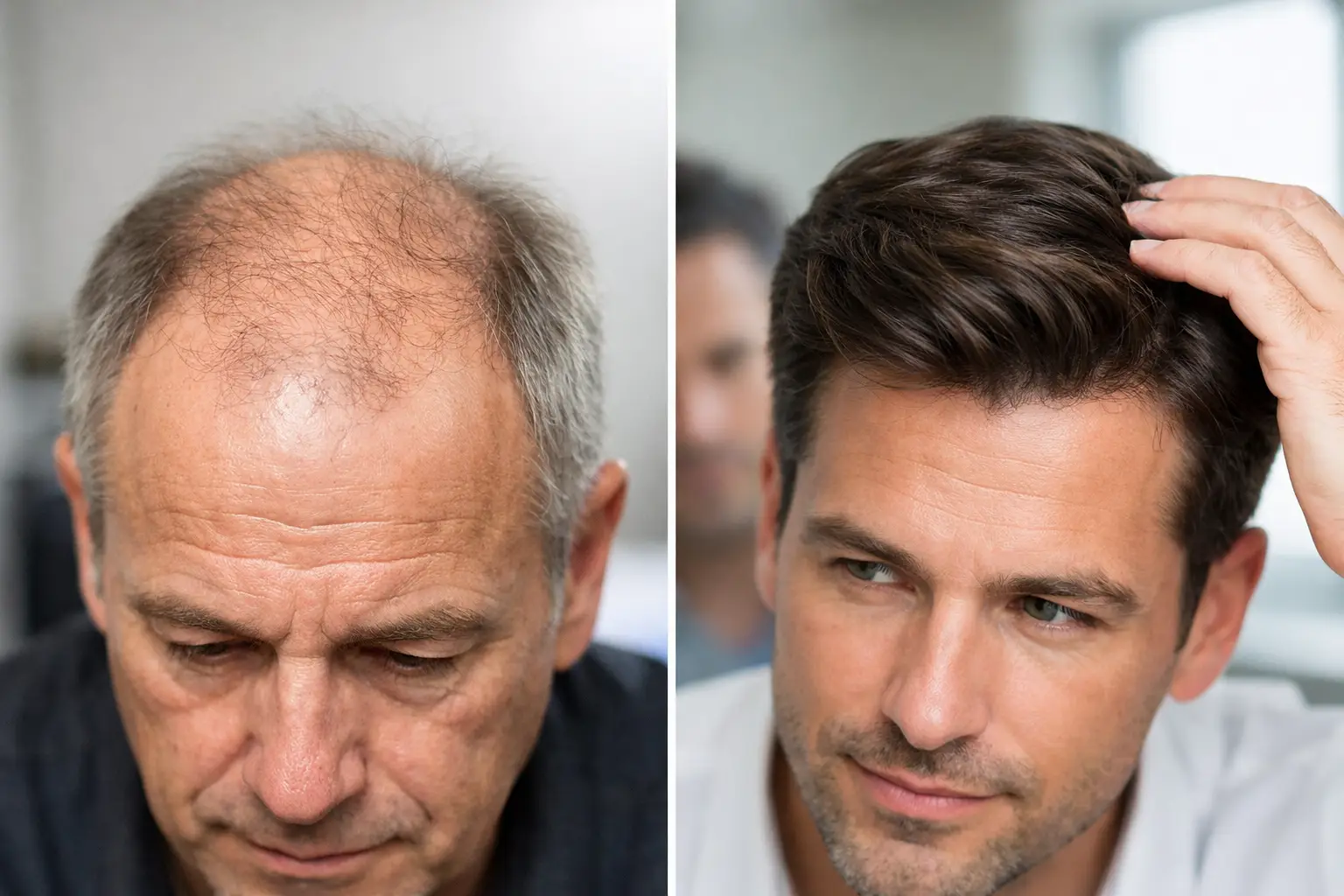
Someone standing close to you will not be looking for a hair system. They will notice whether your hairline looks believable, whether the density suits your age, and whether you carry yourself comfortably. So, is hair replacement detectable? Poorly planned or poorly maintained hair replacement can be. A professionally designed modern system, however, can look remarkably natural in everyday conversations, photographs, office lighting, and social settings.
The difference is rarely one single product feature. It is the combination of an accurate scalp assessment, a customized base, realistic hair selection, skilled attachment, and ongoing maintenance. For people considering non-surgical hair replacement, knowing what affects detectability helps set realistic expectations and leads to better results.
Is Hair Replacement Detectable Up Close?
It depends on the quality of the system, the application, and the situation. A person who runs their fingers through your hair, studies your hairline from a few inches away, or sees an overdue attachment may notice something unusual. That does not mean hair replacement is obvious in normal life.
Modern hair systems are made to sit close to the scalp and blend with your existing hair. Fine bases can create the appearance of hair growing directly from the skin, while carefully ventilated hairlines avoid the dense, straight edge associated with older-style wigs and toupees. The goal is not to create a perfectly uniform wall of hair. Natural hair has variation in direction, density, texture, and placement.
Most detectability concerns arise when a system is selected from a generic template rather than matched to the individual. A hairline that sits too low, hair that is too thick for the wearer’s age, or a color that does not account for natural grays can draw attention. A personalized approach makes these details work together rather than compete.
What Makes Hair Replacement Look Natural?
A hairline designed for the individual
The front hairline is usually the first area people worry about, especially if they want to wear their hair away from the face. A natural hairline should reflect facial proportions, age, previous hair patterns, and preferred styling. It may be slightly irregular rather than ruler-straight, with a gradual transition from lighter to fuller density.
Not everyone needs an exposed hairline. If you prefer a fringe, side part, or textured style, the system can be designed around that choice. This can be a practical option for people who want excellent coverage without making the front hairline the center of attention.
The right density, not simply more hair
Fuller hair can restore confidence, but excessive density often looks less convincing than a modest, age-appropriate result. A specialist considers the density of your side and back hair, the degree of thinning, your facial features, and your desired image. Someone with naturally fine hair may need a lighter-density system than someone with thick, coarse hair.
This is where realistic expectations matter. Hair replacement offers control over coverage and style, but the most natural result is usually one that looks like your own hair at its best, not an unrelated hairstyle from another stage of life.
Hair color, texture, and movement
Hair is rarely one flat shade. Natural-looking replacement hair often includes subtle tonal variation, including soft highlights, lowlights, or gray blending where appropriate. Texture is equally influential. Straight, wavy, curly, fine, and coarse hair all reflect light and move differently.
A close match helps the replacement hair merge with your growing hair at the sides and back. It also makes styling easier. When the texture is wrong, a system may look noticeably different after washing, sweating, or stepping into humid weather.
A secure, low-profile base and attachment
The base is the foundation that holds replacement hair and rests against the scalp. Different materials offer different benefits. Some are particularly lightweight and natural-looking at the hairline, while others prioritize durability or a stronger hold for active lifestyles.
Attachment choice also affects comfort and discretion. Medical-grade tapes and adhesives can keep a system secure while allowing it to sit flat against the scalp. The right option depends on skin sensitivity, lifestyle, how often you exercise, and whether you prefer a shorter or longer maintenance cycle. There is no single best base or adhesive for everyone.
The Details That Can Make Hair Replacement Noticeable
Even an excellent system needs regular professional care. Detectability is more likely when the hair grows out around the perimeter, the adhesive weakens, or oil and residue affect the bond. A lifting edge can catch the light or become visible when hair is parted or moved by the wind.
Styling choices matter too. Excessive shine from heavy products, an unnaturally sharp part, or a style that exposes a poorly matched hairline can make the result less convincing. A stylist experienced in hair replacement can shape the cut, add texture, and recommend products that give the hair a natural finish.
Color changes should not be overlooked. Your biological hair may lighten in the sun, develop more gray, or change with coloring treatments. Replacement hair does not respond in exactly the same way, so occasional color adjustment may be needed to keep everything blended.
Finally, hair loss can progress. If the coverage area expands while the system design stays unchanged, the transition between replacement hair and natural hair may become harder to conceal. Regular reviews allow the solution to evolve with your needs.
Can People Feel a Hair System?
If someone touches the hair itself, they may simply feel hair. If they press directly on the scalp or trace the edge of the base, they could potentially feel a difference, particularly with thicker or more durable base materials. This is one reason the system’s design should reflect how you live.
For example, a person who plays sports frequently may value a secure, durable attachment. Someone whose priority is an exposed hairline may prefer a finer, more delicate option and accept a more frequent maintenance schedule. Both choices can look natural, but they involve different trade-offs in longevity, handling, and upkeep.
Being open with a partner or close family member is a personal choice. Many clients value privacy, while others appreciate not having to worry about accidental discovery in intimate situations. A consultation can help you discuss these concerns without judgment and select an approach that feels comfortable.
How to Reduce the Chance of Detectable Hair Replacement
The most effective step is to begin with an in-person scalp and hair assessment rather than selecting a system based on photos alone. The specialist should assess your hair loss pattern, scalp condition, existing hair characteristics, lifestyle, and styling goals before recommending a solution.
Ask to discuss the hairline design, density, base material, attachment method, and maintenance frequency. If you wear glasses, helmets, or headwear regularly, mention that as well. These small practical details influence comfort and how the system performs day to day.
Once fitted, follow the recommended care routine. Use suitable cleansing and styling products, avoid pulling at the edges, and return for scheduled maintenance before attachment issues develop. Trying to stretch the service interval to save time can compromise both comfort and appearance.
At HairSpec, a free scalp assessment can provide a private starting point for comparing non-surgical hair replacement with options such as scalp micropigmentation, low level laser therapy, or hair transplant services. The right choice depends on whether your priority is immediate coverage, long-term restoration, or a combination of both.
Natural Results Are Built, Not Chosen Off a Shelf
The best hair replacement does not announce itself. It supports the way you want to look when you are presenting at work, meeting friends, exercising, or seeing yourself in the mirror. It should also feel manageable within your routine, budget, and comfort level.
If detectability is your main concern, focus less on whether a hair system can be noticed in theory and more on whether it is properly customized and maintained for you. A thoughtful assessment and skilled fitting can turn hair replacement from something you worry about hiding into a solution you feel confident wearing.