

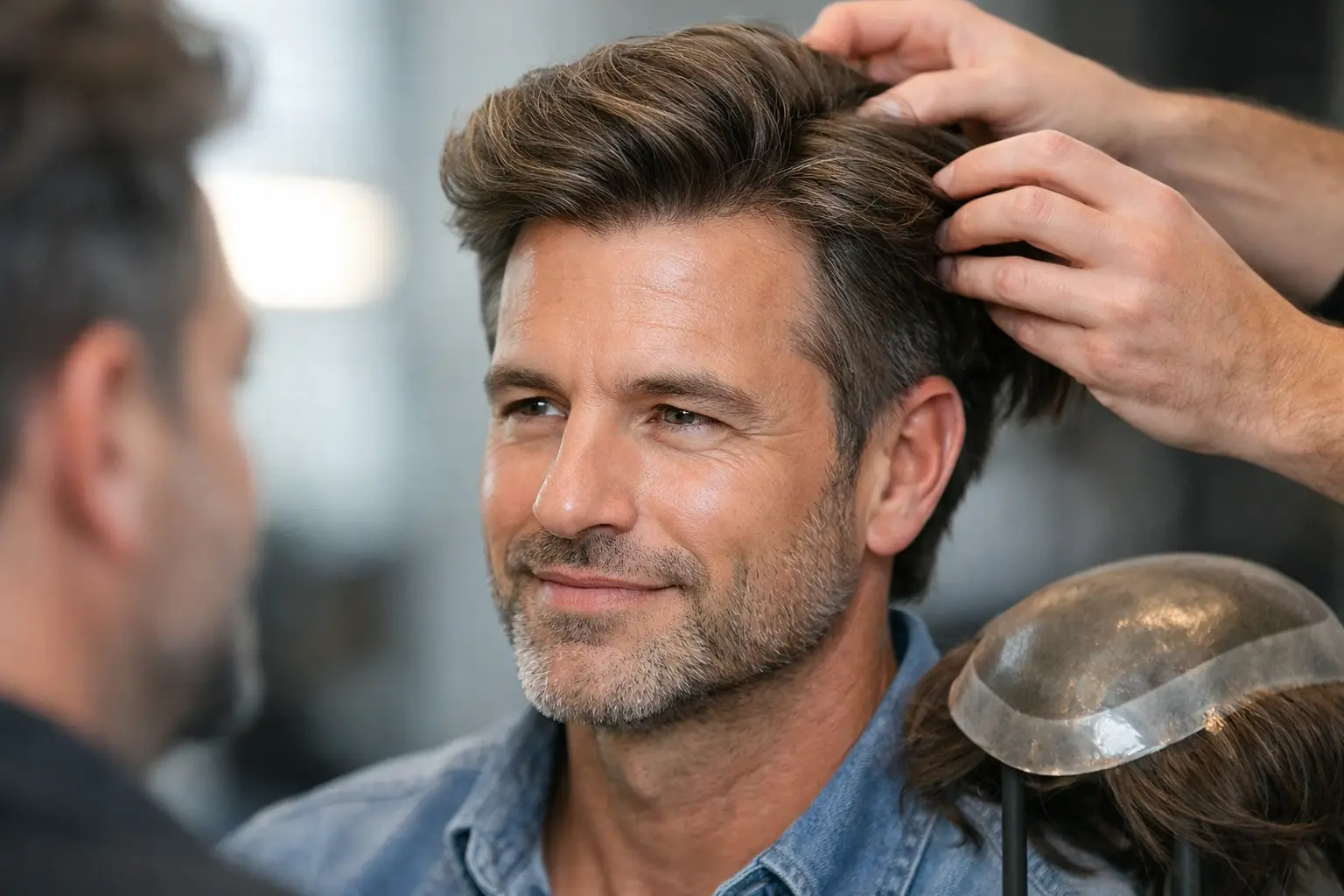
Most people are not looking for “more hair” in the abstract. They want to walk into work, meet friends, sit under bright lighting, or stand in front of a mirror without wondering whether their hair looks real. That is why natural looking hair systems matter so much. The goal is not just coverage. It is credibility, comfort, and confidence in everyday life.
For many adults dealing with thinning, bald patches, or more advanced hair loss, a hair system can be one of the fastest ways to create an immediate visual change. But the result depends heavily on design, fitting, hair quality, and aftercare. A poorly chosen system can look obvious. A well-made one can blend so naturally that even close friends may only notice that you look fresher or younger.
What makes natural looking hair systems believable
The most convincing hair systems are built around proportion and realism. People often focus first on density, but density is only one part of the picture. If the hairline is too straight, the volume is too thick for your age, or the color is too uniform, the result can look artificial even if the hair itself is high quality.
A natural finish usually comes from several details working together. The base material needs to sit flat and match your scalp appearance. The hair color should reflect real-life variation rather than a single flat tone. Ventilation, which is how the hair is tied or injected into the base, affects how the hair moves and separates. The cut also matters. A perfect system can still look unnatural if it is styled in a way that does not suit your face shape or personal grooming habits.
This is where specialist guidance becomes valuable. The right provider will not simply hand over a stock piece and hope for the best. They will assess your hair loss pattern, scalp condition, lifestyle, and expectations before recommending a system that makes sense.
Why some hair systems look natural and others do not
The difference often comes down to customization. Off-the-shelf options can work for some people, especially if hair loss is limited or the style is forgiving. But when someone wants a truly undetectable result, customization usually gives far better control.
A custom approach allows the provider to match not only color and density, but also the front hairline shape, wave pattern, and scalp coverage area. That matters because natural hair is never perfectly symmetrical. A system that copies that slight irregularity tends to look far more believable than one that appears too precise.
There is also the issue of age appropriateness. Many clients understandably want fullness, but the fullest option is not always the most natural one. A softer density often creates a more realistic result, particularly around the front and temples. The best outcome usually looks like your own hair on a very good day, not a dramatic transformation that feels disconnected from your features.
Choosing the right base for natural looking hair systems
Base selection has a major impact on realism and comfort. Lace bases are known for creating a natural-looking hairline and allowing airflow, which can be especially helpful in warm, humid conditions. Thin skin or poly bases can create a scalp-like appearance and may be easier for some clients to maintain. Hybrid designs combine materials to balance realism, durability, and ease of wear.
There is no universal best option. It depends on how you wear your hair, how active you are, how often you want to remove or maintain the system, and how sensitive your scalp is. Someone who wants to expose the hairline may prefer a different base than someone who wears a fringe. Someone with an active routine may prioritize secure attachment and manageable maintenance over the finest possible front edge.
This is why consultation matters more than trend-driven advice. The right hair system is the one that suits your daily life, not just the one that photographs well.
Hairline design is where realism is won or lost
If there is one area that reveals a poor hair system quickly, it is the hairline. A natural hairline is rarely dense, rigid, or perfectly straight. It tends to have softness, irregular spacing, and a gradual transition.
That is why experienced providers pay close attention to front contour design. They consider facial proportions, forehead shape, age, and styling habits. They also think about whether you actually want to show the hairline. Some clients prefer a style that keeps the front slightly covered, which gives more flexibility and can reduce maintenance pressure.
A realistic hairline should not compete for attention. It should disappear into the overall look. When that happens, people do not examine it. They simply accept it as your hair.
The role of color, texture, and cut
Natural color matching is more complex than choosing black, brown, or dark brown. Real hair contains dimension. There may be slight warmth, ash tones, or even a subtle mix of shades across the system. For clients with some remaining hair, blending is critical. Even a small mismatch can become noticeable under daylight or office lighting.
Texture matters just as much. Straight, wavy, and curly systems each behave differently, and the wrong texture can make styling harder and blending less convincing. The final cut brings everything together. A skilled cut-in service shapes the system to your face and ensures it transitions naturally with any existing hair.
This stage should never feel like an afterthought. Many unnatural results are not caused by the hair system itself, but by rushed cutting or generic styling. A personalized finish is what turns a hairpiece into a wearable result.
Natural looking hair systems for different hair loss needs
Not every client needs the same type of solution. Some people have early thinning at the crown and need targeted coverage. Others have more extensive loss and want a full system. Some are managing medical hair loss and want a discreet option that feels comfortable during a sensitive period.
That range is exactly why a one-size-fits-all recommendation often falls short. Non-surgical hair systems are especially appealing because they can offer immediate cosmetic improvement without surgery or lengthy downtime. They also give clients flexibility. You can adjust style, density, and design over time as your needs change.
For some individuals, a hair system may be the best primary solution. For others, it may work alongside treatments aimed at improving scalp health or supporting existing hair. In specialist settings, the conversation is usually broader than just “buying hair.” It is about choosing the most suitable path for your appearance, comfort, and long-term goals.
Maintenance is part of the natural result
Even the best system will not stay natural-looking without proper upkeep. Adhesive breakdown, lifting edges, product buildup, and incorrect brushing can all affect how the hair looks and feels. Maintenance also includes cleaning, repositioning, and replacing the system at the right time.
That does not mean every hair system is high-maintenance in a frustrating way. It means expectations should be realistic. Some systems are easier to manage than others, and some clients are happy with regular salon support to keep everything looking polished. Others prefer a lower-maintenance setup that fits around a busy work schedule.
The key is matching the system to the person. A very delicate design may look excellent, but if it does not fit your routine, it may stop feeling practical. Natural results need consistency, not just a strong first impression.
What to expect from a professional consultation
A proper consultation should feel personal, not pushy. It should include a close look at your scalp, current hair condition, pattern of loss, and styling preferences. You should be able to ask direct questions about realism, maintenance, durability, and cost without feeling rushed.
An experienced specialist will also be honest about trade-offs. For example, the lightest and most invisible base may not be the most durable. The fullest style may not be the most believable. A lower-maintenance choice may slightly limit styling versatility. Good advice is rarely about selling the most dramatic option. It is about helping you choose the one you can wear confidently.
At HairSpec, this personalized approach is central to creating results that look natural in real life, not just in the treatment chair. That matters because confidence comes from how your hair performs on an ordinary Tuesday, not only on day one.
The real standard for success
The best hair system is not the one that changes your appearance beyond recognition. It is the one that lets you stop thinking about your hair every hour. It should feel secure, look believable, suit your age and style, and work with your routine.
Natural results are rarely accidental. They come from careful assessment, smart design choices, and skilled fitting. If you are considering a hair system, focus less on dramatic promises and more on whether the solution is being tailored to you. When that happens, the change can feel immediate, private, and genuinely empowering.
A good hair system should not announce itself. It should give you the freedom to show up as yourself again.