

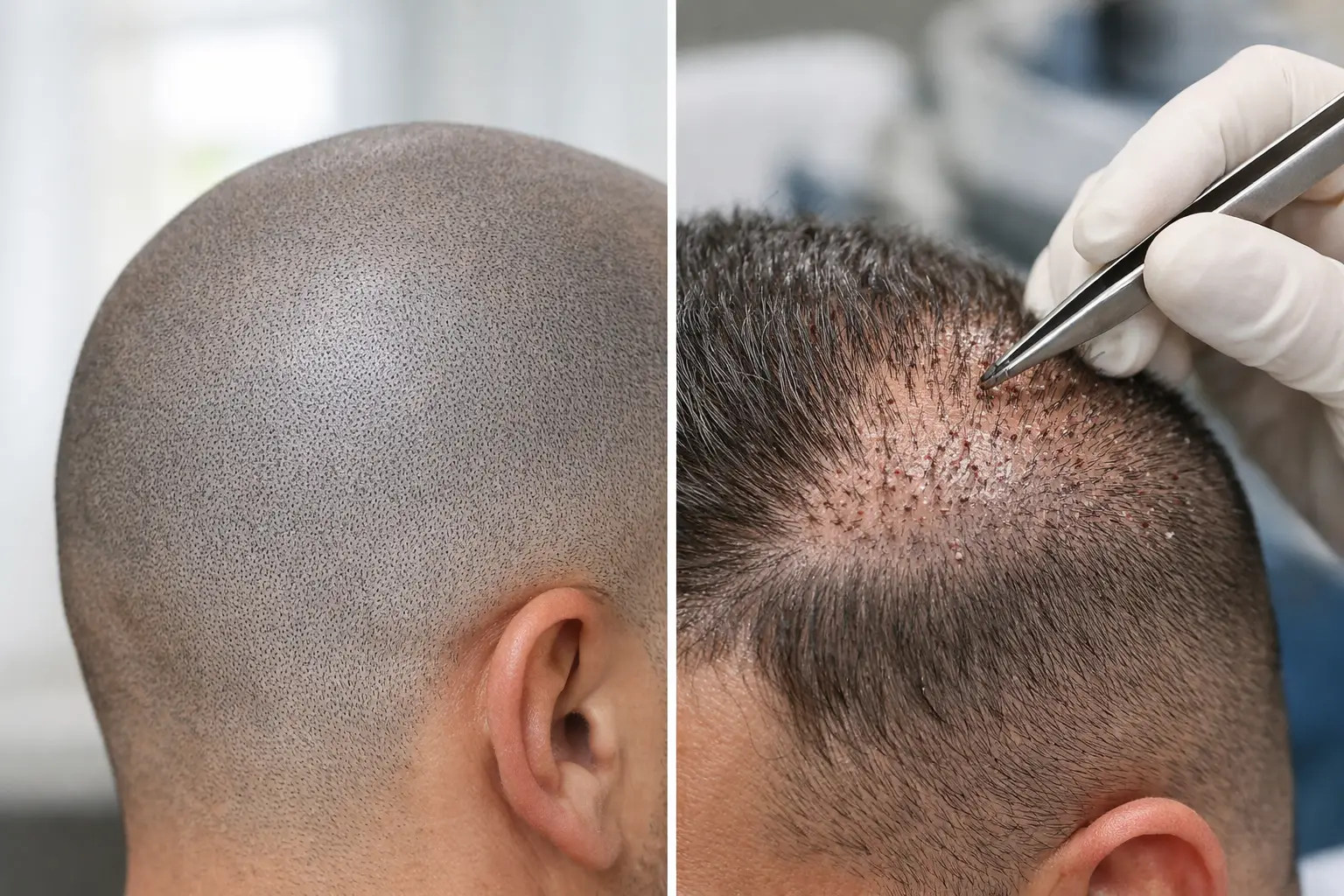
A lot of people start comparing scalp micropigmentation vs transplant after the same moment – harsher lighting, a few more photos they do not like, or the realization that styling tricks are no longer doing enough. At that point, the question is not just which treatment works. It is which one fits your hair loss pattern, comfort level, budget, and expectations.
Both options can improve the appearance of hair loss, but they do it in very different ways. A hair transplant moves real hair follicles from one area of the scalp to another. Scalp micropigmentation creates the look of fuller density or a closely shaved hairline using detailed pigment placement. One is a surgical restoration procedure. The other is a non-surgical visual solution. Neither is automatically better. The right choice depends on what kind of result you want to see in the mirror every day.
Scalp micropigmentation vs transplant: the core difference
The easiest way to understand scalp micropigmentation vs transplant is this: a transplant gives you growing hair, while scalp micropigmentation gives you the appearance of more hair.
With a hair transplant, follicles are harvested from a donor area, usually at the back or sides of the scalp, and implanted into thinning or bald areas. If the grafts take well, those follicles continue to grow hair. This can be a strong option for people who want more real coverage and have enough donor hair available.
Scalp micropigmentation, often called SMP, does not create new hair growth. Instead, it uses specialized pigments and techniques to replicate the appearance of hair follicles or reduce scalp contrast in thinning areas. On a shaved head, it can create the look of a clean, fuller buzz cut. In longer hair, it can make sparse areas look denser by reducing the visibility of the scalp.
That difference matters because some people want actual hair they can cut, style, and grow. Others want a fast, low-disruption improvement that looks natural without surgery.
Who usually does best with scalp micropigmentation?
SMP tends to work especially well for people who are more concerned with visual density than actual strand count. If your hair is thinning diffusely, your part line looks wider, or your scalp shows through under bright light, micropigmentation can make a noticeable cosmetic difference without surgery.
It can also be a strong choice if you wear your hair very short or are comfortable with a closely cropped look. For men with advanced recession or larger bald areas, SMP can create a clean, defined hairline effect that often looks sharper and more consistent than trying to stretch limited donor hair across a large area.
Women can benefit too, particularly when the issue is thinning through the top or crown rather than complete baldness. In these cases, the goal is often not a dramatic transformation but a more balanced, fuller-looking result.
Another important group includes people who are not ideal transplant candidates. That may be because donor hair is limited, hair loss is still progressing aggressively, or they simply do not want surgery, scarring, or recovery time.
When a hair transplant may make more sense
A transplant is usually the better fit when your main priority is growing real hair in areas that have lost it. If you want to wear your hair longer, style it differently, or restore a frontal hairline with actual strands, surgery may offer the type of result SMP cannot.
The best candidates generally have stable hair loss, realistic expectations, and a healthy donor area. That donor area is a major factor. If there are not enough strong follicles to move, the result may be limited, especially in people with extensive baldness.
Transplants can look very natural in the right hands, but they also require patience. Hair does not appear overnight. There is usually a shedding phase after surgery, followed by gradual regrowth over several months. If you want immediate visual change, that timeline can feel long.
This is also where expectations need to stay grounded. A transplant can improve density, but it may not recreate the amount of hair you had years ago. In many cases, it is about strategic improvement rather than complete reversal.
Cost, downtime, and maintenance
For many people, the real decision between scalp micropigmentation vs transplant comes down to lifestyle as much as aesthetics.
A hair transplant usually has a higher upfront cost because it is a surgical procedure. The price depends on the number of grafts, the technique used, and the extent of hair loss being treated. There is also downtime to consider. Even when recovery is manageable, the scalp needs time to heal, and you may need to be more careful with washing, exercise, sun exposure, and daily routines in the early period after treatment.
SMP is generally more accessible from a cost and convenience standpoint. It is performed over multiple sessions, but there is no surgery, no graft harvesting, and typically far less disruption to normal life. Mild redness may happen right after a session, but most people return to work and routine fairly quickly.
Maintenance is different too. Transplanted hair grows, so it needs to be cut and cared for like the rest of your hair. You may also need medical management or supportive treatments if your surrounding natural hair continues to thin. SMP does not grow, but pigment can soften over time and may need occasional touch-ups to keep the result crisp and natural.
Neither option is truly one-and-done. They simply require different kinds of long-term commitment.
What looks more natural?
This is one of the most common concerns, and the answer depends on the person, the provider, and the treatment plan.
A well-executed transplant can look extremely natural because it uses your own hair. The direction of placement, hairline design, and graft distribution all matter. Poor planning, on the other hand, can look obvious, especially if the hairline is too aggressive or density is not balanced properly.
SMP can also look highly natural when it is tailored to skin tone, hair color, facial structure, and existing hair pattern. The issue is not whether SMP looks fake by definition. The issue is whether it is done with subtlety and proper technique. Pigment that is too dark, too uniform, or placed without artistic judgment can look unnatural. Skilled work should blend, not shout.
Natural-looking results come from personalization. That is why a consultation matters so much. A treatment should suit your age, hair loss stage, daily styling habits, and how much maintenance you are actually comfortable with.
Can you combine both?
Yes, and in some cases that is the smartest option.
A transplant and scalp micropigmentation are not opposing treatments in every situation. They can complement each other. Someone who has had a transplant but still wants the appearance of greater density may use SMP to reduce scalp show-through between transplanted hairs. A person with a transplant scar may also use SMP to help camouflage that area.
This combination approach can be especially helpful when donor supply is limited or when the goal is to maximize the visual impact of a surgical result without needing additional grafts. It is also useful for people who want both real hair in key areas and a denser overall appearance.
At HairSpec, this kind of broader treatment planning is often what makes the difference. Hair loss is not always solved by one method alone, and a consultation-led approach helps match the solution to the person rather than forcing the person into a single treatment category.
How to decide what is right for you
If you want real growing hair and you are a strong surgical candidate, a transplant may be worth serious consideration. If you want a non-surgical option, faster visible improvement, or better density without relying on donor hair, SMP may be the better route.
You should also think honestly about your tolerance for downtime, your budget, and how you wear your hair now. Someone who enjoys a very short, clean style may love SMP. Someone who wants to run their fingers through a fuller hairline may care more about transplant results. If your hair loss is still changing quickly, the timing of surgery may need more caution.
The best treatment is the one that works not just on paper, but in real life – with your schedule, your goals, and your comfort level.
Hair loss can feel personal, but choosing a solution does not have to feel confusing. When the plan is based on your scalp, your pattern of loss, and the result you actually want, the path forward usually becomes much clearer.