

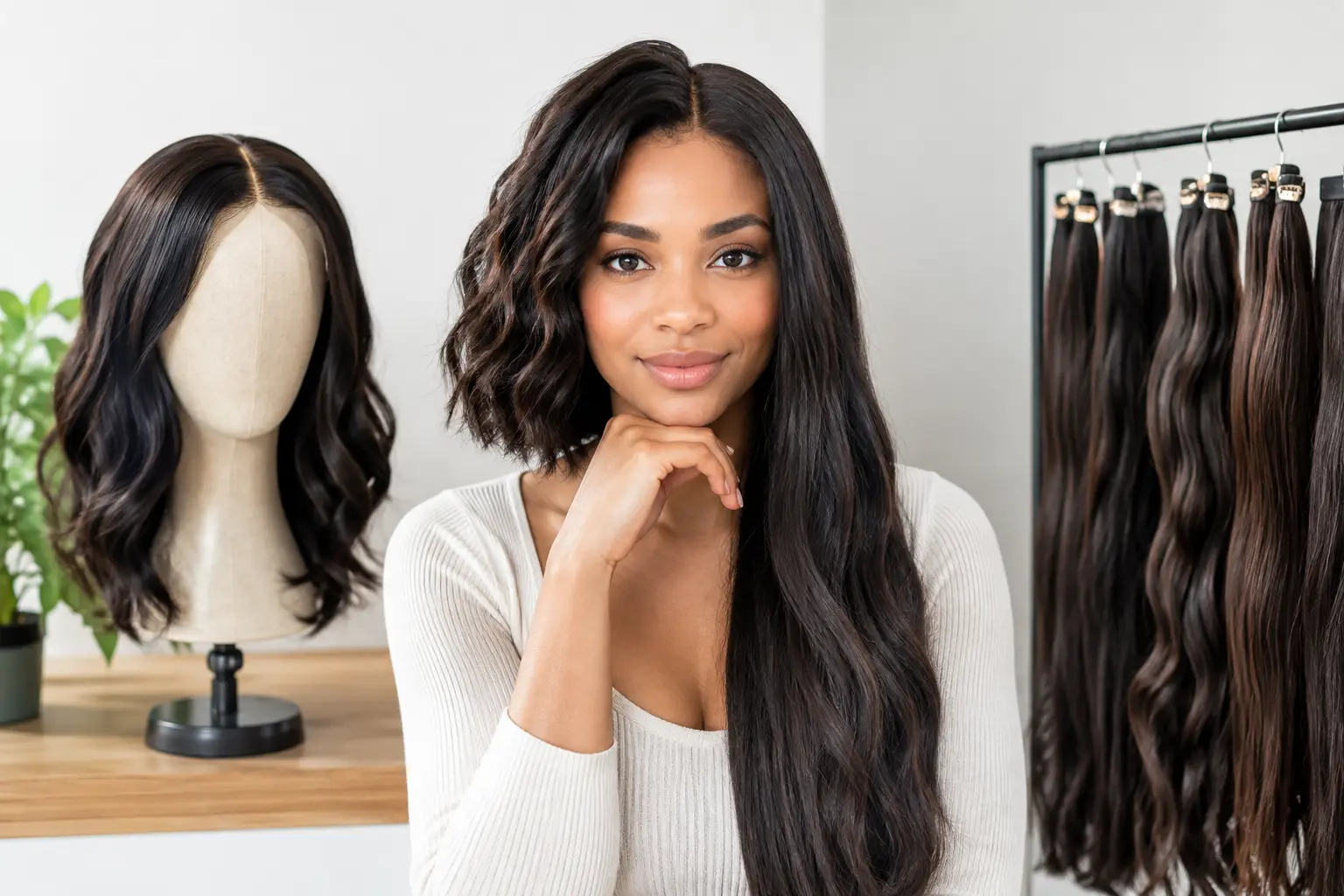
A fuller hairstyle can change how you feel before a presentation, a dinner, or a photo. But wigs versus hair extensions is not simply a question of which option looks better. The right choice depends on where hair loss or thinning is occurring, how much coverage you need, your lifestyle, and the condition of your existing hair and scalp.
Both can create a natural-looking transformation when selected and fitted correctly. They serve different purposes, however. A wig provides coverage from the scalp outward, while extensions add length, volume, or density by blending with the hair you already have. Understanding that distinction can prevent discomfort, unnecessary maintenance, and results that do not match your goals.
Wigs Versus Hair Extensions: The Core Difference
A wig is a complete hairpiece designed to cover all or part of the scalp. It can be worn over existing hair or directly against the scalp, depending on the style and the amount of hair loss. Modern wigs are available in synthetic and human-hair options, with cap constructions that can create a realistic hairline, natural movement, and a comfortable fit.
Hair extensions are added to existing strands to increase length, fullness, or both. Depending on the method, they may be clipped in temporarily, taped in, bonded, woven, or attached with other professional techniques. Extensions work best when there is enough healthy hair to support and conceal the attachment points.
This difference matters most for people with visible thinning. If your concern is diffuse thinning, widening part lines, patchy hair loss, or significant crown coverage, extensions may not solve the problem. They can add fullness through the lengths, but they do not conceal exposed scalp on their own. A wig or a specialized hair replacement solution is often better suited to more extensive coverage needs.
When a Wig May Be the Better Choice
Wigs are particularly useful when you want immediate, reliable coverage. They can be a practical option for pattern hair loss, alopecia, treatment-related hair loss, or a rapid change in appearance without waiting for natural hair to grow.
For many people, the greatest benefit is control. You can choose the density, length, color, texture, parting, and overall style that feels most like you. A well-fitted piece can restore the appearance of a full head of hair even when the natural hair underneath is very fine or sparse.
Coverage for visible scalp and advanced thinning
If your scalp is clearly visible through the hair, a wig offers coverage that extensions cannot. This is especially relevant for people experiencing thinning at the top of the head, receding hairlines, bald patches, or medically related hair loss. Rather than trying to disguise an area with added strands, a wig creates a consistent, fuller appearance across the area you want to cover.
Medical wigs can also be selected with scalp sensitivity and day-to-day comfort in mind. Lightweight caps, breathable materials, and careful fitting are valuable when the scalp feels tender or when hair loss has occurred quickly.
Flexibility without stressing fragile hair
A wig does not need to be permanently attached to your natural strands. That can make it a gentler choice for hair that is fragile, shedding, chemically processed, or recovering from a medical event. You also have the freedom to remove it at night and care for your scalp directly.
The trade-off is that wigs require learning how to position, secure, wash, and store them properly. Human-hair wigs typically need more styling and maintenance than synthetic styles, while synthetic wigs may have more limits around heat styling. A specialist can help you select a cap and fiber type that fits the amount of daily effort you are comfortable with.
When Hair Extensions Make Sense
Hair extensions are designed for people who still have a stable base of hair but want more visual density, length, or styling versatility. They can be especially effective for fine hair that appears flat through the mid-lengths and ends, or for hair that has not reached a desired length.
The finished look should be integrated, not obvious. Proper color matching, careful placement, and an appropriate amount of added hair are what make extensions look believable. Too much weight, poor blending, or attachment points placed too close to a thin hairline can make hair look less natural and may create tension.
Best for adding fullness, not replacing missing coverage
Extensions can make a ponytail feel fuller, give a bob more body, or help layers look more balanced. For someone with mild thinning around the sides or through the lengths, they may create a meaningful cosmetic improvement.
They are less suitable when the scalp is highly visible, the hair is actively shedding, or the strands are too weak to carry additional weight. In those cases, adding extensions can place extra stress on already vulnerable hair. The safest recommendation is not always the one that adds the most volume immediately.
Maintenance is part of the decision
Professional extension systems require regular maintenance appointments as natural hair grows. You will also need to brush carefully, avoid pulling at attachment points, use suitable products, and follow specific washing and sleeping guidance. Some methods are more convenient for active lifestyles than others, but none should feel painful or constantly tight.
Temporary clip-in extensions offer more flexibility because they can be worn for an occasion and removed at home. They are not necessarily the best answer for significant thinning, though, because clips need enough surrounding hair to stay concealed and secure.
Comfort, Lifestyle, and Budget Considerations
Comfort is personal. Some clients prefer the freedom of removing a wig at the end of the day. Others like the feeling of waking up with extensions already in place. Your work schedule, exercise routine, climate, styling habits, and privacy preferences all affect what will feel manageable long term.
A wig may be the more efficient choice if you need substantial coverage and want to change your look quickly. Extensions may be more appealing if your natural hair is healthy enough and you want an enhancement that moves with your own hair. Both options come with ongoing costs, including professional fitting, maintenance, replacement, and home care products.
It is also worth considering how often you want to style your hair. A human-hair wig can offer broad styling freedom but needs care similar to natural hair. Extensions allow you to style your own hair as usual with some adjustments around the attachment areas. For either option, heat tools, coloring, and chemical services should be approached carefully and with professional guidance.
A Scalp Assessment Can Change the Recommendation
Hair loss is not always purely cosmetic. Sudden shedding, painful scalp symptoms, circular patches, or thinning that progresses quickly should be assessed before choosing a cosmetic solution. The underlying cause may influence whether extensions are advisable, whether a wig is more comfortable, or whether additional hair restoration support should be considered.
A professional consultation looks beyond the hairstyle you want today. It considers scalp health, hair density, the pattern of loss, lifestyle, and how much maintenance you can realistically commit to. For someone with early thinning, the best plan may include a density-focused styling solution alongside treatments intended to support existing hair. For someone with more advanced loss, a customized wig or non-surgical hair replacement system may provide the most natural and confidence-building result.
At HairSpec, this consultation-led approach helps clients avoid a one-size-fits-all decision. A free scalp assessment can clarify whether a wig, extensions, hair replacement, or another treatment pathway is the more suitable next step.
Choosing the Option That Feels Like You
The best choice is not the one with the most dramatic before-and-after photo. It is the option that looks natural in your everyday life, feels comfortable on your scalp, and supports your confidence without placing unnecessary strain on your hair.
If you need broad coverage or are managing significant hair loss, a wig is often the more practical and protective solution. If you have a healthy base of hair and want added length or fullness, extensions can create a polished result with the right application and upkeep. Give yourself permission to choose based on comfort and long-term suitability, not pressure to make thinning disappear in one particular way.