

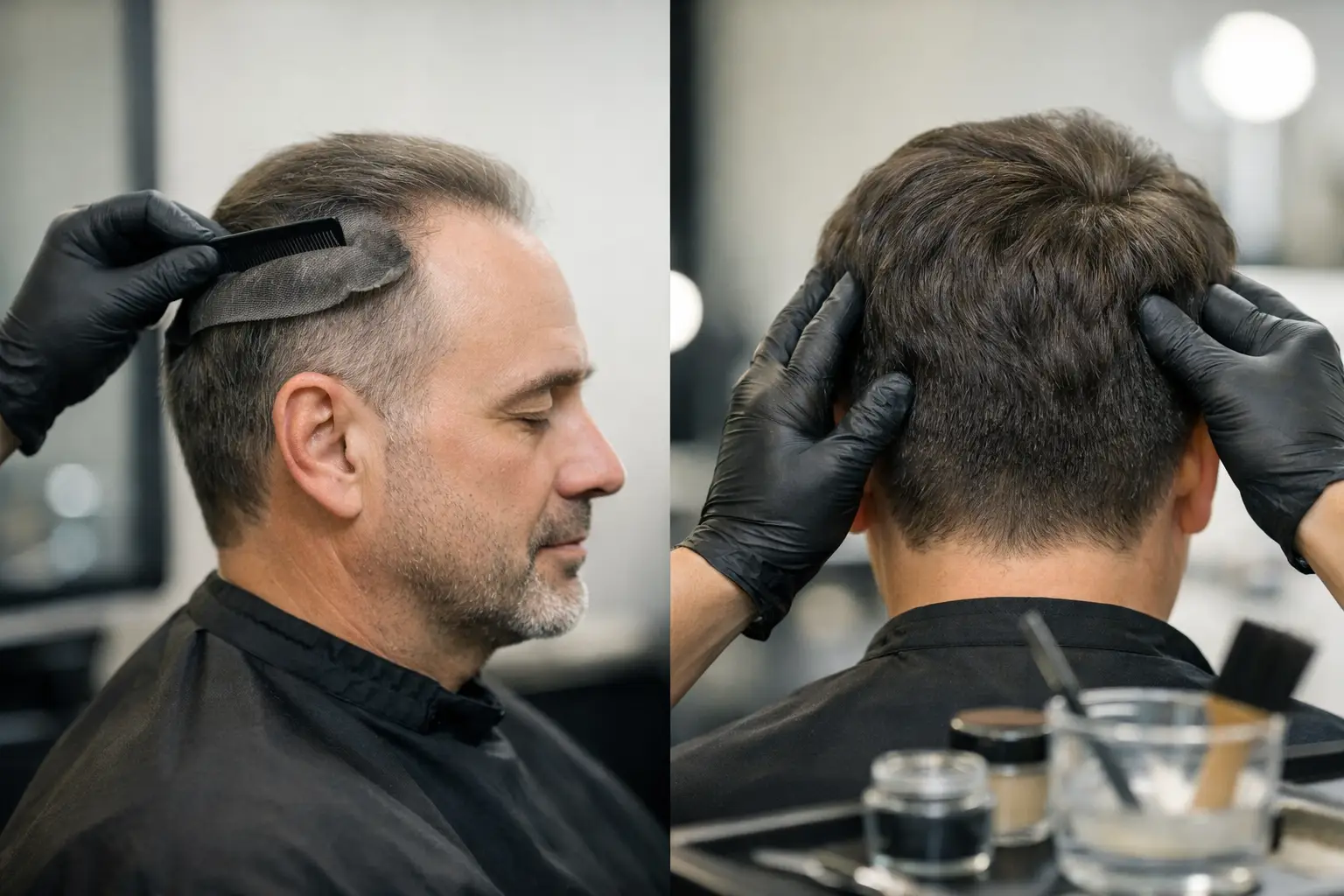
Hair loss rarely feels like a purely cosmetic issue. For many people, it affects how comfortable they feel at work, in photos, under bright lighting, and in everyday social situations. If you have been asking how does non surgical hair replacement work, the short answer is this: it uses a custom-made hair system that is carefully matched, fitted, and blended with your existing hair to create the look of natural fullness without surgery.
That simple explanation is helpful, but the real value is in understanding what happens behind the scenes. Non-surgical hair replacement is not the same as buying a standard wig off the shelf. When done by a specialist, it is a personalized process designed around your scalp condition, lifestyle, degree of hair loss, and the result you want to see in the mirror.
How does non surgical hair replacement work in practice?
At its core, non-surgical hair replacement covers thinning or bald areas with a hair system that is secured to the scalp or integrated with your natural hair. The base of the system is designed to sit comfortably against the scalp, while the hair attached to it is selected to match texture, density, color, and style.
The goal is not simply to cover hair loss. The goal is to make the result look believable at conversational distance, under natural light, and during normal daily activity. That is why consultation and customization matter so much.
A specialist usually starts by assessing your scalp, pattern of hair loss, skin sensitivity, and the condition of any remaining hair. This step helps determine whether non-surgical replacement is the right option, or whether it should be combined with another approach such as scalp treatments, scalp micropigmentation, or medical hair loss support.
Once suitability is confirmed, measurements are taken so the system fits the exact shape and size of the area being covered. This is one of the reasons professional systems tend to look more natural than generic alternatives. A poor fit can shift, lift, or create an obvious edge. A precise fit creates a cleaner hairline and better security.
The main parts of a non-surgical hair system
To understand how the process works, it helps to know what makes up the system itself. There are two key components: the base and the hair.
The base is the part that sits against the scalp. Depending on the design, it may be made from lace, polyurethane, monofilament, or a combination of materials. Each option has trade-offs. Lace can be lightweight and breathable, which is useful in a warm, humid climate. Polyurethane can offer a skin-like appearance and secure attachment, but some people may find certain designs less breathable over long wear. A specialist will recommend the base according to comfort, scalp condition, and how invisible the final result needs to be.
The hair can be synthetic or human hair, though many people seeking the most natural look prefer human hair systems. Human hair generally offers more flexibility in styling and tends to move more naturally. Synthetic hair can be lower maintenance in some cases, but it may not behave the same way under heat or repeated styling. The right choice depends on budget, expectations, and routine.
Density also matters. More hair is not always better. If a system is too dense for your age, facial features, or remaining hair, it can look unnatural. A well-designed replacement should restore balance, not create a result that looks disconnected from the rest of your appearance.
How the hair system is attached
One of the most common questions people have is whether the system stays on securely. In most cases, yes, provided it is applied and maintained properly.
The method of attachment depends on the type of system and the person wearing it. Some systems are bonded with skin-safe adhesive or specialist tape. Others may be integrated with existing hair in a way that allows the replacement to blend into natural growth. The attachment method is chosen based on scalp sensitivity, lifestyle, maintenance preferences, and how long the system is expected to stay in place between service visits.
A secure attachment should feel stable but comfortable. It should not pull painfully on the scalp or create constant awareness that something is attached. When fitted correctly, many wearers are able to go about normal daily routines including work, social events, and light exercise with confidence.
That said, non-surgical hair replacement is not completely maintenance-free. Adhesives break down over time, natural oils build up, and the system needs regular care to keep the scalp healthy and the finish looking clean.
Blending is what makes it look natural
The most impressive non-surgical results usually come down to blending. That means the specialist does more than attach the system. They cut, shape, and style it so it sits naturally with your facial structure and any surrounding hair.
Color matching has to be precise. This includes not just the main color, but also tone variation, highlights, lowlights, and how the hair looks under indoor and outdoor lighting. Texture is just as important. Straight, wavy, and curly hair all reflect light differently, and a mismatch is often what makes replacement hair noticeable.
The hairline also deserves special attention. A realistic hairline does not look overly straight, dense, or perfect. Natural hair grows with slight irregularity, and a good specialist accounts for that. For some clients, a highly exposed hairline is the priority. For others, a style that sits slightly forward gives the most confidence with the least maintenance. It depends on the look you want and how you normally wear your hair.
Who is a good candidate?
Non-surgical hair replacement can be a strong option for men and women with pattern hair loss, thinning at the crown, receding hairlines, patchy loss, or hair loss linked to medical conditions. It is especially appealing for people who want an immediate cosmetic improvement without waiting months for regrowth or undergoing surgery.
It can also suit people who are not ideal candidates for hair transplant procedures, either because of limited donor hair, active hair loss, medical considerations, or personal preference. Some clients simply want a reversible option that gives them control over their appearance without committing to an invasive procedure.
Still, it is not the right answer for everyone. If your scalp is highly sensitive, if you want a completely maintenance-free solution, or if your long-term goal is permanent regrowth from your own follicles, another treatment path may be more appropriate. That is why a proper assessment matters more than a sales pitch.
What maintenance should you expect?
This is where expectations need to be realistic. Non-surgical hair replacement can look excellent, but it does require upkeep.
Most systems need regular cleaning, repositioning, or refitting depending on the attachment method and your scalp condition. If you sweat heavily, exercise often, or live in a humid environment, you may need more frequent maintenance. The hair itself also needs care, including gentle washing, appropriate styling products, and protection from excessive heat or friction.
Over time, the system will also need replacement. Hair quality, wear patterns, sun exposure, and daily handling all affect lifespan. A specialist should explain this clearly so you understand both the cosmetic benefits and the ongoing commitment.
For many clients, that trade-off is worth it because the visual result is immediate. You are not waiting for a treatment to maybe work. You leave with the appearance of fuller hair right away.
What the experience should feel like
A good non-surgical hair replacement service should feel private, respectful, and tailored to you. Hair loss can be emotionally sensitive, and many clients want reassurance as much as they want technical skill.
That means the right provider should take time to explain your options, discuss the look you want, and be honest about what can realistically be achieved. A modern specialist clinic such as HairSpec approaches this with a consultation-led process, which is important because no two cases of hair loss are exactly the same.
The best outcome is not just a better hairstyle. It is being able to stop thinking about your hair all day. When the fit is secure, the blend is natural, and the plan matches your lifestyle, non-surgical hair replacement can give you back a sense of normalcy as much as a change in appearance.
If you have been hesitating because you assumed it would look obvious or feel uncomfortable, the reality is often far more refined than people expect. The key is not whether non-surgical hair replacement works in general. The key is whether it is customized well enough to work for you.
A thoughtful consultation can answer that quickly and clearly, and sometimes that first step is what turns hair loss from a daily frustration into a problem with a practical solution.