

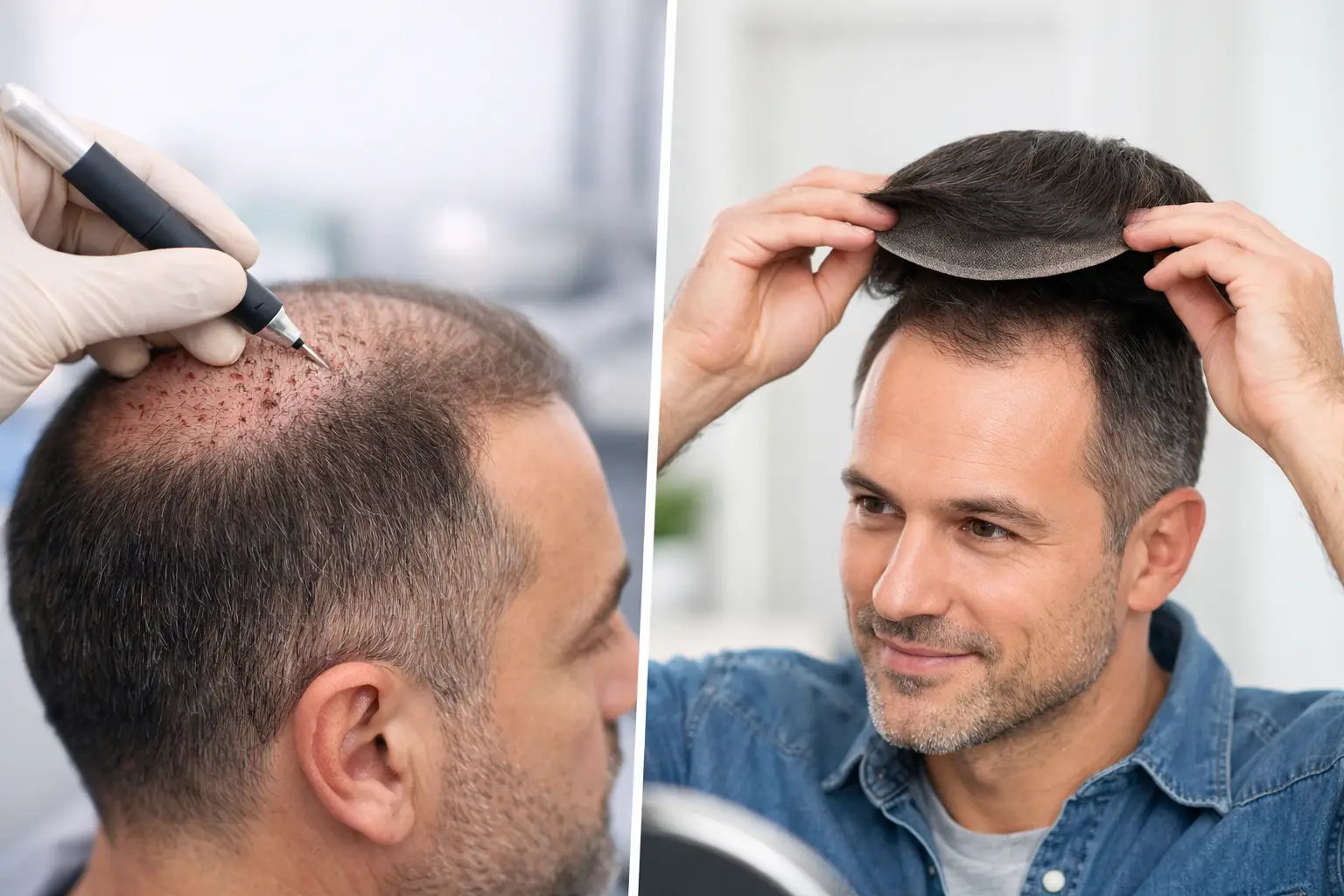
A receding hairline can affect far more than a mirror check before work. It can change how you style your hair, approach photos, and feel in professional or social settings. When comparing a hair transplant versus hair system, the right answer is rarely about which option is universally better. It is about your hair loss pattern, donor hair supply, desired timeline, lifestyle, budget, and how much ongoing maintenance feels comfortable to you.
Both solutions can create a fuller, natural-looking appearance when planned and fitted by experienced specialists. The key difference is straightforward: a transplant redistributes your own growing hair through a surgical procedure, while a hair system adds hair immediately using a customized non-surgical replacement solution.
Hair Transplant Versus Hair System: The Core Difference
A hair transplant moves healthy follicles, usually from the back or sides of the scalp, into thinning or bald areas. Once the transplanted follicles settle and grow, the new hair can be cut, washed, and styled like your natural hair. Common techniques include follicular unit extraction, or FUE, and follicular unit transplantation, or FUT.
A hair system is a custom-made base with real or synthetic hair attached to it. It is carefully matched to your preferred density, texture, color, hairline design, and lifestyle. The system is then secured to the scalp and blended with any existing hair. Modern systems can look remarkably natural, including at the hairline, when the fit, density, and attachment method are chosen correctly.
The practical distinction is timing. A transplant is a long-term surgical investment with gradual results. A hair system provides a visible transformation right away, but needs regular refitting and replacement over time.
When a Hair Transplant May Be the Better Choice
A transplant can be appealing for people who want permanent hair growth from their own follicles and are comfortable with a surgical process. It may suit candidates with stable pattern hair loss, sufficient donor density, realistic expectations, and the patience to wait for growth.
After the procedure, transplanted hairs commonly shed before new growth begins. Early growth may appear after several months, while fuller results often take 9 to 12 months or longer. The appearance can be highly natural because the hair is your own, but the final density depends on available donor hair and the extent of hair loss.
A transplant may be especially worth considering if you prefer lower daily involvement once healing and growth are complete. You can generally wash, exercise, swim, and wear your hair as usual after following your provider’s recovery instructions. However, it does not stop future thinning in non-transplanted areas. Some people need medical hair loss management, additional sessions, or a complementary solution to maintain visual balance as their natural hair changes.
It is also not ideal for every person. Limited donor hair, very diffuse thinning, active scalp conditions, certain medical considerations, or unrealistic density goals can affect candidacy. An honest assessment should include the long-term plan, not just the number of grafts that may be placed today.
When a Hair System May Be the Better Choice
A hair system is often the strongest choice for someone who wants fuller-looking hair now. There is no surgical recovery period and no need to wait months for regrowth. This can be particularly valuable before a wedding, career change, major event, or any moment when you want to feel like yourself without delay.
It is also a flexible option for people with extensive hair loss, insufficient donor hair, or hair loss related to medical treatment. Because the desired density is not restricted by donor supply, a well-designed system can create coverage and fullness that may not be achievable with transplantation alone.
Customization is one of its greatest advantages. You can choose a conservative, age-appropriate density or a fuller style, then adjust it over time. If your preferences change, a system can change with you. For many clients, this sense of control is as meaningful as the cosmetic result.
The trade-off is maintenance. Hair systems need professional servicing to clean the scalp, refresh adhesives, check the fit, and keep the hair looking natural. The replacement schedule varies according to the base material, wear routine, activity level, and care habits. Wearing a system should feel comfortable and discreet, but it does require a continuing commitment.
Comparing Results, Recovery, and Daily Life
The best option depends on what “natural” means to you. A successful transplant offers real growing hair and a gradual, permanent-looking result. A high-quality hair system offers immediate density and can produce a highly convincing appearance, particularly when the hairline and blend are customized by a specialist.
Recovery is one of the clearest differences. Transplant patients should expect short-term redness, scabbing, tenderness, and careful aftercare. Time away from strenuous exercise and sun exposure may be recommended during early healing. A hair system does not involve incisions or graft healing, although first-time wearers may need a short adjustment period while they get used to the attachment and care routine.
Daily styling can be easy with either solution. Transplanted hair behaves like natural hair once established, though its length and texture will reflect the donor area. With a hair system, styling products and activities are possible, but you will receive specific guidance on shampooing, brushing, heat tools, swimming, and adhesives to protect the base and preserve the finish.
Cost Is More Than the First Appointment
It is tempting to compare only the initial price, but the more useful question is what each path costs over the period you expect to wear it. A transplant usually involves a larger upfront investment, potentially followed by medications, follow-up care, or future procedures if hair loss progresses.
A hair system usually has lower entry cost than surgery but includes recurring expenses for the unit, service appointments, products, and eventual replacement. Over several years, those appointments are part of the investment in keeping the result fresh, secure, and natural-looking.
Neither choice should be made on price alone. A low-cost transplant with poor planning can leave limited donor resources and an unnatural hairline. A poorly fitted system can feel uncomfortable or look overly dense. Specialist guidance, quality materials, and realistic design matter in both cases.
Can You Combine a Transplant and a Hair System?
Yes. Combination planning can be an effective answer for people with advanced hair loss or limited donor supply. A transplant may rebuild or soften the frontal hairline, while a hair system provides additional density through the top and crown. Others wear a system while waiting for transplant growth, then reassess their coverage needs later.
This approach needs thoughtful planning. The hairline, density, and future thinning pattern should work together so the result remains believable as your natural hair changes. It is not about choosing surgery or non-surgical replacement as competing camps. It is about creating a plan that protects your options and meets your priorities now.
Questions to Ask During Your Consultation
A thorough consultation should look beyond the visible thinning area. Ask whether your hair loss is stable, what your donor capacity may be, how each option will look over time, and what maintenance will realistically involve. Discuss your preferred hairstyle, exercise habits, scalp sensitivity, work schedule, and comfort with surgery or regular service appointments.
It is also reasonable to ask to see what a natural density and hairline design would look like for your age and facial features. The goal is not to chase an artificial standard of thickness. It is to create a result that feels believable, comfortable, and aligned with how you want to present yourself.
At HairSpec, a private scalp assessment can help clarify whether a transplant, customized hair system, or combined approach is appropriate. The most reassuring choice is usually the one that gives you clear expectations before you commit. Your hair solution should fit your life, not ask you to rearrange your life around it.